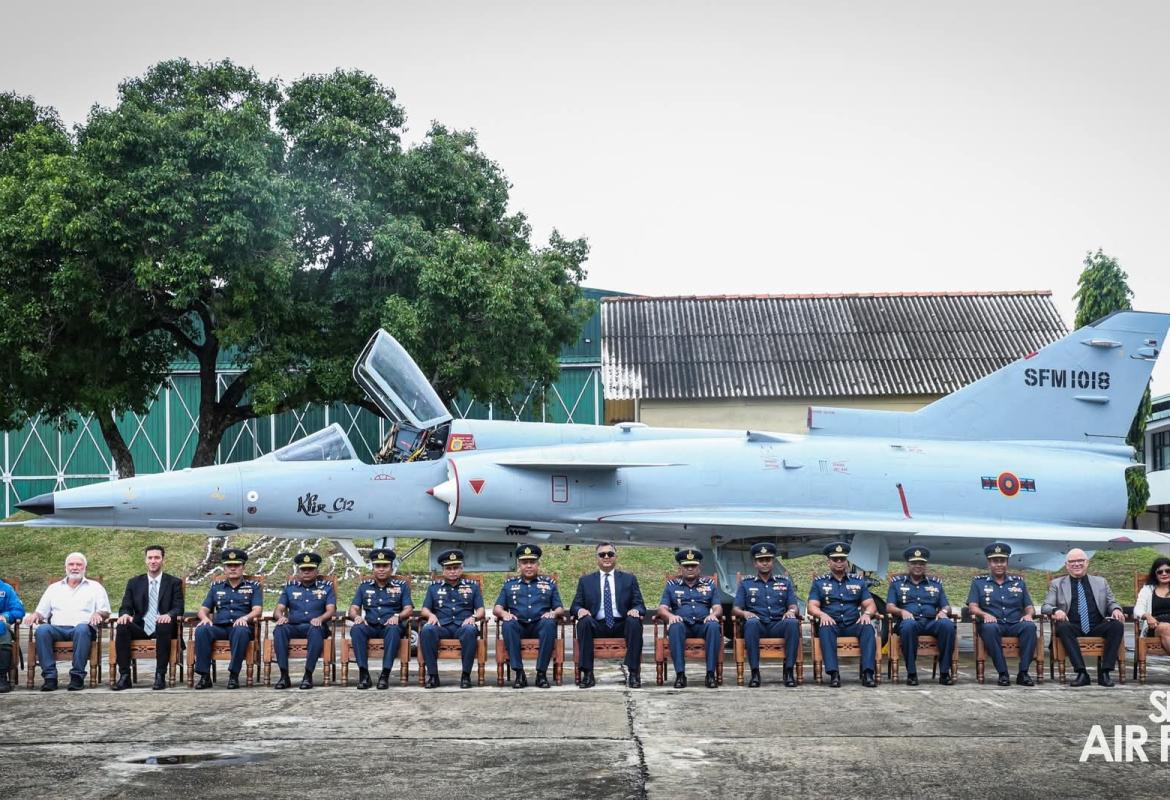
The Sri Lanka Air Force's upgraded Kfir C12 during its first test flight at SLAF Base Katunayake on 11 June. Photograph: Sri Lanka Air Force
On 11 June, the Sri Lanka Air Force conducted the first test flight of an upgraded Kfir C12 fighter at its Katunayake base, presenting the flight as a military milestone. The aircraft is one of five being rebuilt — four C2 and C7 jets plus a TC2 trainer…
Despite verbal acrobatics reminiscent of George Orwell's 1984, Sri Lankan officials have been unable to dismiss a shocking mobile phone video from last January purportedly showing Sri Lankan soldiers summarily executing naked and bound captives. The government has consistently claimed the video is fake, without providing any evidence that the gruesome scene was staged or the footage tampered with.
As one drives towards Sri Lanka’s war-torn northern Jaffna Peninsula on the A9 Highway, the island’s main north-south arterial road, the landscape takes on echoes of the Somme, the French battlefield of the first world war.
A YEAR ago, as Sri Lanka’s long and agonising civil war entered its endgame phase, there was little indication that the bloody denouement would make way for the healing and reconciliation that the island-nation so desperately needs.
Writing just before the Sri Lankan Presidential polls, the author, who served on the International Independent Group of Eminent Persons, argues that the chances for true investigation into war crimes allegations in the country is remote.
President Rajapakse’s crackdown on political opponents, including the arrest of the defeated opposition presidential candidate Sarath Fonseka, is not as unexpected or as surprising as many commentators are suggesting.
Following the end of decades of armed struggle in May last year, western states, led by the United States of America and the European Union, are reviewing their policy on Sri Lanka.