Tamil Affairs

Tamil News

Latest news from and about the homeland

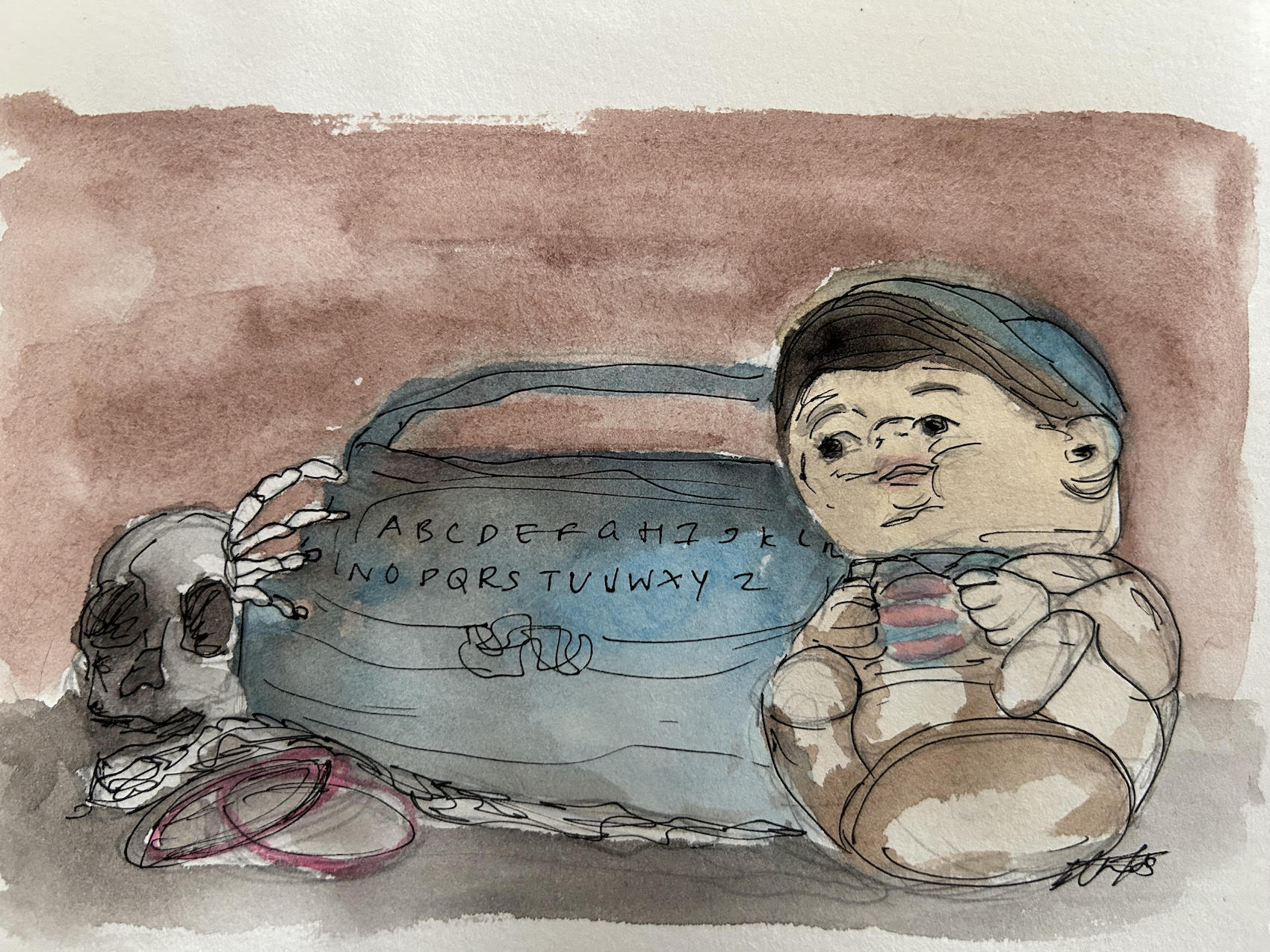
This week, the number of skeletal remains uncovered at Chemmani reached a stark record of 387. With that figure, a patch of earth on the edge of Jaffna town became the largest mass grave ever uncovered on the island, surpassing the 376 remains recovered at Mannar. Recent days alone have seen the bodies of several children exhumed, alongside beads and bangles. These are the contents of the…

Sri Lanka Navy soldier arrested in Jaffna with link to murder

A member of Sri Lanka’s Navy was arrested in Jaffna by the Criminal Investigation Department (CID) in connection with the murder of Guinness world record holder Wasantha Soysa.

The international Karate Champion was murdered on the 24th of October by an unidentified group of individuals.

Vijaya Jeyasekara who currently serves Sri Lanka’s navy in a posting in Jaffna was arrested on Thursday.

Local police sources state that one of the main suspects has already absconded questioning with the police.

Thousands of Vanni IDPs affected by heavy rain

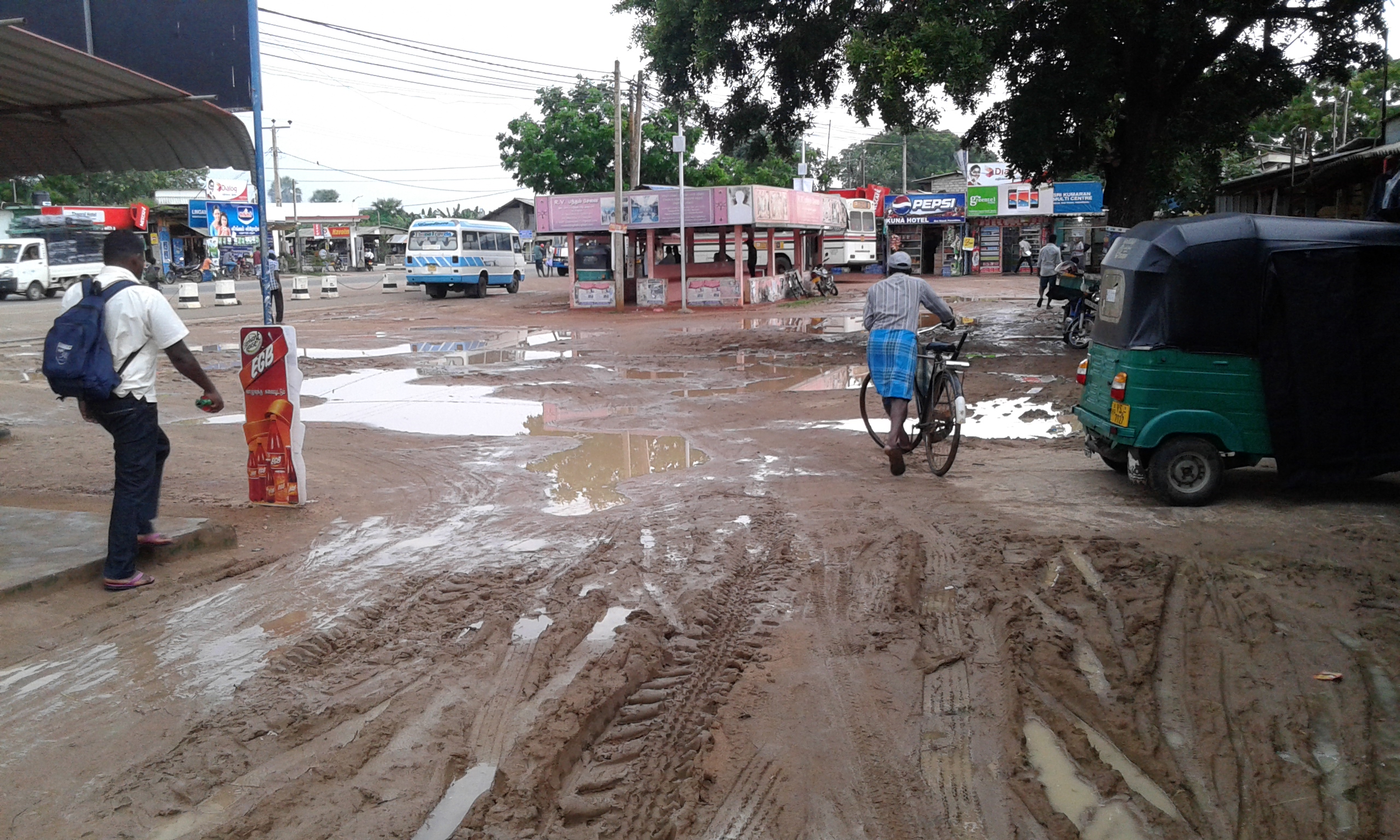
Thousands of Internally Displaced People (IDPs) in the Kilinochchi district are affected by heavy rains.

Enforced Disappearance – A Tamil Perspective

Speech delivered by Father Elil Rajendran at the BMICH, on October 27, 2015

Members of the families of those forcibly disappeared, distinguished guests, ladies and gentlemen.

I would like to thank the organising committee for the invitation to deliver this speech on Enforced Disappearance from a Tamil perspective.

I will start with the story of a Tamil mother - Chandra. Her life changed forever just before midnight on 11th of September 2008. Armed men broke into the house where her 24 year old son Jasinthan was sleeping and took him away in white van. There is only one road leading to the area where she lives and there is no way armed men could have taken away her son without the security forces knowing.

But for the last 7 years Chandra’s life has been spent searching for her son. This may sound futile after so many years but she has good reason to believe that his son is still alive. Three years ago she saw a video of him in hospital with his front teeth smashed . In January this year she recognised him among several men in a photograph showing detainees at Welikada Jail. And yet she still cannot locate him. She lives in limbo and says if he had died it would have been easier to accept than this.

Sri Lanka to introduce electronic identity cards from next year

The Sri Lankan government announced that in January next year electronic national indentity cards will be issued to people across the island.

Minister of Finance Ravi Karunanayake announced that the identity cards will contain “all information from the time of the birth of a child” and would allow the government to tackle fraud and “carry out [the] observations,” reports ColomboPage.

Sri Lanka has 'begun process' to release 120 Indian fishermen

The Sri Lankan government has pledged to release 120 arrested Indian fishermen, according to a foreign ministry official on Wednesday.

“The process to release the detained Indian fishermen began today,” said Foreign Ministry spokesperson Mahishini Colonne, adding that all of them "will be released in the next few days".

“This is pure humanitarian action,” she added.

Sri Lanka sells $1.5 billion in bonds amidst dwindling reserves and growing deficit

Sri Lanka issued $1.5 billion in bonds in its second sale of the year, despite a widening budget deficit and growing investor concern in the island.

On Wednesday, $1.5 billion was raised by issuing a 10-year sovereign bond at 6.85 per cent, above the 6.1 per cent for $650m in bonds Sri Lanka raised in May.

The move comes after S&P issued a "B+" sovereign credit rating on Tuesday morning which it said "reflects the country's relatively low wealth, improving but still moderately weak external liquidity, and a high government debt and interest burden".

Sri Lanka has faced a widening budget deficit and growing depreciation of the rupee, since the change in government earlier this year.

Army constructs community hall for Sinhala military village in North-East

The Sri Lankan military declared open a community hall last month, built for a Sinhala military village in Welioya, Mullaitivu.

The hall, constructed by the 62 Division of the Sri Lankan army, was declared open on August 22.

US Ambassador to Sri Lanka and Ambassador for Global Women’s Issues visit Jaffna

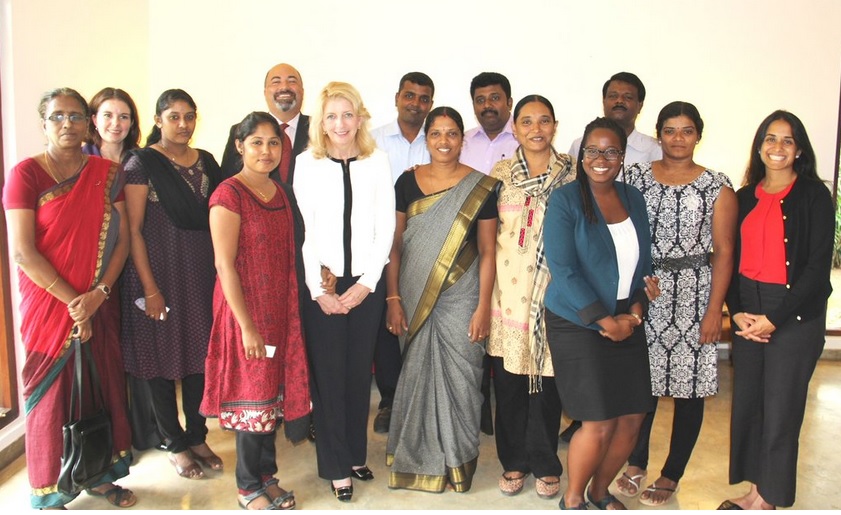
The US Ambassador Atul Keshap and US Ambassador-at-large for Global Women’s Issues Cathy Russell visited Jaffna on Wednesday.
Photograph: @usambkeshap

China pledges to strengthen culture and education cooperation with Sri Lanka

China stands ready to further strengthen exchange and cooperation with Sri Lanka in fields of culture and education, said the Chinese Ambassador to Sri Lanka.

Ambassador Yi Xianliang donated Rs 2 million to Sri Lanka’s National Library for digitisation of its Information Communication Technology training program.

Mr Xianling said that China will support the development of the library during a meeting with the Chairman of Sri Lanka’s National Library Board, reports Colombo Page.

Unlike a stray bullet rape is always intentional - New York Times Op-Ed

The following op-ed, How to Counter Rape During War, written by Elisabeth Jean Wood and Dara Kay Cohen was published in today's New York Times and highlights cases of armed groups who did not tolerate rape by their troops during conflict, including the LTTE.

Last year, at a global conference on sexual violence during war, many speakers agreed that the best way to deter such crimes was prosecution, and they called for more of it. But prosecutions are not enough. We must work to reduce sexual violence by armed groups during wars — not just act afterward.

First, we have to better understand it. Although rape during war is an ancient crime, it’s only in the last decade that social scientists have begun to study the patterns in which soldiers and rebels rape. The findings may be surprising: It’s not more likely to occur in particular regions, countries with greater gender inequality or during ethnic conflict; men may be victims, and women can be perpetrators.

But while rape is tragically common in war zones, it’s not an inevitable part of war. In fact, we have found that a significant percentage of both armies and rebel groups in recent civil wars were, surprisingly, not reported to have raped civilians. That’s because commanders have options: They can choose to order, tolerate or prohibit rape. A deeper understanding of their behavior offers the hope of mitigating the problem.

Some commanders order rape as a military or political strategy, and specify the target. As the Soviet Army marched toward Germany in 1945, generals ordered soldiers to take revenge on all Germans, not just soldiers. Guatemalan soldiers systematically raped indigenous Mayans during the civil war from 1960 to 1996. Today, the Islamic State forces Yazidi women and girls into marriages and sexual slavery, which they wrongly believe is legitimate under Islamic law.