
Tamil Affairs

Tamil News

Latest news from and about the homeland

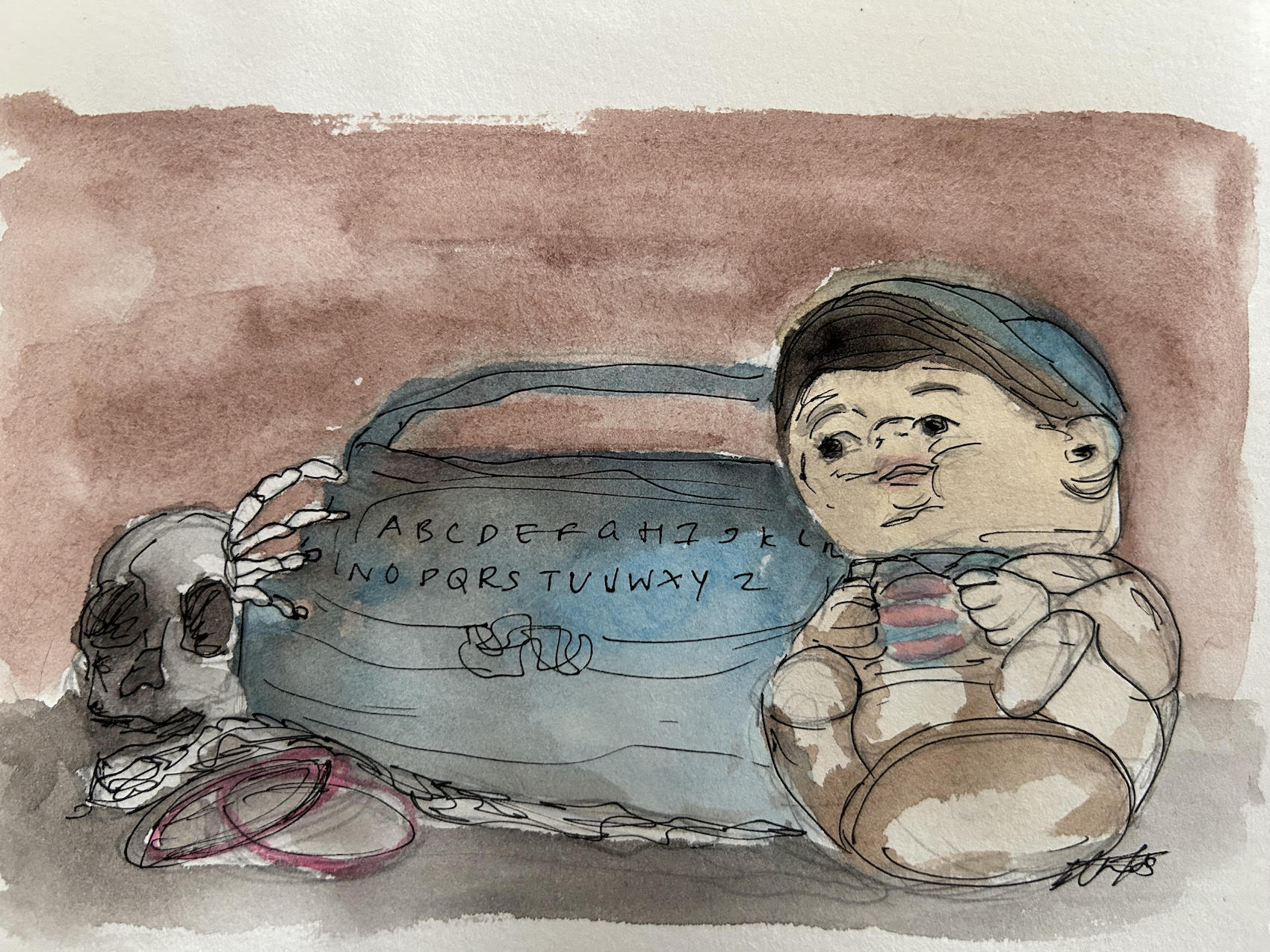
This week, the number of skeletal remains uncovered at Chemmani reached a stark record of 387. With that figure, a patch of earth on the edge of Jaffna town became the largest mass grave ever uncovered on the island, surpassing the 376 remains recovered at Mannar. Recent days alone have seen the bodies of several children exhumed, alongside beads and bangles. These are the contents of the…

15 years since Bindunuwewa prison massacre
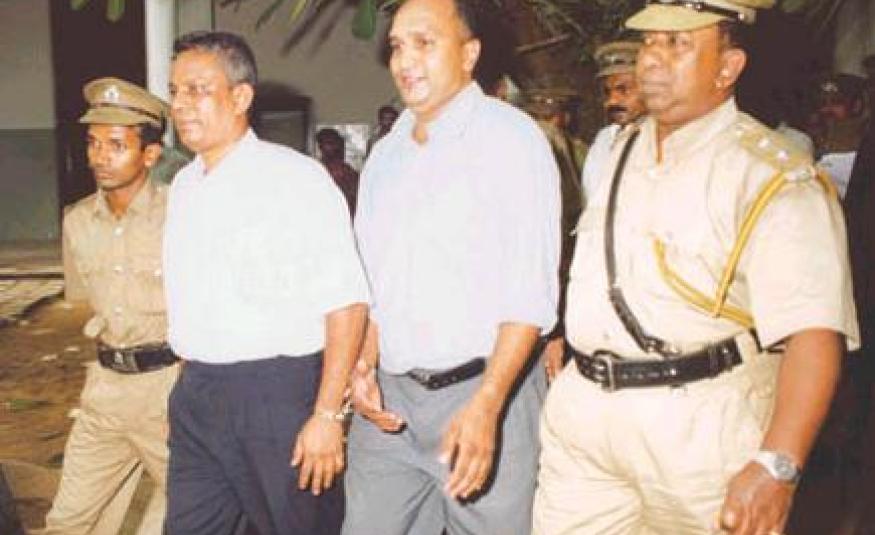
Police officers who were convicted but then released on appeal for the massacre of Tamil political detainees in 2000 (Virakesari)

Fifteen years ago an armed mob of Sinhala villagers stormed a rehabilitation centre and killed at least 28 Tamil youths, as security forces stood by and even joined in.

The centre in the southern town of Bindunuwewa was jointly run by several bodies, including the Presidential Secretariat, under then-president Chandrika Kumaratunga, the Child Protection Authority, the Ministry of Defence and the Ministry of Rehabilitation and Reconstruction.

Dozens of Tamil youths in their late teens and early twenties were held here on suspicion of supporting the Liberation Tigers of Tamil Eelam, supposedly undergoing rehabilitation for a few months before their release. A few days before the massacre, detainees protested against prolonged detention, sometimes over a year, and the deliberate withholding of letters from relatives by the authorities.

The next morning a mob of local Sinhalese, reported by UTHR to be 2,000 strong, had formed outside the detention facility. They entered the centre and attacked the inmates with knives, machetes, clubs and iron rods, and set fire to the residence halls. Police officers stood by and in at least one instance opened fire on the inmates. A military detachment in the area was also withdrawn the previous day, indicating a premeditated attack.
Sri Lanka must tell truth about international component of UNHRC resolution says Tamil CIvil Society Forum

The Tamil Civil Society Forum (TCSF) spokesperson, whilst speaking on the findings of Sri Lanka’s Presidential Commission of Inquiry into Complaints of Abductions and Disappearances, called on Sri Lanka’s government to take the reconciliation process forward by telling the truth about the United Nations Human Rights Council resolution on accountability in Sri Lanka.


Noting that the government was downplaying the international component of the criminal investigation that it signed up to at the UNHRC, Guruparan Kumaravadivel said,


“The new government cosponsored the UN resolution on accountability in Sri Lanka which called for foreign judges and prosecutor participation but they have been playing down the foreign involvement part of the resolution and suggesting merely involvement of experts.…They are not speaking truth about the resolution let alone being prepared to speak about what really happened in Sri Lanka, not just in the last phases of the war but over the last 30 years. And this is where the problem is. If even this government is not willing to talk to the Sinhalese on the need for an honest recounting of what happened. They should start by honestly telling the Sinhalese the honest purpose of the resolution.”

Sri Lanka police rejects HRW report on torture

The Sri Lankan police force has rejected a report by Human Rights Watch, which said that detainees were regularly tortured in custody.

The New York-based organisation found that police frequently use torture to try to obtain confessions rather than undertaking the more difficult and time-consuming process of gathering evidence through investigations.

Cases detailed in the report are only from the south of the island, as access to the Tamil-dominated North-East was restricted to human rights organisations.

The report named 'We Live in Constant Fear': Lack of Accountability for Police Abuse in Sri Lanka, detailed severe beatings, electric shocks, rubbing chili paste on genitals and suspension from ropes in stress positions, amongst various methods used by the Sri Lankan police.

Sri Lanka's Foreign Minister announces four new institutions to deal with truth, accountability and reparations

Sri Lanka’s foreign minister, speaking in parliament after a debate on the United Nations Human Rights Council, Mangala Samraweera outlined government plans to create four separate institutions to ensure the suffering of those who have lost loved ones is recognised, crims is punished, and any injustice is remedied.

Mr Samaraweera outlined four separate institutions; A commission for Truth Justice Reconciliation and Non-recurrence; An Office on Missing Persons based on the principle of the families right to know, to be set up by Statute with expertise form the ICRC; A Judicial Mechanism with a Special Counsel to be set up by Statute; An Office for Reparations to be set up by Statute.

Full speech reproduced below:

Is Sirisena ready to release Tamil Political Prisoners? - Taylor Dibbert

Sri Lanka’s government could be doing much more to heal the wounds of the war and address Tamil grievances writes Taylor Dibbert in the Diplomat.

Highlighting the ongoing military “occupation of civilian land in the northern province” and the “ government’s continued detention of Tamil political prisoners,” Mr Dibbert said President Sirisena’s  decision on how to deal with Tamil political prisoners will be something to watch closely.

Sri Lanka hosts event to mark 70th anniversary of UN

The United Nations in Sri Lanka celebrated the 70th anniversary of the world body and 60th anniversary of Sri Lanka being accepted as a member state on Saturday.

A ceremony was held at the United Nations compound in Colombo in the presence of President Maithripala Sirisena, Prime Minister Ranil Wickremasinghe, Foreign Minister Mangala Samaraweera and the visiting UN Assistant Secretary General Mirslav Jenca report Colombo Page.

Members of the Tamil National Alliance including MP MA Sumanthiran and party leader R Sampanthan were also present at the event.

Jaffna Press Club holds remembrance service for slain Tamil journalist


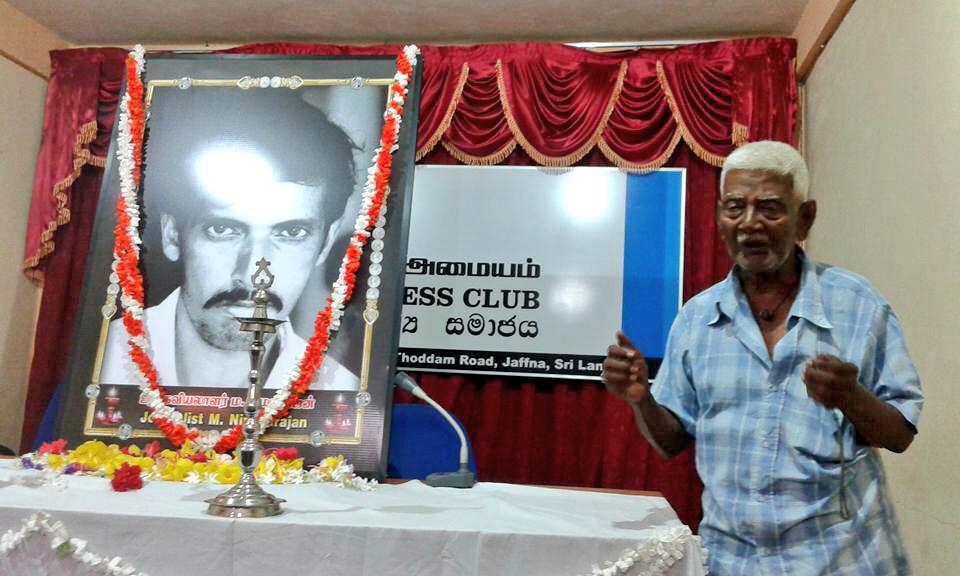
Photograph: @uthayashalin

The Jaffna Press Club held an event to mark the 15th death anniversary of murdered Tamil journalist Mylvaganam Nimalarajan earlier this week.

Mr Nimalarajan, a senior journalist who contributed to the BBC Tamil and Sinhala services, the Tamil daily Virakesari and Sinhala weekly Ravaya, was murdered on October 19th 2000.

The Committee to Protect Journalists stated shortly after his death:

“The assailants shot the journalist through the window of his study, where he was working on an article, and threw a grenade into the home before fleeing the premises. The attack occurred during curfew hours in a high-security zone in central Jaffna town.”

“Local journalists suspect that Nimalarajan's reporting on vote-rigging and intimidation in Jaffna during the recent parliamentary elections may have led to his murder.”

The government aligned paramilitary group the EPDP are suspected of carrying out the killing.

‘There are no political prisoners in Sri Lanka’ reiterates cabinet spokesperson

Sri Lankan cabinet spokesperson and government minister Rajitha Senaratne reiterated that there are no political prisoners being kept in Sri Lankan jails, reports the Daily Mirror.

Speaking to reporters at the weekly cabinet news briefing, Mr Senaratne stated that prisoners who have been involved in “terrorist activities during and after the conflict” would be prosecuted as soon as possible.

He added that some of the prosecutions would be “fast tracked” where the Attorney-General felt there is “strong evidence” against the accused.

JSP willing to form coalition against UN resolution on Sri Lanka

The leader of the Janatha Sewaka Party declared he was willing to join forces with any other political party in Sri Lanka to defeat a UN Human Rights Council resolution on accountability for violations of international humanitarian law.

“I can’t remain silent when such resolution is destroying our independent state,” said Somawansa Amarasinghe, who added that he was open to the idea of partnering with the National Freedom Front.

Stating that the resolution has “violated even the UN convention”, Mr Amarasinghe said “this propaganda is handled by separatists because such global organisation is not supposed to adopt country-specific resolutions violating the country’s sovereignty and Constitution”.