• India’s troubles in Sri Lanka

    China’s increasing influence in Sri Lanka is seen by some Indian and western security analysts as a threat to India's national interests. Given the proximity and location of Sri Lanka, activities on the island by hostile states, they say, is detrimental to India’s national security.

    However it is missing the point to see China as the ‘problem’ here; it is Sri Lanka’s conduct that should worry India. If Sri Lanka was not to entertain powers hostile to India, then neither China, Pakistan nor any other state can pose a threat via the island.

  • Too close for British comfort

    On Wednesday we highlighted British Defence Secretary Liam Fox’s links with President Mahinda Rajapakse's government, and the minister's insistence on meeting the Sri Lankan leader this week despite the growing chorus of demands he be investigated for war crimes.

    It seems the much-publicised, yet supposedly 'private', meeting has also made the British government uncomfortable: The Times newspaper reported Thursday that Dr. Fox has been warned by Foreign Office officials.

  • What’s so surprising?

    The leaked cable to the US State Department from US Ambassador to Sri Lanka Patricia Butenis has this week added to growing calls for international investigations into the Rajapakse administration’s culpability for war crimes.

  • Thank you anyway, Miliband

    “Any mention of my island home (no matter what British political scandal it may involve), is most welcome. For here is a chance for the world to stop its hurried turning, pause a moment, and remember that savage kingdom in the Indian Ocean. To read once more of the 100,000 Tamils thought to have died in a few balmy days last May.

  • Japan failing leadership test in Sri Lanka

    “Japan's studied refusal to add to the international pressure on the Sri Lankan government, while it continues to pour money into infrastructure development, could be construed as not simply more ineffectual checkbook diplomacy, but in fact a cynical investment in the regime.

  • Doubts over Sri Lanka's pledges

    “Most of [Sri Lanka’s] deficit reduction plans hinge on turning around loss-making state ventures hampered by subsidy schemes, mismanagement and an infamously intractable corps of bureaucrats.”

  • Loyal defender of Sri Lanka’s realm

    It isn’t surprising that the only British politician who will be meeting Sri Lanka's President Mahinda Rajapakse during his controversial visit to the UK this week is Defence Secretary
    Liam Fox.

    Amid a storm of outrage and calls this week by Amnesty International for Britain to pursue war crimes prosecutions against Sri Lankan leaders, the Defence Secretary is going to meet President Rajapakse “in a private capacity”.

    "This reflects Dr Fox's longstanding interest in Sri Lanka and his interest in, and commitment to peace and reconciliation there," a spokesman for Fox told The Guardian newspaper.

    A closer look at Dr. Fox's long-standing engagement with Sri Lanka suggests otherwise.

  • US embassy cables: Rajapaksa shares responsibility for 2009 massacres

    “There are no examples we know of a regime undertaking wholesale investigations of its own troops or senior officials for war crimes while that regime or government remained in power.

  • Sri Lanka’s fishy story

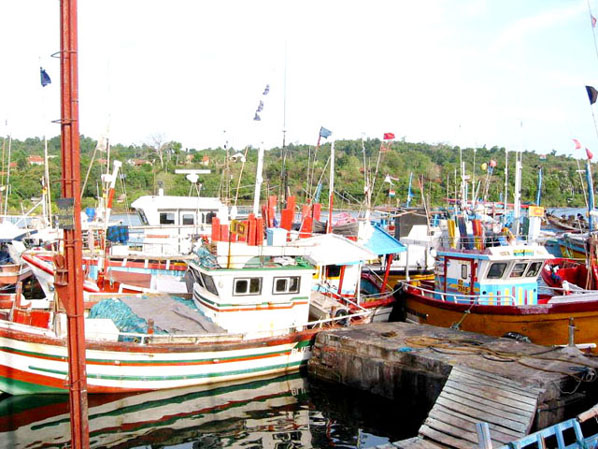
    After 32 consecutive years of losses, Sri Lanka's state-owned Fisheries Corporation announced this July it had made a profit. The explanation, inevitably, was ‘the end of the war’.

    But a close look suggests much more than that: a militarized and ethnicised monopoly in the making.

  • Why Rajapakse’s case is different

    “The Oxford Union has in the past faced criticism for inviting other controversial speakers also known for their racist views. However, President Rajapakse is in a different position from [far right leader] Nick Griffin or [Holocaust denier] David Irving.

  • Sri Lanka might — but probably won't

    “Would Sri Lanka be better off wagering on the intelligence of President Rajapakse and his relatively small circle, or on the creativity and hard work of a broader entrepreneurial class? The fact that foreign direct investment, and domestic long-term investment money, is sitting on its hands a year and a half after the war is a sign of which side of that bet the market is taking.”

  • Jaffna and the world

    This is what India’s External Affairs minister S. M. Krishna said Saturday in his speech at the opening of the Indian consulate in Jaffna:

  • ‘Ethnocracy’?

    Out of the 55 Secretaries, the senior-most civil servants of Sri Lanka’s ministries, appointed this week, one was a Tamil, another a Muslim; the rest were Sinhalese.

    Recruitment of young Tamils or Muslims into the civil service has been negligible over the past several years; this year there were none.

  • Sri Lanka’s foreign debt less attractive than even Greece's

    So much for Colombo's claim of 'post-war optimism' amongst foreign investors.

    Sri Lanka’s long term sovereign debt is presently rated as less attractive to foreign creditors than that of Greece, which triggered another international financial crisis earlier this year after being caught concealing a yawning budget deficit.

    Standard & Poor’s, the debt rating agency, has given Greece’s foreign debt an overall rating of BB while Sri Lanka scores B+.

    According to the agency’s website, a rating of B is understood as more vulnerable to debt default than BB. The +/-  signs indicate a state's relative standing within the overall ‘B’ category.

    S&P's raised Sri Lanka’s debt rating in September this year from B to B+ primarily on the condition Colombo sticks to the IMF’s reform programme, the LBO reported.

    Meanwhile, Sri Lanka is amongst the world's heaviest borrowers.

Subscribe to Tamil Affairs