• Sri Lanka’s stocks: a closer look

    The doubling of Sri Lanka’s main stock market index in 2010 has led to some effusive news reports, most recently in The Guardian. Inevitably, these reports have been lauded in Sri Lanka’s state-owned press, alongside its own hype.

    But, as other recent analysis shows, these reports make two mistaken assumptions: [1] that the index’s rise is entirely due to fundamental improvement in the stocks, and [2] that the market is indicative of the wider economy’s progress.

    Firstly, the index has been driven up by Sri Lankan government buying, while foreigners are exiting. Secondly, the Colombo bourse is unrepresentative of the wider economy.

    This is what the Sri Lankan Sunday Times’ economic column warned last October about the mistaken presumption:

    “There is little doubt that the recent [stock] market performance is not directly related to either economic performance or market fundamentals. It has been guided by market sentiments, speculation and government intervention.”

    See also this discussion in October by LBO of over-valuation and government buying.

    In fact, international equity investors’ wariness of the Sri Lankan market is underlined by one detail:

    Foreigners have been net sellers in 2010 and 2009 – after having been net buyers since 2001 (See Reuters’ reports in Dec and Feb 2010).

    2010 saw a net foreign outflow of US$240m (Rs 26.4bn), more than twice 2009’s outflow of US$103m (Rs 11.4bn).

  • Cause and effect

    “It is not the possibility of statehood, but the impossibility of living under oppression that drives protracted struggles for self-determination. As both resolved conflicts and resumed struggles [across] the world attest, oppression is not forever, but resistance to it is.”

  • EU aid must not fuel new ethnic conflict in Sri Lanka

    EU member states should be working more actively to ensure that [international] development projects in Sri Lanka, especially in the north and east, do not help institutionalise an unjust peace or fuel new grievances and violent conflict, particularly with regard to the use and ownership of land.

  • Sri Lanka’s FDI surprise

    Foreign direct investment in Sri Lanka dropped in 2010, despite the end of the war in May 2009, Reuters reported last month.

    Highlights:

  • The limits of possibility

    When ratings agencies upgraded Sri Lanka’s debt rating – to still well below ‘investment-grade’- late last year they added a warning: the government needs to demonstrate a commitment to fiscal discipline and cutting its deficit to keep these ratings.

    However, despite solemn promises – including those in the November budget – of economic reforms, the Sinhala-nationalist government is unwilling to abandon the populist measures on which both its electoral support and its ethnicised vision of the economy rest.

  • Ensuring insecurity and instability in Tamil areas

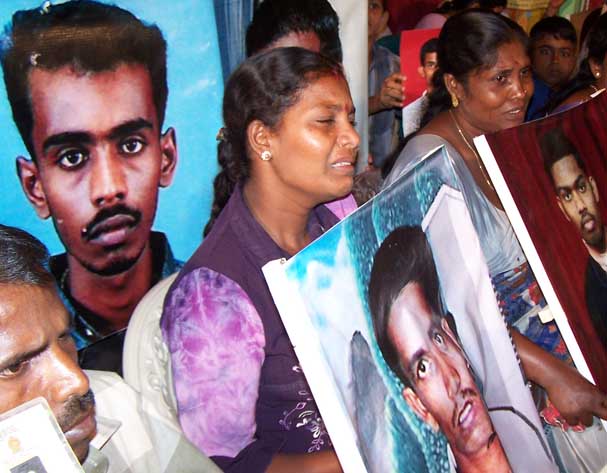
    Disappearances and extrajudicial killings of Tamils are once again on the rise in Sri Lanka. In Jaffna a simmering terror campaign by government-backed paramilitaries has escalated with several people going missing and the bodies of others, bearing horrific wounds, being dumped in public spaces.

    The victims include business people and prominent members of the community. And it is no coincidence this is happening amidst international efforts, led now by India, to restore normalcy in the Tamil areas and kickstart the economy there.

  • The logic in Sri Lanka's disappearances

    When people are abducted and never seen again – ‘disappeared’ – or their bodies are later found dumped, and when they are gunned down in public or in front of their families, these acts are often described as ‘senseless’. Senseless because nothing these people might have done - or are suspected to have done - is seen to justify such horrific ends.

    But there is a purpose to disappearances and extra-judicial killings: terror. These acts are not just about the individual, but the rest of society. They constitute a specific form of violence aiming to define the relationship between the state and the community concerned, between fear and submission.

  • Strict criteria ...

    Of the 135 individuals recently accepted into the Sri Lanka Administrative Service (SLAS), described as the apex of the government’s bureaucracy, all but one (a Muslim) were Sinhalese. Unsurprisingy - there weren’t any Tamils amongst the 257 people short listed.

  • The state is the main obstacle to developing Tamil areas

    Sri Lanka’s rhetoric on the urgent need for development in the Northeast belies its systematic efforts to disrupt the Tamil people’s recovery and subvert international assistance towards further consolidation of Sinhala dominance over them. The state’s cynical calls for the international community and the Diaspora to contribute to development of the Northeast must be viewed against its actual practices and past record.

  • Curbing humanitarianism

    "There is a definite trend to reduce aid agencies to [mere] service providers where the government says where, what, when and how. Therefore, it might be more difficult for NGOs to operate in the future according to humanitarian principles or their mandate"

  • World Bank to raise Sri Lanka’s cost of borrowing

    The World Bank will phase out grants and interest-free loans to Sri Lanka over the next three years, and will instead provide loans at near commercial interest rates for Colombo’s development projects.

  • Sri Lanka’s leaders complicit in forced prostitution and child sex trafficking

    The categories of war crimes for which Sri Lanka’s top civilian and military leadership are responsible expanded this week to include rape, forced prostitution and trafficking into sexual slavery, based on a Wikileaked US embassy cable of May 18, 2007.

    (See the full text of the cable here, and a summary of the sex-related crimes it outlines here.)

    Tamil paramilitaries ran prostitution rings for Sri Lankan troops in government-controlled parts of the Northeast, and child sex trafficking rings using their networks in India and Malaysia, and they did so with the knowledge and support of the Sri Lankan government, the US cable revealed.

    Article 7, para (g), of the Rome Statute lists “rape, sexual slavery, enforced prostitution, forced pregnancy, enforced sterilization, or any other form of sexual violence of comparable gravity" as crimes against humanity "when committed as part of a widespread or systematic attack directed against any civilian population."

    The US cable leak comes on the tenth anniversary of the landmark UN Security Council Resolution 1325, which specifically addresses the impact of conflict, particularly sexual violence, on women and girls.

    The below report looks at the international legal context of the sexual crimes described in the US cable, Colombo's response, and some of the past documentation of rape by the Sri Lanka's armed forces.

  • UN panel: what will Ban's deal sacrifice?

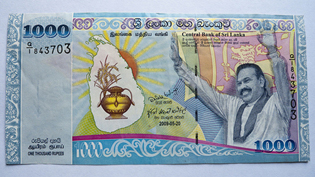
    No sooner had Sri Lanka’s supposed change of heart on allowing the UN panel of experts on war crimes convened by Secretary General Ban Ki-Moon been announced, the Colombo regime made clear the circumscribed space it will accord the panel and, more importantly, the dangerous reciprocity it is demanding.

Subscribe to Tamil Affairs