Tamil Affairs

Tamil News

Latest news from and about the homeland

""
Sri Lanka's United National Party (UNP) has accused the National People's Power (NPP) government of attempting to undermine Buddhism and interfere in the affairs of the Buddhist clergy, as controversy continues over proposed reforms aimed at addressing misconduct within the Buddhist Sangha. The dispute comes amid heightened public scrutiny of Buddhist institutions following allegations of…

Self indulgent hypocrisy
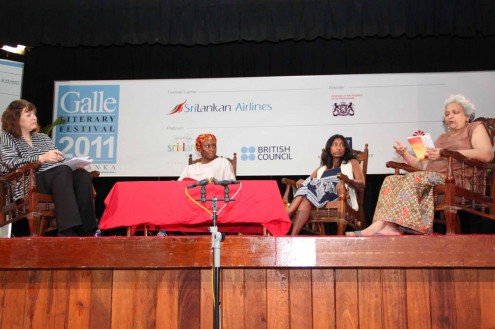
When Reporters Without Borders (RSF) and Journalists for Democracy in Sri Lanka (JDS) called upon literary figures to boycott this year’s Galle Literary Festival, they were undoubtedly prepared to face the ire of the Sri Lankan state. What they would not have anticipated was the angry response provoked from event organisers and a small but prominent group of liberal advocates in Sri Lanka. What was particularly striking about the backlash was the hypocrisy inherent to the arguments about free speech and inter-ethnic harmony marshalled in defence of the GLF.
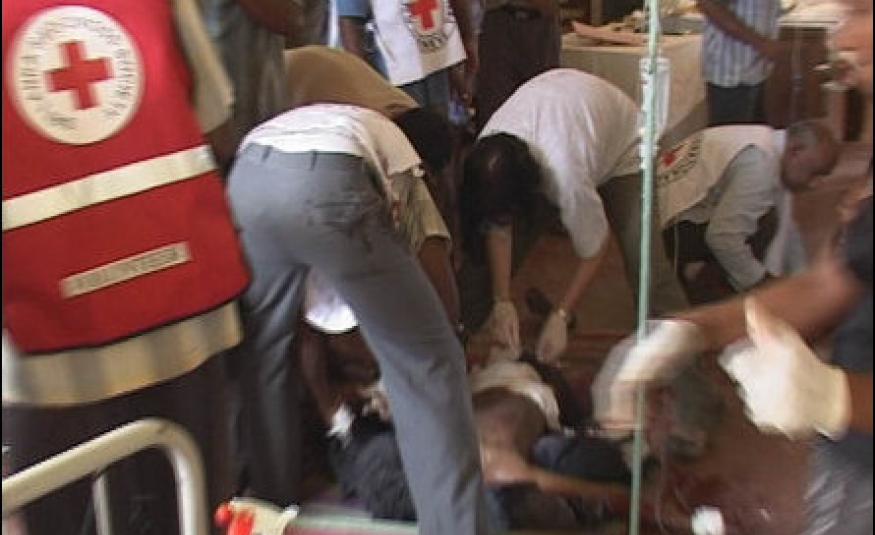
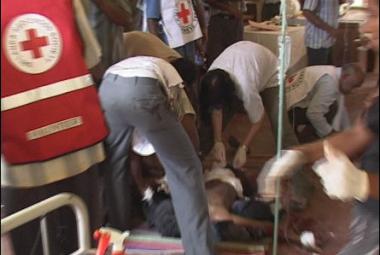
How the ICRC was kept out of killing zones

File photo: ICRC staff in Puthukkudiyiruppu's make-shift hospital in February 2009 struggling to cope with the flood of civilian casualties from Sri Lanka's bombardment of the 'Safe Zone'. Photo TamilNet.

BJP to take up Tamils’ plight

The President of India’s BJP (Bharatiya Janata Party), Nitin Gadkari, said last week that his party would take up the miseries of Sri Lanka’s Tamils at the United Nations Human Rights Council (UNHCR).

The BJP would also raise the issue in India’s Parliament, where it has 165 seats, he told a party event in Tamil Nadu on Saturday January 30.

Arguing that the Sri Lankan Tamils’ plight is not an issue for Tamil Nadu alone, Mr. Gadkari said:

IMF: Sri Lanka’s exports/GDP falling ‘for years’

"[Sri Lanka’s] export earnings, as a percentage of GDP, have been falling for years. So the first thing for Sri Lanka is to boost its exports to where it was 10 years ago.”

- IMF Asia Pacific Director Anoop Singh. (See The Island’s report here.)

Interestingly, ten years ago Sri Lanka was gripped by high-intensity armed conflict.

And, as the IMF’s chart (click more below) shows, Sri Lanka’s export/GDP ratio today is the same as in 1987 - when the JVP’s second insurgency erupted, and the IPKF intervention began.

While Sri Lanka’s Central Bank says export earnings would grow strongly in 2011, the National Chamber of Exporters recently said it would not be able to deliver half of the Central Bank’s expectations.

The exporters blame growing energy costs (for their production) and the strengthening rupee (making their products expensive in the global market).

See ‘Why Sri Lanka’s exporters are gloomy

Meanwhile, what exactly does the IMF want Sri Lanka to do? Diversify export destinations (to Asia from US and EU), and export products (from garments and tea to more sophisticated ones).

Stretch …

Even as Sri Lanka pledges to carry out the tax reform sought by the IMF, The Sunday Leader newspaper points out another of the system’s quirks:

Powder Keg

In the run up to last month's referendum in South Sudan, it was widely accepted that the overwhelming majority would opt for independence. Similarly, even before Kosovo unilaterally declared independence two years ago, it was widely agreed that the majority of its people endorsed the move.

What is striking, therefore, is what went before in these places. Sudan's civil war raged for four decades before the 2005 peace agreement. And when the international community ended the post-Cold War firestorm in the Balkans with the 1995 Dayton Accords, the Kosovars, despite their pleas, were actively excluded. Instead, they were told to make the best of it under Serbia's rule.

Killings after Katchatheevu

An investigation by the Times of India found 378 recorded attacks on Tamil Nadu fishermen by the Sri Lankan navy (SLN) between 1983 and 2005.

Interestingly, however, most cases were closed in a few months with the comment "action dropped" or "unidentified", the paper found.

There have been many more attacks since 2005, with the issue repeatedly appearing in bilateral relations between the two states and prompting a bilateral agreement, which proved non-consequential, in October 2008.

However, the paper quotes researchers as saying SLN attacks began well before 1983.

"Firing and high-handedness by the Sri Lankan navy started in 1975, a year after Katchatheevu was ceded to them," said researcher L Selva Prakash.

Katchatheevu, a tiny islet close to Rameswaram, was ceded to Sri Lanka in 1974. (See map and discussion of the deal here)

In March 2010, Chinese and Sri Lankan naval personnel were reported to be training on the islet. In Jan 2008, the SLN planted sea mines near it.

Foreign exit of Colombo bourse continues

Foreign funds are continuing to exit Sri Lanka’s stock market, Reuters reported Friday, sustaining a trend since the end of the armed conflict.

[See also our post: 'Sri Lanka's stocks: a closer look']

Despite the bourse's main index doubling last year, foreign investors have been net sellers of the “overbought and expensive” market.