
Tamil Affairs

Tamil News

Latest news from and about the homeland

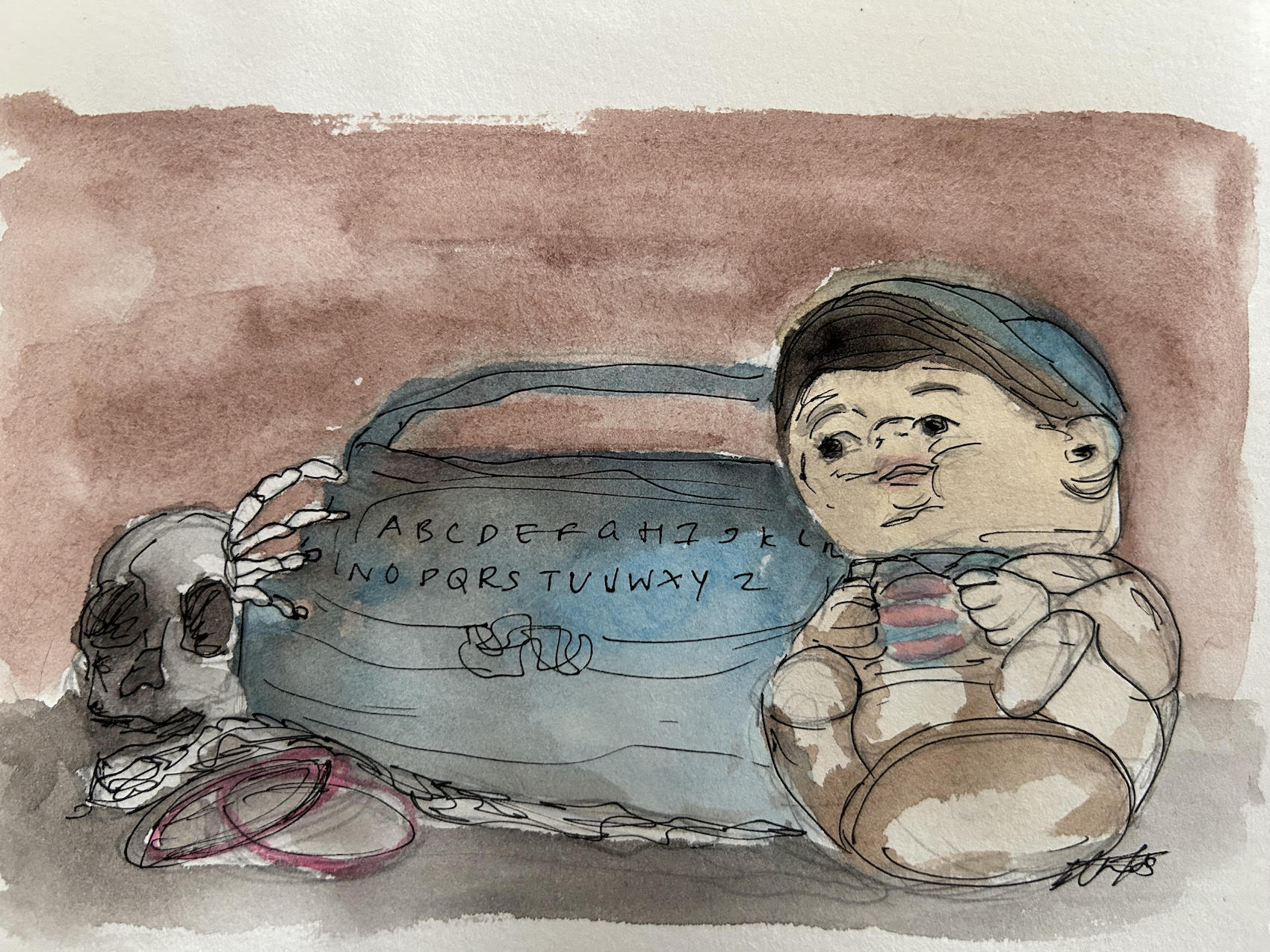
This week, the number of skeletal remains uncovered at Chemmani reached a stark record of 387. With that figure, a patch of earth on the edge of Jaffna town became the largest mass grave ever uncovered on the island, surpassing the 376 remains recovered at Mannar. Recent days alone have seen the bodies of several children exhumed, alongside beads and bangles. These are the contents of the…

Opposition MPs call for referendum on inclusion of foreign judges

Opposition MPs in Sri Lanka called for a national referendum on the inclusion of foreign judges in a domestic justice mechanism as detailed in the resolution to be adopted by the UN Human Rights Council, reports the Daily Mirror.

“If the people feel they are fine with the UNHRC recommendations and a court with foreign judges and investigators to probe alleged war crimes in Sri Lanka, then the government can go ahead with the proposals. We also request the people to urge their MPs to vote against an Act to be tabled in parliament asking for the approval of the UN recommendations,” UPFA MP, Wimal Weerawamsa was quoted by the paper as saying at a press conference on Tuesday.

Urging the government to refrain from co-sponsoring the resolution, MP Dinesh Gunawardane said, “co-sponsoring a resolution is similar to writing one’s own death certificate and is a bad precedent to other countries. This move has also put our allies in a difficult situation."

Cannot blame people who are sceptical of domestic process says TNA leader

The leader of the Tamil National Alliance (TNA), R Sampanthan, said those sceptical of a judicial process in Sri Lanka could not be blamed due to previous negative experiences.

Referring to the consensus resolution due to be adopted by the UN Human Rights Council today which calls for a Sri Lankan court with the participation of "Commonwealth and other foreign judges, defence lawyers, and authorized prosecutors and investigators", Mr Sampanthan said in an interview to The Hindu that such inclusion would give it a “much greater degree of credibility”.

“You can’t blame the people who are sceptical because the previous experiences were quite bad," he added.

“This is perhaps the best possible resolution that could have been achieved at the UNHRC on the basis of a consensus," he said.

Hybrid special court essential to give victims confidence in process reiterates UN Human Rights chief

Introducing the debate on the report of the Office of the High Commissioner for Human Rights' Investigation into Sri Lanka (OISL) at the UNHRC's 30th session on Wednesday, the High Commissioner, Zeid Ra'ad Al Hussein, reiterated the report's recommendation that a hybrid special court be established in order to give confidence to the victims and their families in the process of justice and accountability.

Listing the key reasons why a domestic process would not be successful in Sri Lanka, the High Commissioner said,

"This is why I have recommended the establishment of an ad hoc hybrid special court, integrating international judges, prosecutors, lawyers and investigators, mandated to try notably war crimes and crimes against humanity, with its own independent investigative and prosecuting organ, defence office and witness and victims protections programme."

"In a highly polarized environment, such a mechanism is essential to give all Sri Lankans, especially victims, confidence in the independence and impartiality of this process."

Children of Tamil political prisoners protest in Jaffna

More children of Tamil political prisoners have called for the release of their fathers.

 
Protesting in Jaffna on Wednesday, Tamil children called for the release of their fathers that have been held for years without trial under Sri Lanka's Prevention of Terrorism Act.

 
The protest continues a ripple of demonstrations by children across the North-East calling for their fathers' release.

Strong calls for Sri Lanka to implement said commitments and deliver justice as OISL discussed at UNHRC

Updated 01 Oct 2015 09:21 GMT

There were strong calls from member states at the UN Human Rights Council on Wednesday for the new Sri Lankan government to deliver concrete steps on its said commitments towards justice and accountability, as the report of the Office of the High Commissioner for Human Rights' Investigation into Sri Lanka (OISL) was discussed at the Council.

Find our live coverage of the discussion on our Twitter feed
here.

Introducing the debate High Commissioner, Zeid Ra'ad Al Hussein, reiterated the report's recommendation that a hybrid special court be established in order to give confidence to the victims and their families in the process of justice and accountability.

OISL recommendations will ‘receive due attention’ says Sri Lanka

Sri Lanka said that the recommendations of the Office of the High Commissioner for Human Rights' Investigation into Sri Lanka (OISL) will “receive due attention”, in a statement delivered to the UN Human Rights Council today.

Sri Lanka’s ambassador Ravinatha Aryasinha told the council that the OISL report had “set out clearly the path we intend to take”.

“We stated we take note of the Report of the OISL and that we will ensure that its content as well as recommendations receive due attention of the relevant authorities including the new mechanisms that are envisaged to be set up,” he added.

Earlier the High Commissioner had
reiterated one of  the reports key recommendations – “the establishment of an ad hoc hybrid special court, integrating international judges, prosecutors, lawyers and investigators, mandated to try notably war crimes and crimes against humanity, with its own independent investigative and prosecuting organ, defence office and witness and victims protections programme”.

EU calls for ‘immediate adoption of essential confidence building measures’ for victims in Sri Lanka

The European Union called on the Sri Lankan government to implement the “immediate adoption of essential confidence building measures” for the victims of Sri Lanka’s armed conflict.

In a statement delivered to the UN Human Rights Council in Geneva, the EU said it expresses its “deepest solidarity with the victims and their relatives” and had “sincere admiration for the manner in which victims have contributed to the work of the OISL and have placed their confidence in the Human Rights Council”.

Stating the tabled resolution on Sri Lanka “marks a crucial step towards a credible transitional justice process... with the active support and participation of the international community”, the EU said:

“The full implementation of these commitments is now needed, starting with prompt action on a fully participatory national consultation, especially with the victims, for the design of a comprehensive justice process and the immediate adoption of essential confidence building measures”.

Resolution is not an end in itself says UK

Whilst welcoming the Sri Lankan government's commitments to deliver justice, the UK, in its address to the UN Human Rights Council debate on the OHCHR Investigation into Sri Lanka report (OISL) stressed that the resolution being discussed was not an end in itself.

"We warmly welcome the constructive approach that the government of Sri Lanka has taken during this session to agreeing a consensual resolution. However, the UK recognises that this resolution is not an end in itself, but the start of a process that will require commitment from all parties if it is to deliver meaningful reconciliation and long-term peace and stability in Sri Lanka."

Welcoming the OISL report's conclusions and recommendations, the UK said "without facts, there can be no justice, no end to impunity and no reconciliation.

"The report sets out a range of extremely grave human rights violations and abuses, committed by all sides in the conflict. While this account will be difficult for many in Sri Lanka, it was essential for the Council to have seen it and for the people of Sri Lanka. Without facts, there can be no justice, no end to impunity and no reconciliation. We therefore welcome the report's conclusions and recommendations. They provide an important basis for Sri Lanka and all those affected by the conflict and its aftermath to look to the future."

Estonia and Switzerland invite Sri Lanka to ratify Rome Statute of ICC

Addressing the UN Human Rights Council (UNHRC) discussion the report of the Office of the High Commissioner for Human Rights (OHCHR) Investigation on Sri Lanka (OISL), Estonia and Switzerland invited Sri Lanka to ratify the Rome Statute of the International Criminal Court (ICC) as a guarantee against non-recurrence.

Switzerland urges institutional reform to allow for prosecutions of war crimes and genocide in Sri Lanka

Switzerland has urged Sri Lanka to reform its laws and institutions to allow for the prosecution of war crimes, crimes against humanity and genocide.

Addressing the United Nations Human Rights Council during the general debate on the findings of the UN report into Sri Lanka’s atrocities, Switzerland called on Sri Lanka "to amend its Criminal Code in order to fully integrate war crimes offences, crimes against humanity, genocide and forced disappearance with retroactive effect and while guaranteeing their imprescriptibility. It urges Sri Lanka to commit so that crimes do not go unpunished."

Switzerland also called on Sri Lanka to "develop a credible transitional justice process with international participation and reform its institutions and its laws."