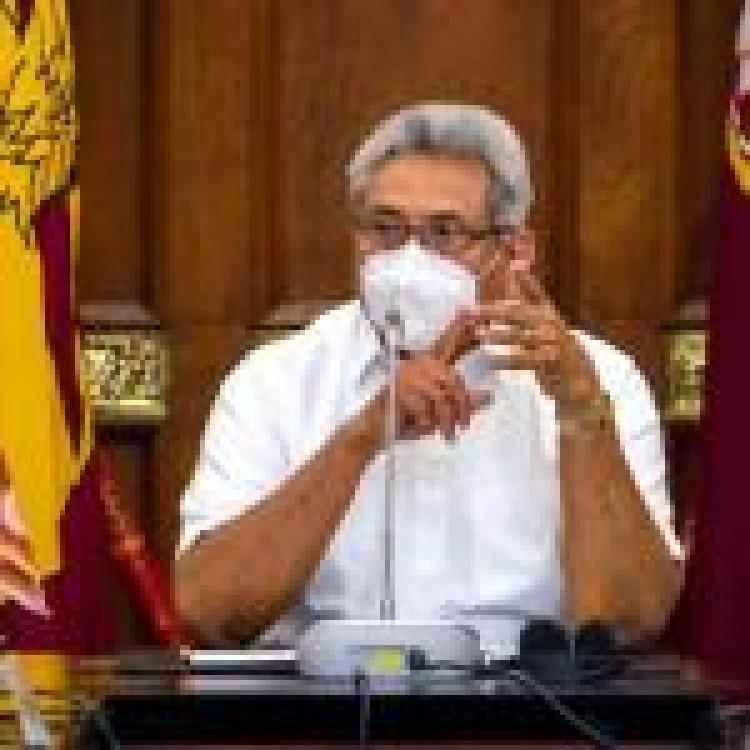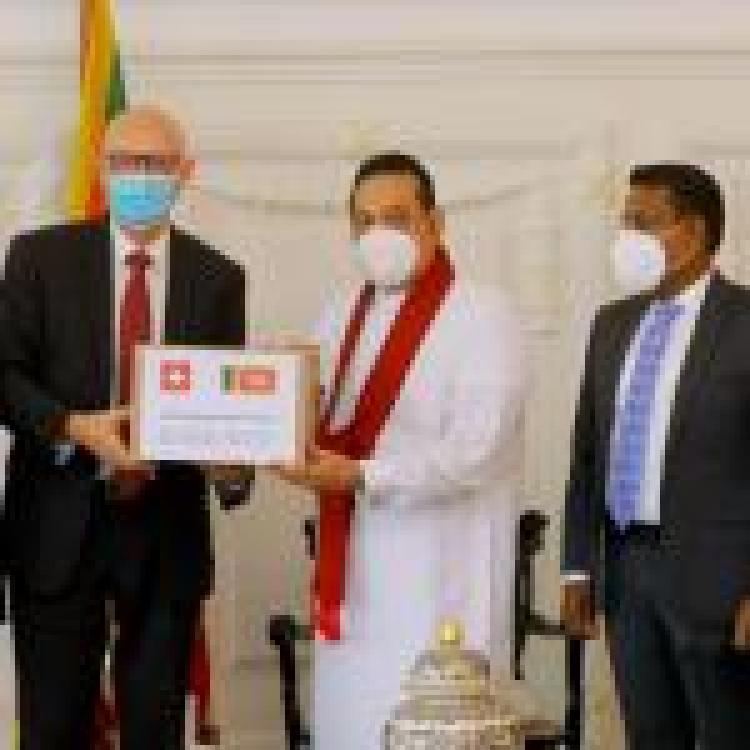
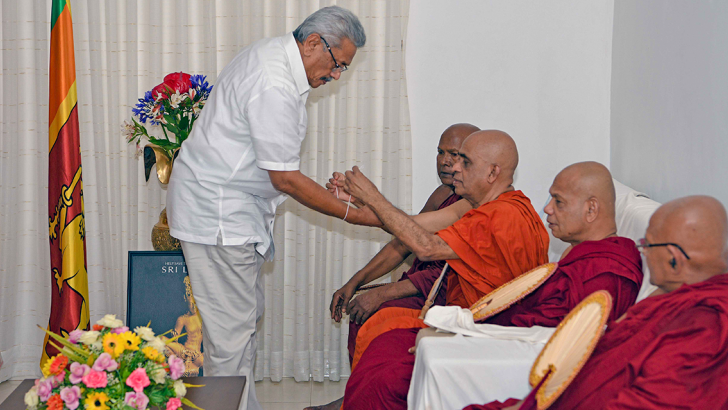
(Photo of Gotabaya Rajapaksa meeting with senior Buddhist clergy 2019)
Following repeated calls from the healthcare profession, opposition parties, and trade unions, Sri Lankan President Gotabaya Rajapaksa has announced a 10-day lockdown after receiving a request from the Sinhala Buddhist monk Mahanayake.
The nationwide lockdown came into force from 10 pm 20 August and will last until 30 August. The announcement comes as COVID-19 infections in Sri Lanka continue to rise, reaching an average COVID-related daily death toll of over 160 and 4,693 new infections each day. However, there is a great deal of uncertainty over reported figures as military and health officials stand accused of distorting data to deliberately underplay the impact of the pandemic.
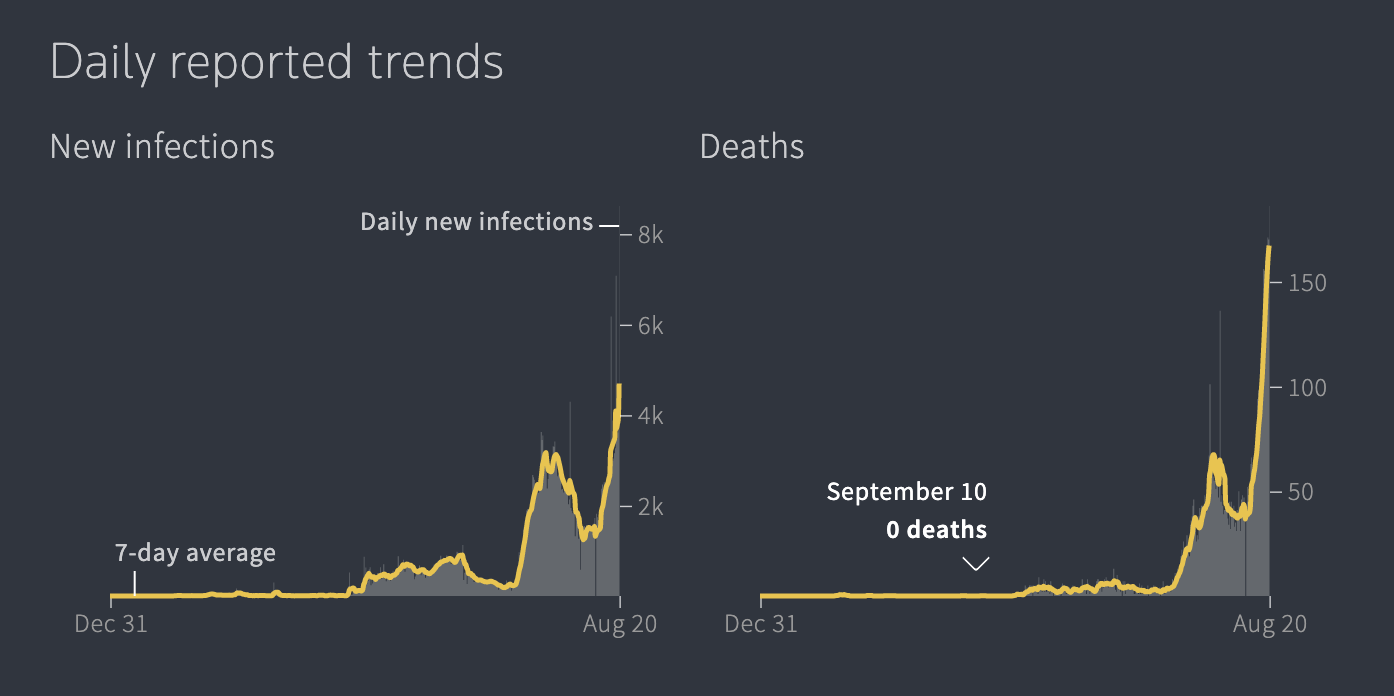
Photo credits - Reuters
Last week World Health Organisation officials called for a four-week lockdown to avert the deaths of 18,000 people by January. The leaders of ten political parties wrote a letter to the president calling for a three-week lockdown emphasising the fear that many citizens were living with and the need to lighten the load on hospitals. Sri Lanka's Medical Association has called for the minimum of a two-week lockdown. Amnesty International has raised concerns over Sri Lanka's response to the pandemic highlighting that public health officials have been effectively silenced for .“criticising health policies”.
Following the government's repeated refusal to enter a lockdown many Sri Lanka's entered a self-imposed lockdown out of concern for their own safety and did not receive support from the government. Sri Lanka’s Media Minister, Keheliya Rambukwella, had repeatedly denied the need for a lockdown claiming that that would only be used as a “last resort, but we are not there yet”. Similarly, Sri Lanka’s High Commissioner to the UK, Saroja Sirisena, claimed Sri Lanka’s healthcare response was “phenomenal” and expressed optimism that Sri Lanka would make it off the UK’s red list from September.
New variants
However, medical experts warn the newly introduced lockdown may be too late. The Government Medical Officers’ Association (GMOA) stated that the most dangerous threat Sri Lanka may face is “the potential for an emergence new severe COVID virus strain by the end of 2021, that would bypass the immunity created by the current vaccination programme.”
According to State Minister Jayasumana, three mutations of the Delta variant have been detected in Colombo. He identified the mutations as SA 222 – V, SA 701-S and SA 1078-S, which may have caused the rapid rise of covid cases.
GMOA Secretary Dr. Shenal Fernando highlighted the need for Sri Lanka to provide a third dose of the Covid vaccine to keep citizens safe from the Covid variant.
Yet only “about 38.8% of the country’s population has received 2 doses,” stated Reuters. In addition, “at Sri Lanka’s current rate of vaccination, it would take an additional 14 days to administer enough doses for another 10% of the population,” stated Reuters.
Increasing arrests
Sri Lanka's authorities have responded to the pandemic by cracking down on its citizenry with an increasing number of arrests for allegedly violating COVID regulations. Earlier this week, the Sri Lanka police arrested a total of 456 people within 48 hours. A total of 55,402 people have been arrested since quarantine regulations were issued in October last year.
It comes as Human Rights Watch raises concerns that the pandemic is being exploited to overlook police abuses which include arbitrary detentions, torture, and extrajudicial killings.