
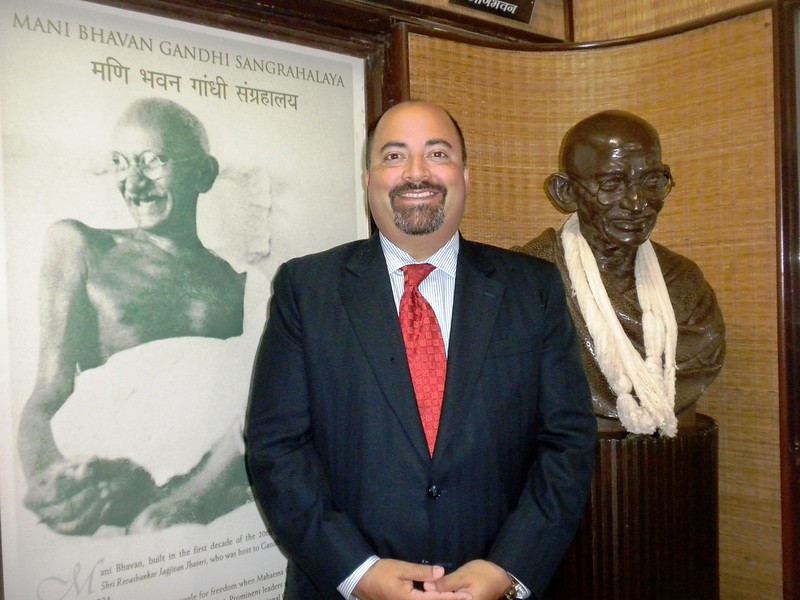
(Photo provided by US State Department)
US President Joe Biden has appointed former US Ambassador to Sri Lanka and the Maldives, Atul Keshap, as the country’s Charge’d Affairs in Delhi to replace Daniel Smith, who is retiring.
Keshap is a seasoned diplomat having served for close to three decades in posts in India, Morocco, Guinea, and as United States Ambassador to Sri Lanka and the Maldives from August 2015 to July 2018, during the Sirisena administration.
His appointment follows the nomination of Julie Chung to his previous post.
Read more here: US nominee ambassador to Sri Lanka is critical of Chinese influence
Record on Sri Lanka
 Photograph: @Uthayashalin
Prior to entering into office, Keshap had noted Sri Lanka’s failure to make meaningful reforms on “issues relating to federalism” and warned that the country’s refusal to engage with an international inquiry placed it in “very select company with North Korea and Iran and Syria and other notorious human rights violators”.
"Five years after the war ended. I am sorry to say that there seems to have been a deterioration of respect for human rights in this country, in the north, in the south, all around," Mr Keshap said.
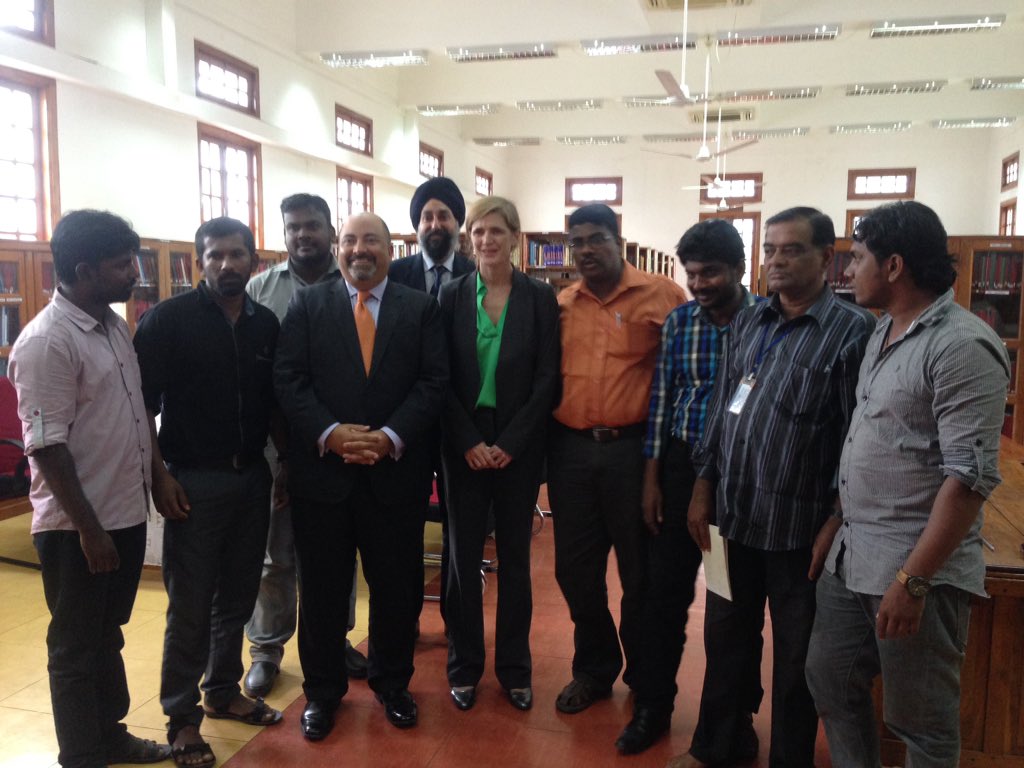
During his time as Ambassador, he would meet with Jaffna’s Press Club and claim that “a free press is the guardian of democracy and human rights”. He also met with the wife of the missing political cartoonist, Prageeth Eknaligoda, and expressed his sympathies. Eknaligoda was forcibly disappeared after he had uncovered evidence of the Sri Lankan army’s use of chemical weapons against the Tamil people.
Misplaced faith
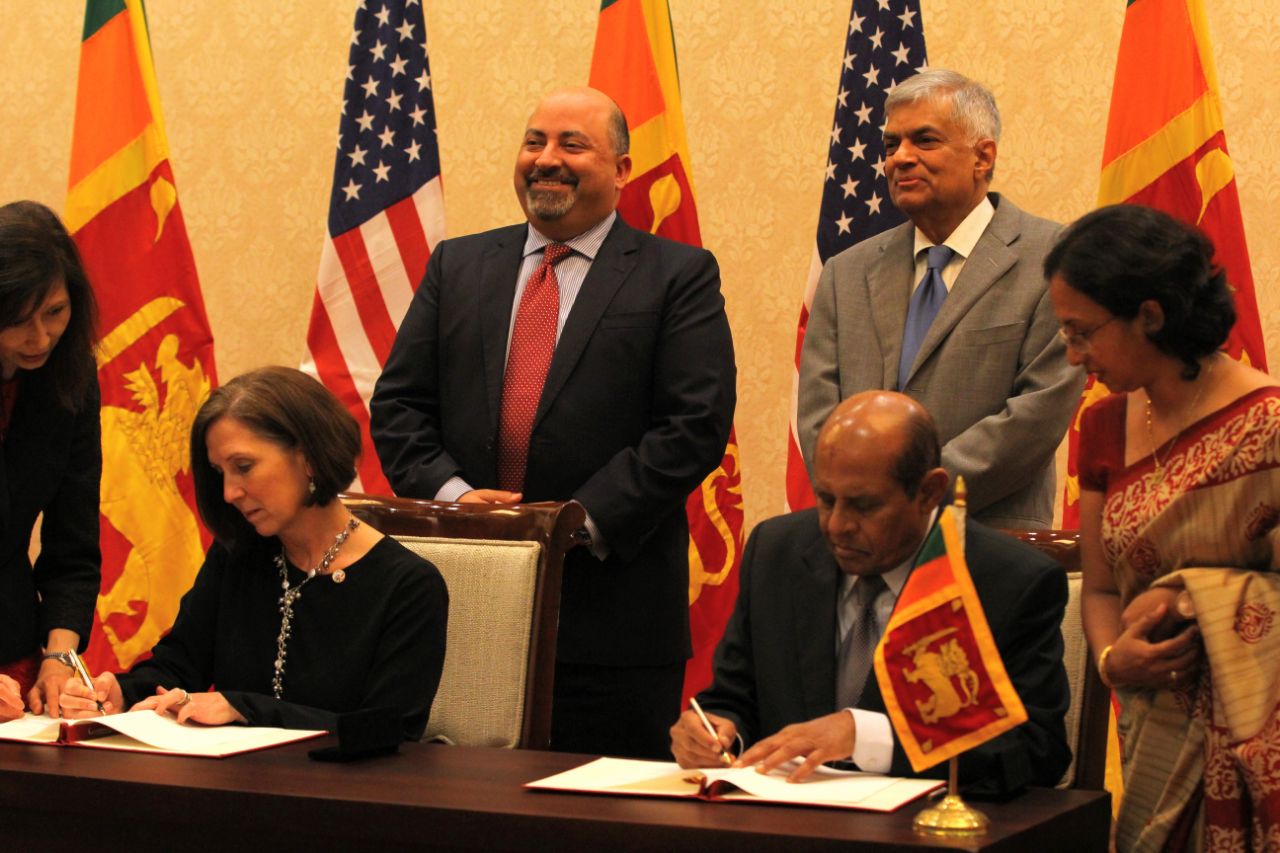
Despite the dire human rights conditions, Keshap had also praised the strengthening of military ties between the US and Sri Lanka. His term saw the reestablishment of a US - Sri Lanka Peace Corps program despite human rights concerns, including a 2007 peacekeeping operation in which over 100 Sri Lankan peacekeepers were identified as being a part of a child sex ring in Haiti.
It was Keshap’s belief that the election of Maithripala Sirisena had “marked a historic shift in the country’s political direction and made possible a new relationship with the United States”.
“Sri Lankan voters elected a new government built upon the pledge of good governance and national reconciliation and rejected an increasingly authoritarian rule by a government determined to erode democratic institutions”, he claimed.
Whilst expressing support for token reforms such as the establishment of the Office of Missing Persons, Tamil civil society activists remained sceptical throughout Sirisena’s tenure, given Sri Lanka’s long history of broken promises.
At the start of his appointment as Ambassador, over 40 Tamil civil society activists had called for the establishment of an international mechanism to address accountability stating:
“While FM Mangala Samaraweera promised credible mechanisms for truth and accountability abroad, the government promoted alleged war criminals Major General Jagath Dias as Army Chief of Staff, and Sarath Fonseka as Field Marshall,” the letter said.
The letter added:
“We cannot rebuild our lives without dealing with the past. We must know what happened, who was responsible, and how those persons will be brought to justice,” the letter said.
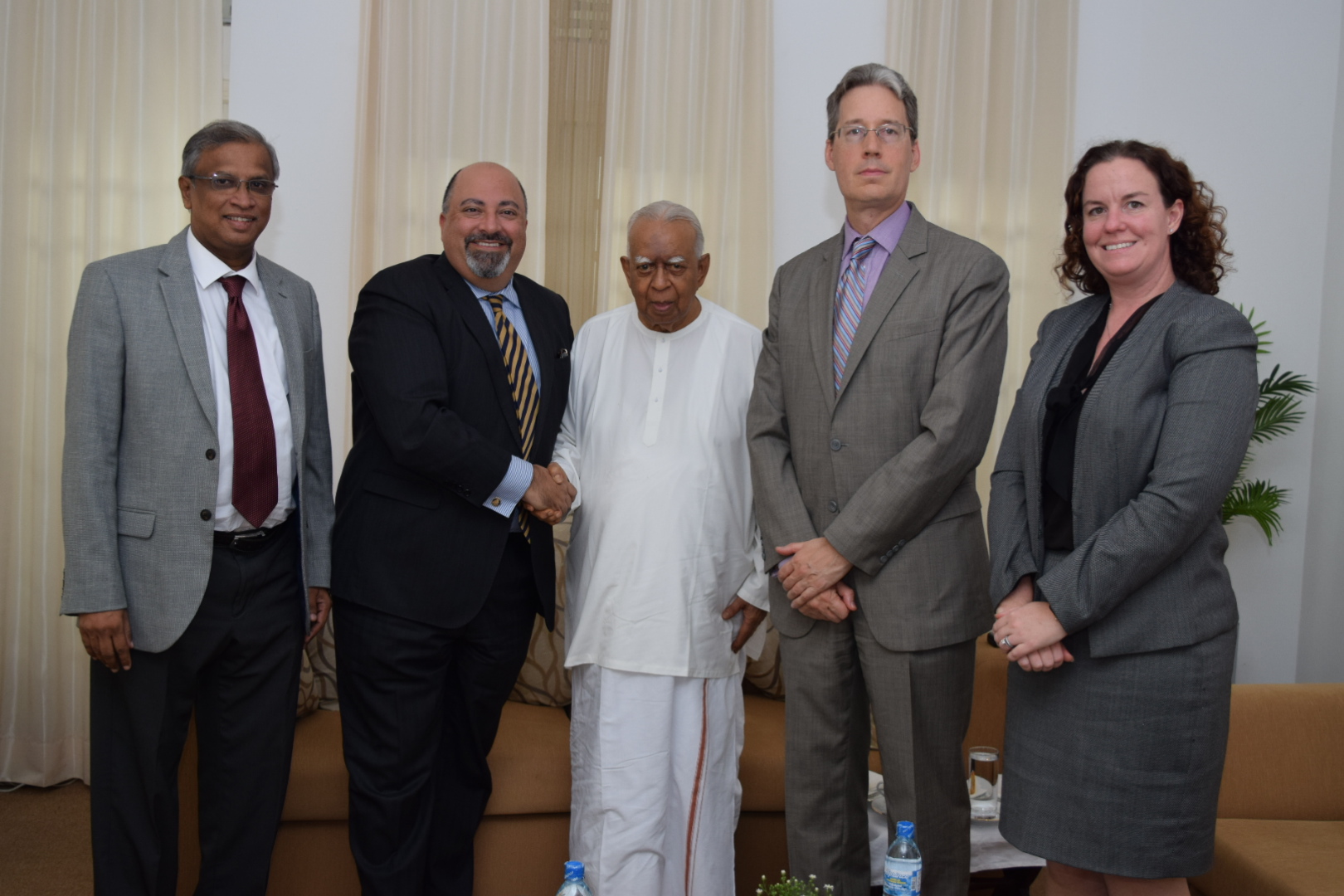
In 2018, prior to his resignation and replacement by Ambassador Teplitz in October 2018, Keshap had reaffirmed the US commitment to Tamil rights. Whilst meeting with the Tamil National Alliance (TNA) and former northern province's chief minister, C V Wigneswaran, he maintained that the UN Human Rights Council resolution on accountability and transitional justice would remain a basis for the relationship between Sri Lanka and the USA.
Gotabaya’s election
_0_0_0.jpg)
In November 2019, Gotabaya Rajapaksa was elected to the Presidency and subsequently withdrew from that very resolution.
Since coming into office, human rights in Sri Lanka has actively deteriorated with the appointment of senior military figures, with serious human rights accusations, appointed to oversee civilian posts; continued land grabs; and ongoing reports of torture and harassment targeted towards Tamils and Muslims.
He has established a presidential commission of inquiry into "political victimisation" to exonerate government and military officials implicated in human rights abuses and to prosecute those pursuing investigations against them. Amongst the high-profile cases, the commission is dealing with is the 2010 disappearance of a journalist, Prageeth Ekneligoda. Sri Lankan police had previously provided evidence implicating Gotabaya Rajapaksa in his disappearance.
In March of this year, the UN Human Rights Council passed a new resolution on Sri Lanka mandating the Office of the High Commissioner for Human Rights to "collect" as well as "consolidate, analyse and preserve” evidence that could be used in future war crimes trials.
The resolution also “expresses serious concern at the trends emerging over the past year, which represent a clear early warning sign of a deteriorating situation of human rights in Sri Lanka” and highlights “ongoing impunity and political obstruction of accountability for crimes and human rights violations”.
Read the full state department press release here.