
OPINION

Opinion

Latest news from and about the homeland

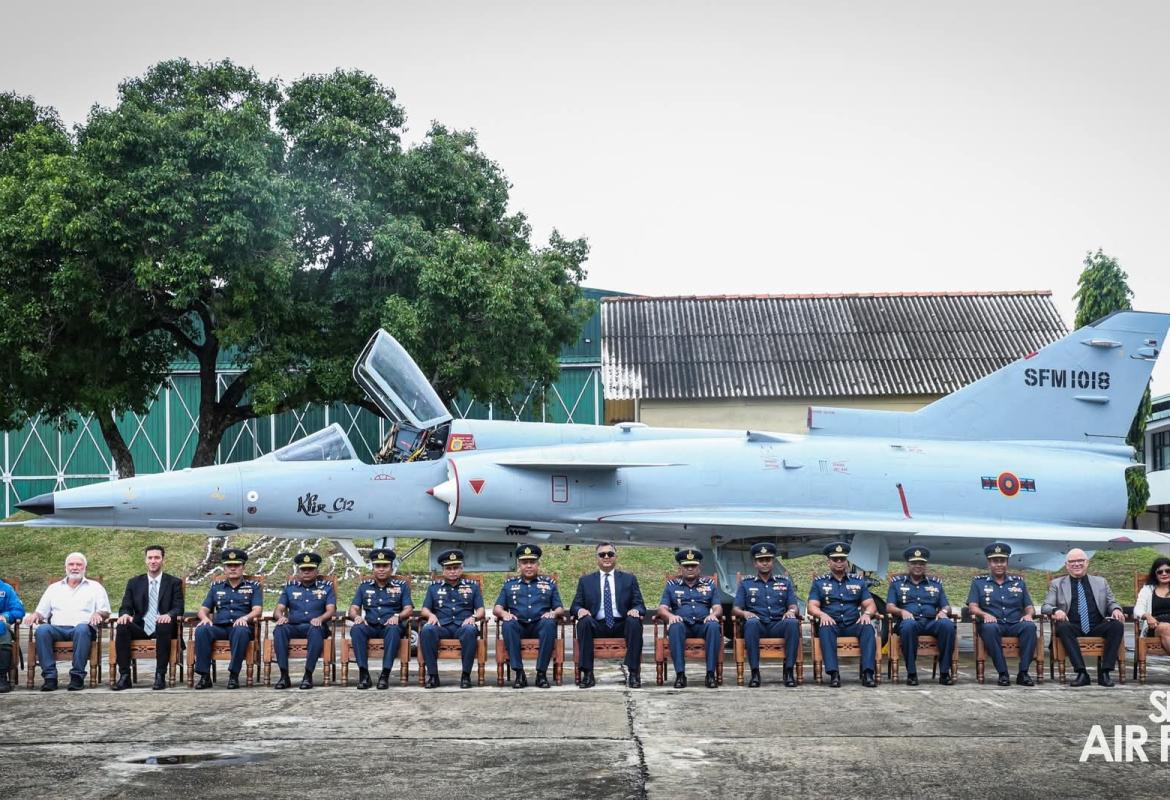
The Sri Lanka Air Force's upgraded Kfir C12 during its first test flight at SLAF Base Katunayake on 11 June. Photograph: Sri Lanka Air Force On 11 June, the Sri Lanka Air Force conducted the first test flight of an upgraded Kfir C12 fighter at its Katunayake base, presenting the flight as a military milestone. The aircraft is one of five being rebuilt — four C2 and C7 jets plus a TC2 trainer…

Why Commonwealth nations should boycott the Sri Lanka meeting - CTC

Writing in Embassy, Raj Thavaratnasingham, the president of the Canadian Tamil Congress, called on Commonwealth heads to boycott CHOGM next week. The full text of his opinion has been reproduced below: 

In 2009, the Canadian government refused to support a bid by Sri Lanka to host the next Commonwealth Heads of Government Meeting, as a way to pressure the government to allow relief workers access to refugee camps following the end of the Sri Lankan civil war. In 2011, Prime Minister Stephen Harper first mentioned his intent to boycott the biennial summit if the human rights situation in Sri Lanka did not improve.
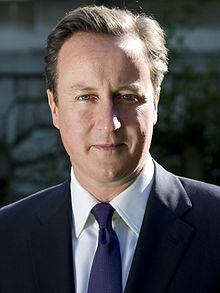
William Hague: a boycott of Sri Lanka would be wrong

Britain’s presence at the Commonwealth summit will achieve more than an empty chair would

Next week, the Prime Minister and I will travel to Sri Lanka for the latest Commonwealth Heads of Government Meeting. The 53 Commonwealth countries together represent two billion people – nearly a third of our world’s population – and some of its fastest-growing economies. Despite its significance, most discussion of the summit has centred on its location. In particular, because of Sri Lanka’s poor record on human rights, some people are calling for a British boycott.

Genocidaire on Yale’s campus'

Tasha Manoranjan, a graduate of Yale Law School and the founder and executive director for People for Equality and Relief in Lanka, has criticised the Yale School of Forestry and Environmental Studies' decision to allow Sri Lanka's ambassador to the UN to speak at the school, calling it 'contradictory to the values that are so actively inculcated in Yale students'.

See the full piece entitled 'Genocidaire on Yale’s campus' here.

Extracts have been reproduced below.
"This Thursday, one of the key officials implicated in the White Flag incident will be speaking at the Yale School of Forestry and Environmental Studies. Sri Lankan Ambassador Palitha Kohona is Sri Lanka’s permanent representative to the United Nations in N.Y., and is the subject of an investigation by the Australian Federal Police. There have also been requests from NGOs to the International Criminal Court that Kohona’s involvement in these extrajudicial killings be investigated."

"Kohona is the official representative of an authoritarian and oppressive regime. Yale is disturbingly granting him a platform to whitewash Sri Lanka’s genocide against Tamils on the island and normalize Sri Lanka’s role within the international community."

Commonwealth complicit in Sri Lanka's rehabilitation - Jonathan Miller

Writing in the Radio Times Point of View column, Channel 4 correspondent Jonathan Miller compares reactions to Sri Lanka’s war crimes with the way Syria’s Assad regime is perceived. See Miller’s blog for a version of the article. Extracts reproduced below.

Sri Lanka should be condemned, not acclaimed'

Writing in The Independent, author and practising English barrister, Sadakat Kadri outlined the need to condemn Sri Lanka.

Full opinion reproduced below.

Forgotten heroes of the Eelam war'

Writing an opinion about ‘Forgotten heroes of the Eelam war’  for the Weekend Leader, political researcher and member of Tamils Against Genocide (TAG), Sinthujan Varatharajah, outlined the reasons behind the organisation’s forthcoming report, “Silencing the Press: An analysis of Violence against the Media in Sri Lanka.”

Sinthujan Varatharajah, works as a London based researcher at Euro-Islam.info and teaching assistant at the University College London (UCL) Political Geography Department.

Aung San Suu Kyi: falling from grace'

See below for Channel 4's Paul Mason on Burmese opposition leader Aung San Su Kyi:

As political heroes go, few rank higher that Burmese opposition leader, Aung San Suu Kyi. Most people know her as a modern-day saint – the diminutive democrat who defied Burma’s ruthless military leaders. Yet an increasing number are beginning to question Ms Suu Kyi’s judgement.

It is time David Cameron woke up' - The Times

British Prime Minister David Cameron should immediately call to host the upcoming Commonwealth Heads Of Government Meeting in London, rather than Sri Lanka, wrote Rosemary Righter, an associate editor for The Times.

Righter, the author of 'Utopia Lost: the United Nations and World Order' also applauded Canadian Prime Minister Stephen Harper's decision as 'a display of leadership' stating that he was 'riding to the rescue of the Commonwealth'.

She went on to call upon Cameron to  move CHOGM away from Colombo, adding it was 'hardly beyond Britain to put on this show at short notice'.

‘Media repression and Tamils’ – Tamils Against Genocide

In a preview of a report analysing media violence in Sri Lanka, Tamils Against Genocide (TAG) has determined that the Sri Lankan “state repression of the media mirrors the state’s wider ethno-chauvinist policies”, placing Tamil journalists at a greater risk of violence than their Sinhalese counterparts.
 
Examining data from, Journalists for Democracy (JDS), TAG found that of all the reported murdered or disappeared journalists listed by JDS since 2004, 37 are media workers of ethnic Tamil origin while 4 are ethnic Sinhalese and 2 Sri Lankan Muslims.

The advocacy group went on to observe that approximately 75 per cent have taken place in the majority Tamil-speaking regions of the island.

Extracts of their piece have been reproduced below. See the full piece here.

"Sri Lanka has gained a reputation as one of the most dangerous countries in the world for journalists alongside Afghanistan, Somalia, Eritrea and North Korea."
 
"Yet considering that much of Sri Lanka’s post-independence period has been entrenched in ethnic violence, the central question of race has been absent in the analysis of media attacks."

"Indeed, often ethnicities of attacked media workers remain unspecified in the reporting of human rights and news organisations. With the erosion of ethnic labels in the reporting of violence against media personnel, some core reasons for the Sri Lankan states repression of media personnel elude us."