
Features

Features

Latest news from and about the homeland

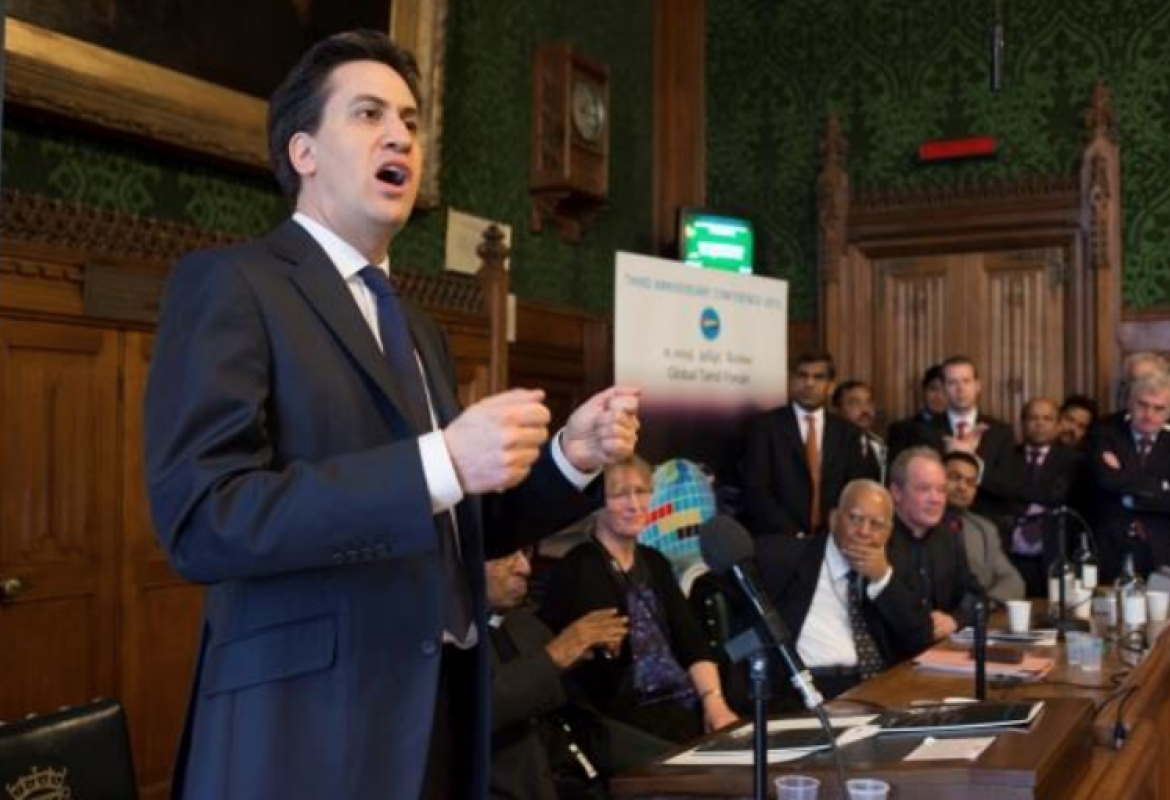
Miliband speaking at British Tamil event at the Houses of Parliament in 2013. Ed Miliband, appointed Foreign Secretary on Monday in Prime Minister Andy Burnham's first cabinet reshuffle, arrives at the Foreign Office with a longer record on Tamil affairs than almost any of his predecessors. During his time as Labour leader between 2010 and 2015, Miliband issued statements marking Mullivaikkal…

British MPs turn up the heat on Sri Lanka

In a debate held Thursday in the British House of Commons, several British MPs once again called for a full international investigation into war crimes in Sri Lanka, stating that Britain must take the lead in pushing for accountability.

MPs from across the political spectrum united in expressing concern at the Sri Lankan government’s conduct since the end of the war.

Robert Halfon, MP for Harlow, stated,
“We must be clear about the fact that Sri Lanka is a rogue nation. It has carried out genocide against the Tamil people, and we must do all that we can to stop the persecution of the Tamils once and for all.”
He further elaborated that,
“We must make a distinction between murder and genocide—genocide is scientific, organised killing”.
Watch the full debate on the BBC below.


Siobhain Mcdonagh, MP for Mitcham and Morden also said,
Britain must take a brave and principled lead—just as we did in Kosovo and, with France, in Libya—and do all that it can to ensure that a full independent international investigation of war crimes takes place.
Those of us who believe in justice want the people responsible to be held to account, just as all of us would agree about Colonel Gaddafi, Radovan Karadzic and Charles Taylor.
We cannot allow the international community to slip back to the cosy days of 2009, when the UN disgracefully ignored calls for a war crimes investigation, or when the Secretary-General spoke of Sri Lanka’s ‘tremendous efforts’.”
Read the Hansard transcripts here.

Requested by MPs Lee Scott and Steve Baker, the debate tackled the issue of “Human Rights in the Indian Subcontinent”, looking in particular at human rights abuses in Kashmir and Sri Lanka.

Concluding the debate, Under-Secretary of State for Foreign and Commonwealth Affairs Alistair Burt said,
“The allegations of war crimes and other human rights violations committed by both sides in the military conflict are of great concern to us.

The UK has consistently made its position clear: Sri Lanka needs to address accountability through an independent, thorough and credible process that meets international standards and allows the people of Sri Lanka to move towards reconciliation and lasting peace and security.”
Excerpts from the debate have been reproduced below.

US warned Sri Lanka against offensive on safe zones

Leaked US embassy cables reveal how then Ambassador Robert Blake warned Sri Lanka that mass civilian civilian deaths would ensue, if its military stormed the government-declared safe zone.

A March 2009  cable, detailing a meeting with Sri Lankan Foreign Minister Bogollagama, said:

“Ambassador recalled continuing reports he has heard that the military intends to take the safe zone by force and told the Foreign Minister if the government did so thousands, perhaps tens of thousands, could be killed.

If such casualties occurred the government would be accused of war crimes and its actions would diminish Congressional and public support for future US assistance to Sri Lanka.”

Sri Lanka warned

Blake, now US Assistant Secretary of State for South Asia, went on to urge Sri Lanka to think “very very carefully” on the next steps to be taken after the military surrounded the government-declared safe zone.

Thereafter, Sri Lanka launched a massive air, sea and ground offensive, escalating the bombardment of civilians.

The following month, in another
meeting with Bogollagama, Blake said that,

“comparisons are already being made to what transpired in Rwanda where the international community did not do enough to prevent a catastrophe.

Blake added that if they pursued the military option then Sri Lanka could expect “escalating international criticisms.”

“The Ambassador said such actions could include suspension of aid to Sri Lanka, closer scrutiny of IMF lending, possible war crimes investigations, and perhaps other actions.

2010 elections and the kingmaker who never was

Leaked US embassy cables, created towards the end of 2009, provide an intriguing insight into Tamil National Alliance (TNA) leader R. Sampanthan's thoughts on then upcoming presidential elections. 

According to a leaked cable dated December 2009, Sampanthan, convinced, despite the widespread Sinhala triumphalism that the Tamil vote still had considerable value, informed US officials that "the best scenario for the Tamil community would be to extract concessions from the presidential candidates".

Moreover, he hoped that the international and domestic communities could "hold the candidates to their promises after the election."

The two main candidates were the Sinhala chauvunists, Mahinda Rajapaksa, the incumbent of the SLFP, and the former Army chief, Sarath Fonseka, backed by the other two main Sinhala parties, the UNP and JVP. 

Seven months after the mass-killings of 40,000 Tamil civilians supervised by the Rajapakse-Fonseko duo, Sampanthan is quoted as asserting he was "looking for the manner in which each candidate would make promises to the Tamil community" before deciding which candidate to endorse.

Gestures Sampanthan considered desirable from the two included a "public declaration" or at a minimum "campaign promises".

According to the cable, "Sampanthan divulged that many within the Tamil community had asked him to run as an independent candidate, but he assessed that it made no sense for him to win "a couple of hundred thousand votes and lose."

Of those reported missing ...

File photo: An international ceasefire monitor of the Sri Lankan Monitoring Mission (SLMM) examines two bodies dumped by the roadside in then government controlled Vavuniya town on 13 Oct 2006. Apart from thousands of such extra-judicial killings by Sri Lanka's military, tens of thousands more people have vanished after being taken into custody. Click photo for details. Photo TamilNet.

Amnesty on Sri Lanka's LLRC

Amnesty International has released a new report criticising Sri Lanka's Lessons Learnt and Reconciliation Commission as "flawed at every level".

The report went on to urge the UN to establish a full international independent investigation into war crimes.


Sam Zarifi, Amnesty's Asia Pacific Director said,
"The Sri Lankan government has, for almost two years, used the LLRC as its trump card in lobbying against an independent international investigation.
"Officials described it as a credible accountability mechanism, able to deliver justice and promote reconciliation. In reality it's flawed at every level: in mandate, composition and practice."
In a 69-page report, the human rights group has said,
"Amnesty International urges the international community not to be deceived that the Lessons Learnt and Reconciliation Commission -- the latest in a long line of failed domestic mechanisms in Sri Lanka -- will deliver justice, truth and reparations to the tens of thousands of victims of war crimes, crimes against humanity and other crimes committed during the conflict by both sides, particularly during its last bloody few months,"
Entitled “When Will They Get Justice?” the report called on the UN to establish a credible international, independent investigation into war crimes, calling it “crucial” to “protest the global principle of accountability”.
"All U.N. member states should fulfill their shared responsibility to investigate and prosecute persons suspected of responsibility for war crimes and crimes against humanity in Sri Lanka by exercising universal jurisdiction."

Yolanda Foster of Amnesty International said,

We’re publishing this report now as a wake up call to UN member states that they must act on the … credible evidence of very serious crimes that happened at the end of the war and (the UN) recommended an independent international investigation”.

A previous UN panel report also called for an independent international investigation to take place on Sri Lanka's war crimes.


Amnesty's report comes amid increasing pressure on Sri Lanka, as the UN Human Rights Council is expected take up the issue in three-week meeting in Geneva starting Monday.

US watched shelling of civilians hoping it would cease

Puthukurippu hospital was shelled repeatedly by Sri Lankan forces in the final months of the war. The red crosses are clearly marked on the roofs and were visible to circling Sri Lankan drones guiding the shelling. Circles mark some of the shell impacts. Image from March 6, 2009.

Libya and China’s pragmatism

Despite an attributed commitment to ‘non-interference’ in other countries, China is now well recognised for its pragmatism when it comes to international affairs. Libya is a case in point.

China had substantive investments in Libya and good relations with Muammar Gaddafi’s regime when the rebellion against it began this year.

Nonetheless, amid international outrage at the regime’s attacks on civilians, China stood aside at the UN Security Council vote in February on resolution 1973.

The resolution also imposed an arms embargo on Libya.

NATO adopted resolution 1973 as the mandate for its military intervention in Libya. However China also stridently criticised the NATO air campaign against Gaddafi’s forces.

As the opposition showed itself to be a credible challenge to the regime, Beijing began reaching out.

In early June the regime’s Foreign Minister Abdelati al-Obeidi was welcomed to Beijing. Barely two weeks later, so was the opposition’s top foreign affairs official, Mahmud Jibril.

On June 22, China recognized the opposition National Transitional Council (NTC) as "an important dialogue partner."

At the same time, Foreign Minister Yang Jiechi said:

"China is not seeking any private interest on the Libyan issue. China believes the Libyan issue is essentially Libyan internal issue."

Stressing "the future of Libya should be left to be decided by Libyan people," he urged the two sides in the Libyan conflicts to "truly give peace a chance," saying "this will work for the fundamental interests of the Libyan people."

However, as recently as late July, despite the UN arms embargo, Chinese arms firms were discussing weapons sales worth $200 million to the regime’s beleaguered forces. They include pistols, missiles and rocket launchers.

See The Telegraph’s report here.

Of two African powers …

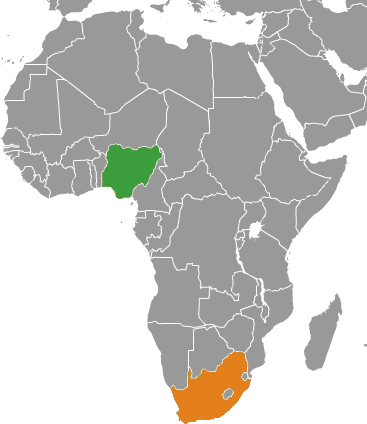
Whilst South Africa came into unexpected and ungainly confrontation with Western states over Libya this week, the other African power, Nigeria, has deftly come off the sidelines and joined the international action.

Whilst South Africa is baulking at recognising the rebels’ National Transitional Council (NTC) as Libya’s authority, Nigeria moved swiftly to do so on Tuesday – just as the rebels overran Gaddafi’s base-complex in Tripoli.

Rahul Gandhi: anti-corruption campaign undermines democracy

Rahul Gandhi, the scion of India's Nehru-Gandhi political dynasty and widely seen as a prime minister-in-waiting, said Friday that a popular anti-corruption campaign spearheaded by activist Anna Hazare was “a dangerous precedent for a democracy.”

See  AFP's report here.

Hazare’s fast for a strong anti-corruption law is in its eleventh day and millions across India have rallied to the cause in huge protests.

It was Gandhi's first public statement on an issue that has snowballed into a full-blown crisis for the government.

"A process divorced from the machinery of an elected government, that seeks to undo checks and balances created to protect the supremacy of parliament, sets a dangerous precedent for our democracy," he said.

Gandhi also said he had "serious doubts" about the idea that a single piece of legislation would eradicate the corruption that permeates all levels of Indian society.

The dispute, however, is over the terms of an anti-corruption law presently before parliament that would create a new ombudsman.

The BBC summarised some of the differences thus:

Mr Hazare says ombudsman should have power to investigate prime minister and senior judges; the government refuses.

Mr Hazare wants the ombudsman to be able to investigate MPs accused of taking bribes to vote or ask questions in parliament; the government says such probes should be carried out by MPs.

In recent days, Prime Minister Manmohan Singh, who sat beside Gandhi as he spoke, has sought to reach out to Hazare with a series of conciliatory gestures aimed at bringing the hunger strike to an end.

But at the beginning of his campaign, the government had taken a tough line, initially arresting Hazare and several thousand of his supporters in a move widely criticised as repressive and short-sighted.

Meanwhile, three top Indian industrialists have expressed concern over the impact worsening corruption has on their businesses.