Tamil Affairs

Tamil News

Latest news from and about the homeland

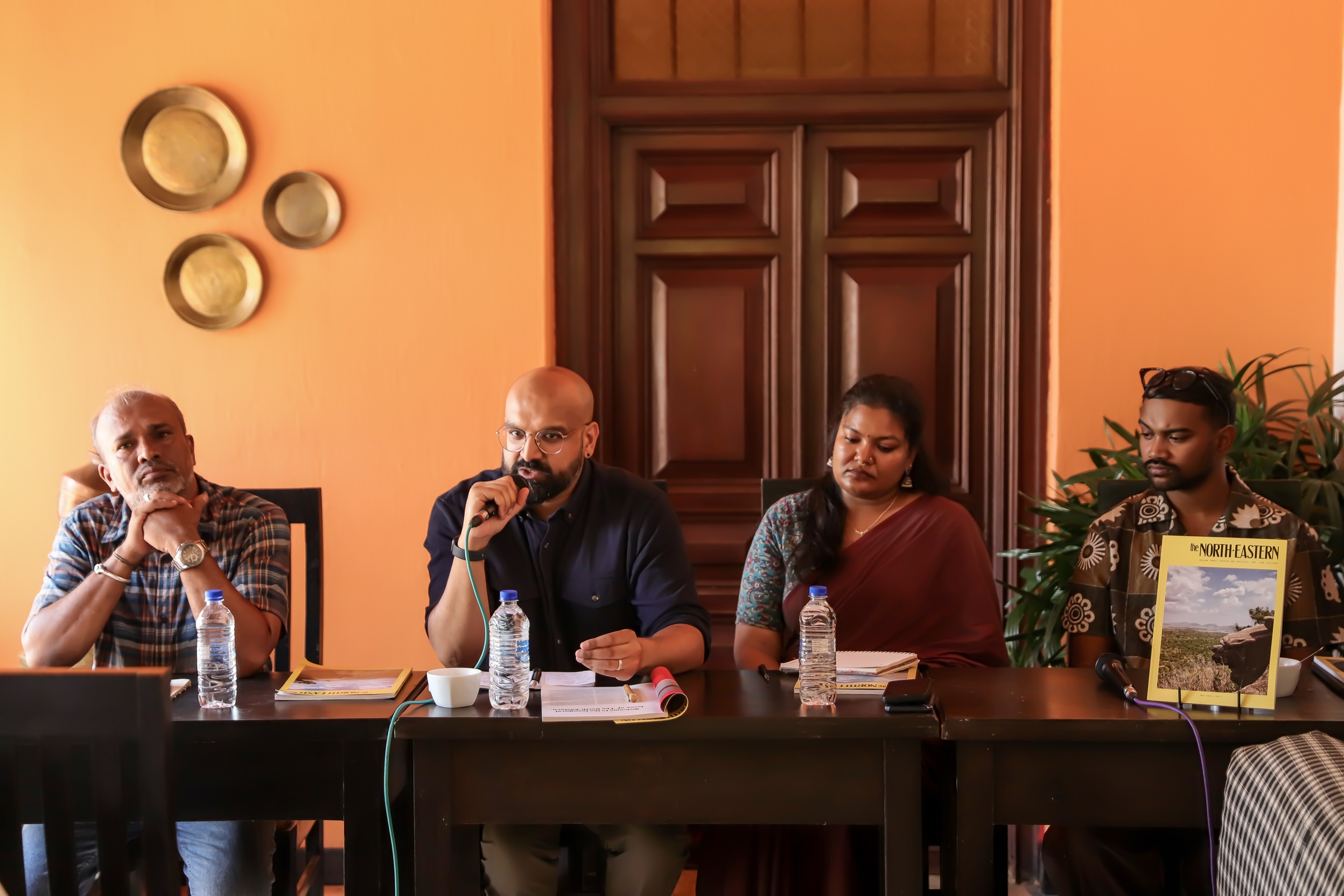
A new English-language print magazine has been launched in the Tamil homeland, with events in Jaffna and Batticaloa timed to coincide with the 50th anniversary of the Vaddukoddai Resolution. The North-Eastern, a quarterly covering politics, arts and culture relevant to Eelam Tamils, was published last month. Both launch events drew lively exchanges between attendees and panellists, among them…

Dias faces arrest if he returns

Major General Jagath Dias, Sri Lanka’s Deputy Ambassador to Germany and Switzerland, will face a criminal investigation if he were to return to Swiss territory due to his “personal involvement” in alleged war crimes.

Takers, keepers

“When asked why can't [Tamil] refugees go back to the villages that they originally came from, the government said that it is not possible because those areas are now special economic development areas, uncleared minefields or on land the military wants to keep.”

ANI news agency. See the report here.

Lies and landlords

While Channel 4’s investigative documentary Sri Lanka’s Killing Fields is yet to be shown at the UN despite numerous requests, the Sri Lankan Government’s counter-documentary was granted permission to be screened earlier this month.

The decision to air the documentary “Lies Agreed Upon” (and not Sri Lanka’s Killing Fields) was made by the UN Correspondent’s Association President, Giampaolo Pioli, who also covered the event.

Tamil lawyers protest against police impunity

Tamil lawyers in Jaffna reportedly boycotted the Court of Law, on Thursday, in protest against the arrest and brutal assault of a Tamil civilian by the Sri Lankan police.

Describing the conduct of the seven policemen involved as an "affront to the authority, dignity and the sanctity of the Courts of Law", they added that such conduct "constitutes a brazen and blatant violation of all norms of behaviour that are expected of the guardians of the law."

India shields Devananda from arrest

India's External Affairs Ministry reportedly informed the Madras High Court that Douglas Devananda, as a cabinet minister of Sri Lanka, could not be arrested as he enjoys diplomatic immunity, warning that any attempt to arrest Devananda would sour relations between Sri Lanka and India.

Devanda, leader of the pro-government paramilitary group-cum-political party, EPDP, is wanted in a 1986 shootout and murder case in Chennai, Tamil Nadu.

He was also been accused of kidnapping a boy in 1988. In 1989, he was arrested and later let out on bail.

Under Secretary in the Ministry of External Affairs, Kaghal Matha Praphullachandra Sharma, also stated that India did not have an extradition treaty with Sri Lanka.

However, according to a report in the The Hindu, under sub-section (1) of Section 3 of the Extradition Act, there was an extradition arrangement between the governments with effect from September 1, 1978.

Leaked US embassy cables, sent in June 2009, describe Devananda to have a "violent and even criminal history", showing "few signs of reforming".  

Australian campaign for Sri Lanka’s Commonwealth suspension

A group of Australian academics, politicians and human rights campaigners is calling for Sri Lanka's suspension from the Councils of the Commonwealth until the government agrees to cooperate with an international investigation into war crimes.

Commonwealth nations have to take [their institution] seriously or otherwise it just becomes another gentleman's club where everyone slaps everyone on the back and says nice things.

JVP suffers major split' - The Island

The Janata Vimukthi Peramuna (JVP) has suffered a major split and a new party has been formed according to reports in The Island.

The dissidents led by Dimuthu Atygala, Pugbudu Jagoda and Waruna Rajapakse are said to have walked out a Committee meeting on Monday after announcing the breakaway.

The breakaway faction, who claim to have the support of more than half of the JVP’s 24-member committee, are expected to register a new political party soon.

Mahinda Economics

Sri Lanka’s trade, currency and debt quandary

The International Monetary Fund suspended its programme of supplying Colombo with credit in exchange for reform on Monday after Sri Lanka refused to follow advice and abandon a policy of actively intervening in foreign exchange markets to support the value of the Rupee.

Earlier this month Brian Aitken, the IMF’s head of mission in Colombo, warned that Sri Lanka’s policy of selling dollars to maintain the value of the rupee “does not seem to be in line with the fundamentals in the economy”’ and that the policy was rapidly depleting foreign currency reserves.

He pointed out that Colombo’s “non-borrowed reserves.. have steadily declined, reflecting foreign exchange sales by the central bank.”

British High Commissioner questions 'peace'

Speaking at an event held to mark International Day of Peace, John Rankin, the British High Commissioner to Sri Lanka, stressed that the absence of war does not necessarily equate to peace and that peace "means different things to different people.

Human Rights Groups urge Navi Pillai to fulfil responsibilities of UN Human Rights Council

Sixteen Human Rights organisations, including Amnesty International, FORUM-ASIA, Human Rights Watch, International Crisis Group and International Commission of Jurists undersigned a letter addressed  to the High Commissioner of the Human Rights Council, Navi Pillai, appealing for