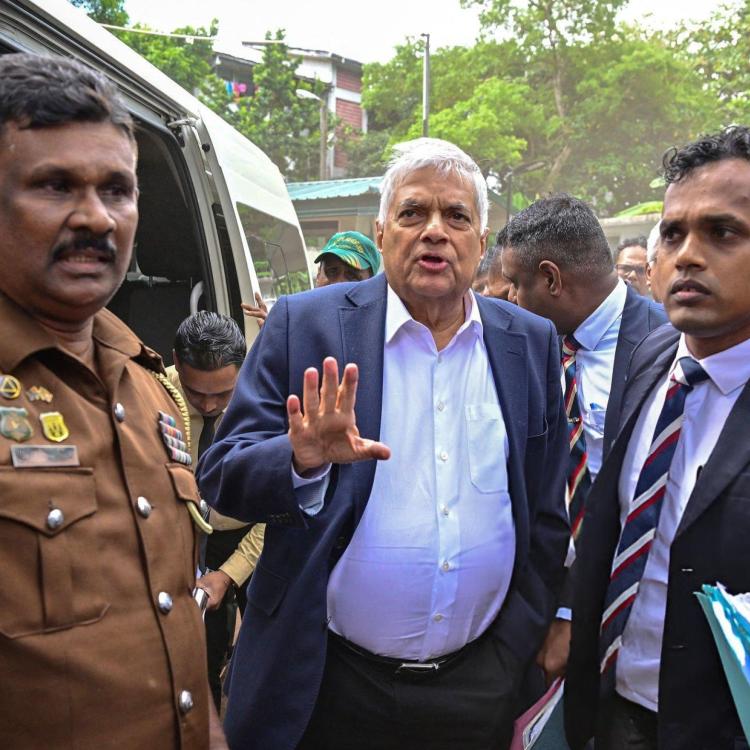
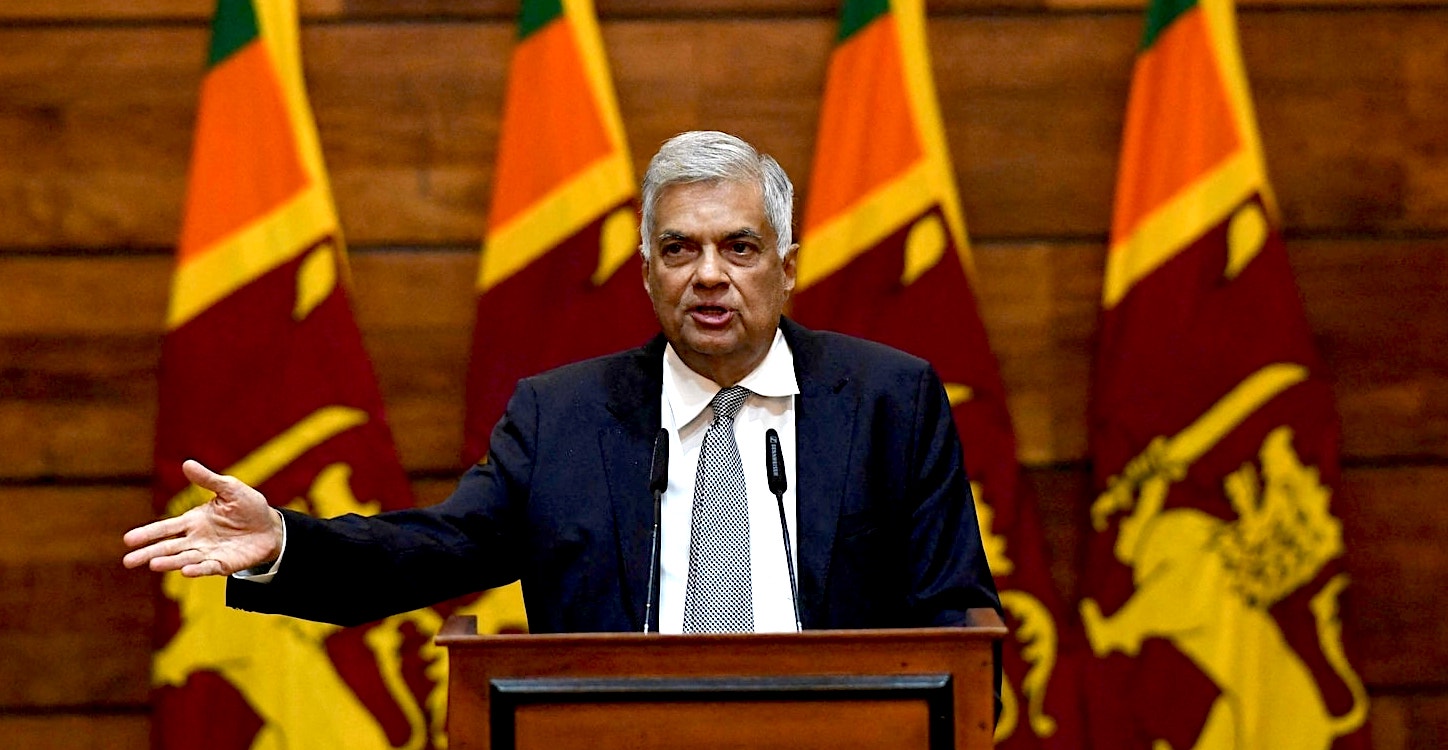
Ranil Wickremesinghe, Sri Lanka’s former President and leader of the United National Party, served as Prime Minister from 1993 to 1994, 2001 to 2004, 2015 to 2015, 2015 to 2018, and 2018 to 2019.
In the midst of the Aragayala protests of 2022, which saw the ousting of Gotabaya Rajapaksa, he was appointed Prime Minister and subsequent to Rajapaksa’s resignation, he assumed the presidency, despite not holding a single seat in Sri Lanka’s parliament.
He was in office from 21 July 2022 until 23 September 2024, after he failed to win re-election, finishing in third place in the presidential polls.
Why was he arrested?
The recent arrest is linked to allegations that Wickremesinghe misused state funds to cover expenses for a private visit to London during his presidency, where he attended a university graduation ceremony of his wife, Professor Maithree Wickremesinghe.
Investigators claim the London trip, which was incorporated into a wider overseas tour, did not include official engagements but was financed with government money. Earlier this month, Wickremesinghe’s former presidential secretary Saman Ekanayake and former private secretary Sandra Perera were questioned over their roles in arranging the visit.
Read more below:
CID probes Ranil Wickremesinghe over 16 million rupee trip to UK graduation ceremony
Wickremesinghe’s £1,000-a-day butler: Extravagant £40,000 trip to London revealed
A long political history
Wickremesinghe has a long history in Sri Lankan politics. He held his first government posts under the administration of his uncle J.R Jayewardene, where he served as Deputy Minister of Foreign Affairs and then Minister of Youth Affairs & Employment. It was under the Jayewardene regime that Tamils would suffer from horrific losses during the anti-Tamil Black July pogrom; thousands of Tamils were killed by Sinhala mobs backed by the then UNP government and state forces.
As Sri Lankan president, Ranil Wickremesinghe has been slammed by human rights critics who have noted a host of repressive legislations that he sought to implement to silence dissent as well as the crackdown on protests and memorialisations. The Office of the UN High Commissioner for Human Rights released a damning report detailing these issues at length as well as the intimidation and sexual violence perpetrated by Sri Lanka’s security forces against Tamils journalists and political activists.
An infamous Al Jazeera interview
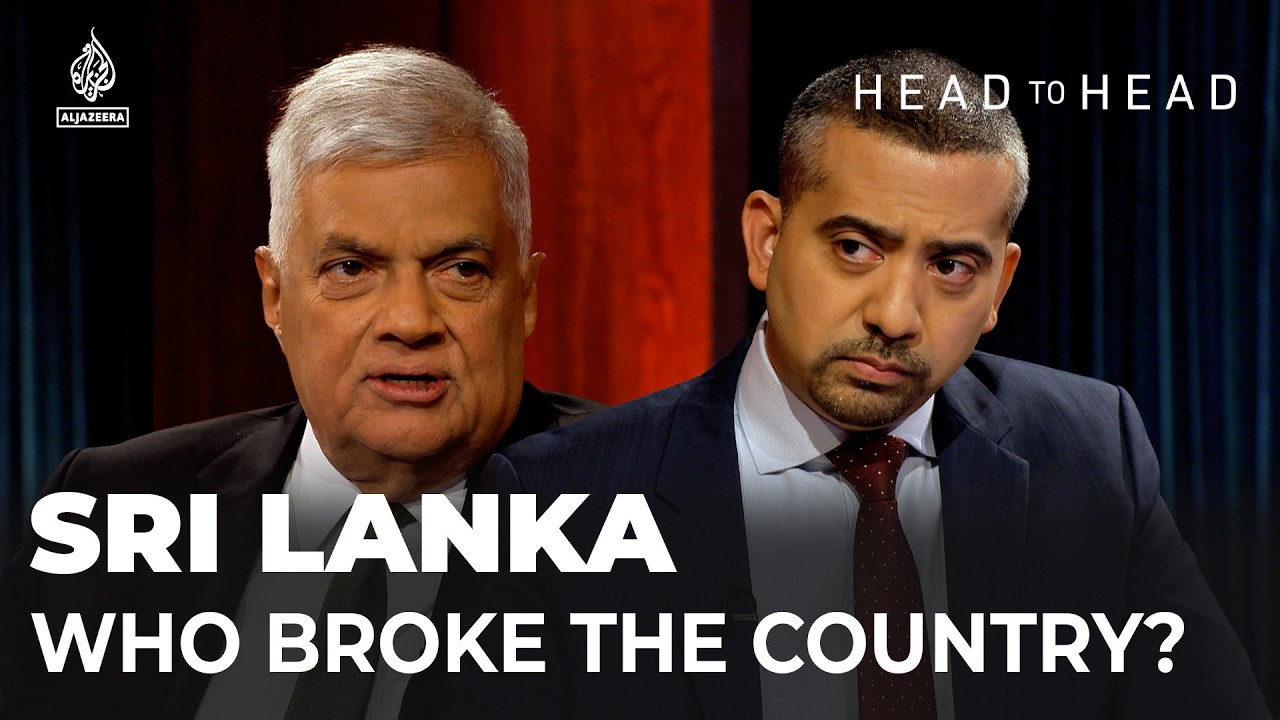
Earlier this year, Wickremesinghe made headlines once more after a disastrous interview on Al Jazeera English’s Head to Head, in which he floundered over questions on war crimes, enforced disappearances, and his defence of war criminals such as Shavendra Silva.
Wickremesinghe, who visibly struggled under scrutiny from Head to Head host Mehdi Hasan, has now claimed that the interview was unfairly edited and accused two members of the panel of having links to the LTTE, despite the fact that his main clashes were with Hasan himself.
He threatened to walk out several times during the interview, the first just eight minutes into the hour-long discussion, and repeatedly refused to answer questions with regards to accountability, including on his own role in alleged crimes.
Read more below:
Ranil Wickremesinghe blames ‘pro-LTTE’ panel as he flounders over Al Jazeera interview
The Batalanda Commission Report
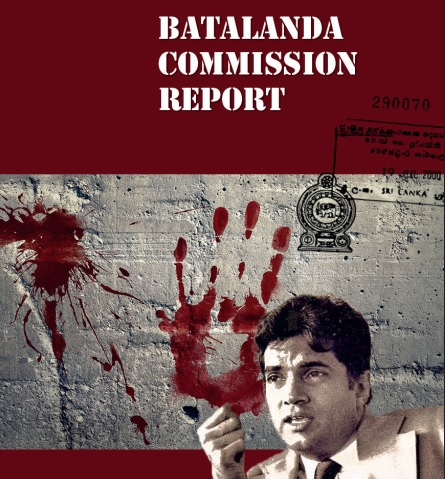
Following his Al Jazeera interview, the Sri Lankan government formally tabled the long-suppressed Batalanda Commission Report in Parliament, reigniting discussions on the alleged torture chambers and human rights violations that took place during the 1988–1990 period.
The Batalanda Commission was established in 1995 by then-Sri Lankan President Chandrika Bandaranaike Kumaratunga, with the task of investigating the illegal detention, torture, assassinations, and disappearances that took place at the infamous Batalanda Housing Scheme. The final report was handed over to Kumaratunga in 1998 and published as a sessional paper in 2000, but its recommendations were never implemented.
Wickremesinghe has been directly implicated in the Batalanda scandal, with the Commission stating that he had knowledge of the torture and unlawful detentions that took place.
During the commission hearings, several witnesses directly implicated Ranil Wickremesinghe, alleging that:
• He facilitated the creation of the illegal detention centre at Batalanda.
• He provided political cover for the security forces operating there.
• He personally visited the Batalanda site, where detainees were tortured and killed.
Despite mounting evidence, no legal action was taken against Wickremesinghe. The commission ultimately ruled that he bore “political responsibility” for Batalanda’s operations but did not recommend prosecution, allowing him to continue his political career.
When confronted with a government inquiry naming him as a “main architect” of securing the site by Mehdi Hasan, Wickremesinghe first denied the report’s existence, before backtracking and questioning its validity.
“Where is the report?” he remarked with his hands folded. “I deny all those allegations… where is that commission?”
“There is nothing to be found against me… I am telling you there is no report.”
Read more below:
Sri Lanka announces probe into Ranil Wickremesinghe – but ignores war crimes against Tamils
Sri Lanka’s cabinet to present Batalanda Commission Report to parliament
Sri Lankan government tables Batalanda commission report, Wickremesinghe to respond
Tamil Families of the Disappeared
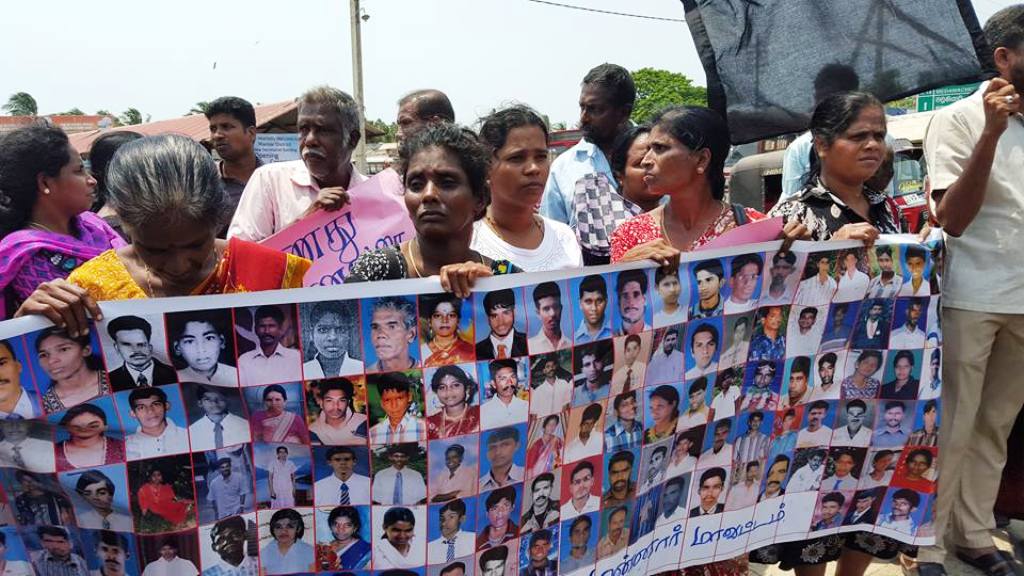
Wickremesinghe has also gained the ire of Tamils through his callous remarks towards Tamil Families of the Disappeared. In 2016, he triggered outrage as he twice claimed that the thousands of Tamils that surrendered during the final phase of the armed conflict or were forcibly disappeared Tamils were“most probably dead”.
He offered no explanation as to who killed them or why they had died but simply told Tamils in Kilinochchi that they should “forget the past and move forward”.
Tamils have criticised the Office of Missing Persons, which was established under the Sirisena administration, in which Wickremesinghe had served as Prime Minister, as a scam. In 2022, the UN High Commissioner highlighted that the OMP "has not been able to trace a single disappeared person or clarify the fate of the disappeared in meaningful ways".
The latest OHCHR report further details the intimidation and sexual violence suffered by activists supporting the Tamil Families of the Disappeared in pursuit of their loved ones.
Read more below:
Missing and disappeared persons most likely dead says Sri Lanka prime minister
Sri Lankan PM faces backlash after telling Tamils to ‘forget the past’
The missing are considered dead says Sri Lankan prime minister
Mannar disappeared families protest Ranil visit
Police block families of disappeared protesting in front of Ranil
Keppapulavu residents protest Ranil's visit
Defending the military and rejecting international accountability
Wickremesinghe has also consistently stated his opposition to any international accountability mechanism for violations of international humanitarian law, even claiming that his government’s ability to postpone UN resolutions “saved Mahinda Rajapaksa from the electric chair”. He also claimed to have saved members of the government from being hauled before the International Criminal Court.
"We will never accept an international war crimes tribunal," he told Sri Lanka's parliament in 2016. "I never approved the Rome Statute. Sovereignty lies with the people according to our Constitution."
He would reiterate how it was throughout his tenure that Sri Lanka “refused to sign the Rome Statute which established the ICC” and how he "has no desire to send soldiers to any court".
Alongside stating how he would “never betray the forces,” Wickremesinghe has close ties to those accused of mass atrocities.
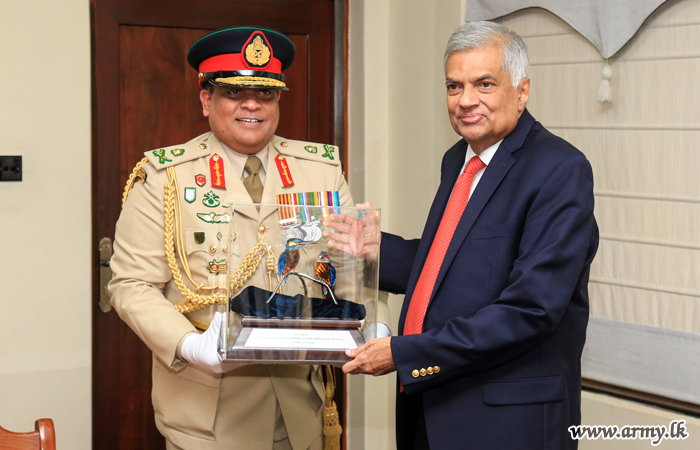
Speaking on Shavendra Silva, the current head of the Sri Lankan army who is barred from entry to the USA due to his role in the execution of Tamils, Wickremesinghe said, “I have no problem with Shavendra Silva. He is my friend, and he has helped me a lot.”
In 2018, Wickremesinghe appeared at a defence conference alongside Sri Lanka's chief of defence staff Admiral Ravindra Wijegunaratne, just a day after a Colombo court had ordered his arrest for allegedly helping the main suspect in the abduction and murder case of 11 Tamil youths evade arrest.
Read more below:
‘We will never accept an international war crimes tribunal’ – Sri Lankan prime minister
‘I saved Rajapaksa from the electric chair’ claims Ranil
‘I saved Sri Lanka from ICC’ says Ranil Wickremesinghe
‘South will look after the Southerners’ says Ranil
Ranil says 'govt has no desire to send soldiers to any court'
‘Why all this fuss?’ asks Ranil Wickremasinghe
No foreign involvement in war crimes probe - Ranil
Ranil claims to have ‘preserved Sri Lanka’s sovereignty’ at United Nations
A staunch Sinhala Buddhist
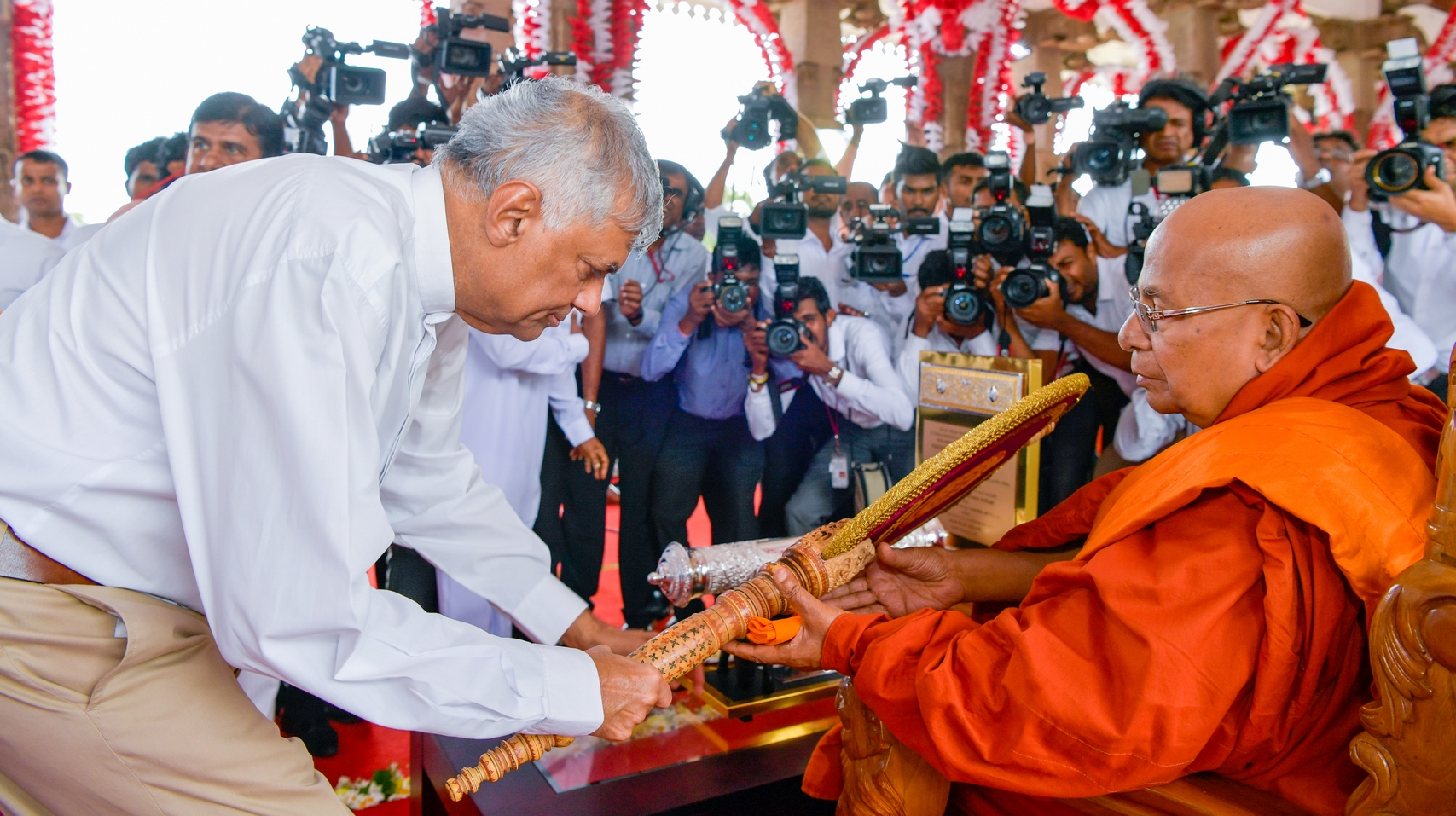
During his tenure as president, Wickremesinghe has consistently upheld the Sinhala Buddhist nature of the Sri Lankan state, pledging that any constitution for the island would ensure Buddhism continues to hold the “foremost” place and denying there would be any federal solution to the ethnic conflict.
Read more below:
New constitution drafted within 6th Amendment says Ranil
Ranil denies federal solution and pledges to uphold Buddhism in new constitution
Ranil assures monks of Buddhism's foremost place
Ranil claims to have ‘preserved Sri Lanka’s sovereignty’ at United Nations
Ranil pledges government will ‘do more work to protect Buddhism’
Responsibility of government to spread Buddhist message says Ranil
Easter Sunday attacks
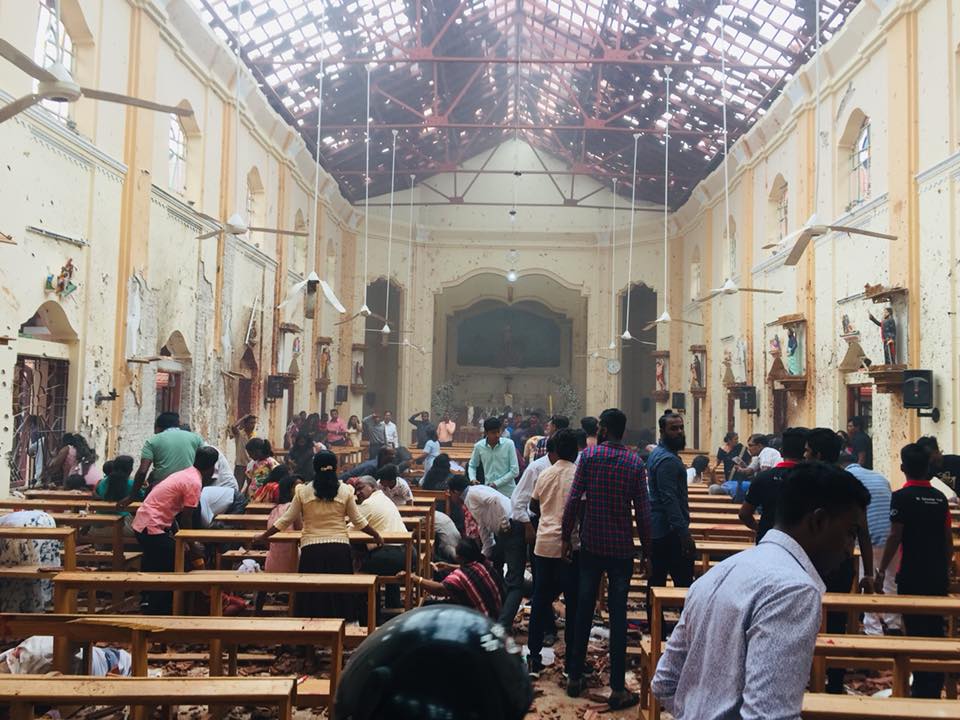
Wickremesinghe has faced a wave of criticism following the Easter Sunday bombings. He admitted that the Government of India had alerted Sri Lanka’s Police intelligence service of the Easter Sunday attacks hours prior to the incident however the police failed to act.
He also admitted the government's "failure" to ensure security which could have prevented the Easter Sunday bombings which killed over 250 people across the island.
Speaking to Sky News, Ranil said there had been a "breakdown in government machinery" with intelligence not being passed on to himself and other ministers
"If we had known the information and we had not acted then I would certainly say the government had to be held responsible and [should] leave office."
However, in an interview with Channel 4, Wickremesinghe evaded his responsibility as prime minister in ensuring security, and laid the blame at the feet of the president.
Read more:
Former Sri Lankan Prime Minister admits India provided alert for Easter Sunday attacks