Tamil Affairs

Tamil News

Latest news from and about the homeland

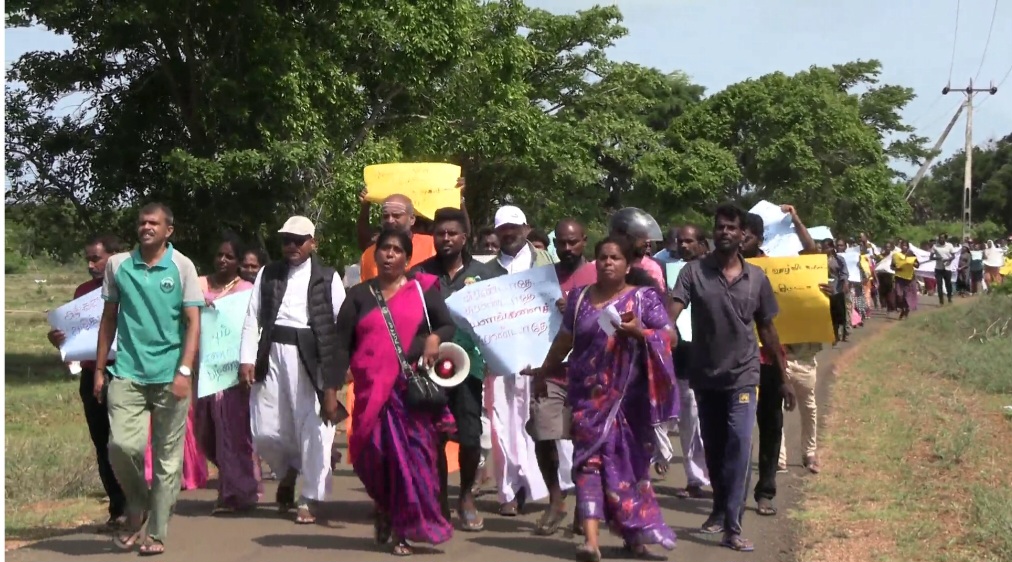
A protest march was held last month opposing limestone excavation, mineral sand mining and a proposed wind power project across the villages of Veravil, Valaipadu, Ponnaveli and Kiranchi, in the Poonakary Divisional Secretariat division of Kilinochchi. The demonstration was organised against plans to establish wind power stations and to carry out mineral sand and limestone extraction in the…

Civil society groups condemn Sri Lankan president’s comments

Sri Lankan President Maithripala Sirisena “appears to be indicating a withdrawal from the obligations” his government has committed to, said a statement signed by Tamil and sections of Sri Lankan civil society groups on Thursday.

The statement, which condemned Mr Sirisena’s recent comments, said the Sri Lankan government negotiated a consensus resolution passed at the 30th Session of the UN Human Rights Council (UNHRC) in October 2015, and “now appears to be backtracking from even these compromised commitments”.

“Of particular concern was his accusation, quite similar to that of his predecessor, that those who allege such things have an LTTE connection,” added the statement, endorsed by 144 groups and individuals.

The civil society organisations also noted that just days later Sri Lankan Prime Minister Ranil Wickremesinghe said his government would abide by commitments given in Geneva, stating:

“These contradictions between the President and the Prime Minister are however not new and have been a constant feature of the Government’s public communications about their commitments under the resolution ever since the resolution was passed”.
UK urged to pressure Sri Lankan president over UN resolution

The British government has been urged to ensure Sri Lankan President Maithripala Sirisena meets commitments agreed to under a UN Human Rights Council resolution passed last year, in a question raised in parliament today.

Wes Streeting, Member of Parliament for Ilford North and Vice Chair of the All Party Parliamentary Group for Tamils told parliament:

Sri Lanka's constitution: What's in it for Tamils?

Sinhala politicians are hell bent on denying Tamils federal power sharing, so that they can control Tamils through a Sinhala majority parliament writes JS Tissainayagam in the Asian correspondent.

Questioning the Sinhala leadership’s willingness to meet the minimum Tamil demands, the journalist formerly in exile, noted the new unity government’s rejection of a federalist set-up, stating,

“ The government has argued the process to draw up the new constitution would be inclusive and transparent where the views of all the 225 members of parliament would be consulted. But by rejecting even before the process has begun a key demand of the Tamils – federalism – it has made a mockery of the whole process.”

Noting further concern regarding the fact that any new constitution that did meet Tamils demands would have to receive a 2/3 majority in parliament to be passed, he said, 

“To reinforce it, his partners in the national unity government, the UPFA insisted that the new constitution to be drawn up would have to be put before the people at a referendum. While on the one hand it is very democratic to do so (neither the first nor second republican constitutions were formally approved by the people) there is very little doubt that the Sinhala majority will reject any federal arrangement with the Tamils and Muslims.”

Mr Tissainayagam concluded continued pressure on the Tamil political leadership was required to ensure it did not back down from its election promises in the face of a mounting threat from the Sinhala majority.

See full opinion below.

Sri Lanka cabinet spokesperson reiterates domestic accountability process

Sri Lanka’s Cabinet spokesperson reiterated that local judges and prosecutors are capable of conducting a domestic probe into alleged war crimes that meets international standards, reports Colombo Page.

Stressing that the process would be entirely local, Cabinet spokesperson Minister Rajitha Senaratne told a press meet in Colombo that a domestic probe would be set up by the end of next month, adding,

“We have more than enough specialists, experts and knowledgeable people in our country to solve our internal issues.”

Time for Justice in Sri Lanka' - NYT

In its editorial on Friday's print edition, the New York Times called for justice to be delivered for the killing of Tamil civilians promptly.

Stating that changes so far though welcome were "no substitute for justice", the editorial called for "troubling allegations of torture under Mr Sirisena's watch" to be addressed.

"Military leaders who oversaw the bloody operations that killed as many as 40,000 Tamil civilians in the final months of the war remain in command, and have even been promoted. A dangerous anti-Muslim campaign by Singhalese nationalists is threatening to further fray Sri Lanka’s ethnic fabric."

Tamil farmers honoured in Farmers' Festival

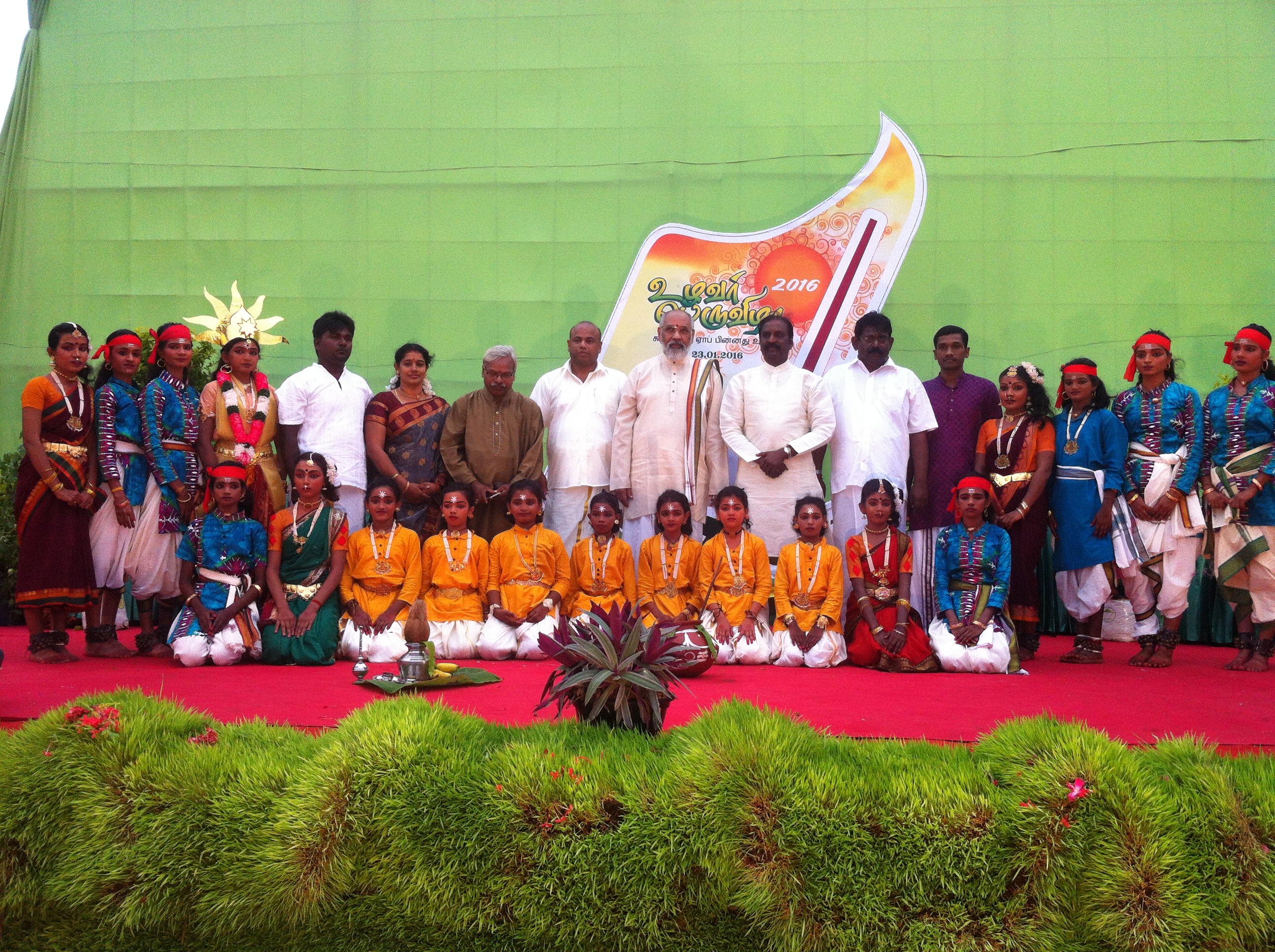
Farmers of the Northern Province were honoured with a Farmers Festival in Mullaitivu on Saturday.


The event was presided over by Chief Minister C. V. Wigneswaran as well as several Northern Provincial Council Ministers, and prolific Tamil poet Vairamuthu attended as chief guest.

Pillayan remanded again till Feb 10

The paramilitary leader and former Eastern province's chief minister, Sivanesathurai Chandrakanthan, alias Pillayan was remanded in custody until February 10th on Tuesday by magistrate Ganesha Rajasah. 

Pillayan was arrested in connection with the murder of Tamil National Alliance (TNA) MP Joseph Pararajasingham on 24th December 2005.

Mr Pararajasingham was shot dead whilst praying in a Batticaloa church.

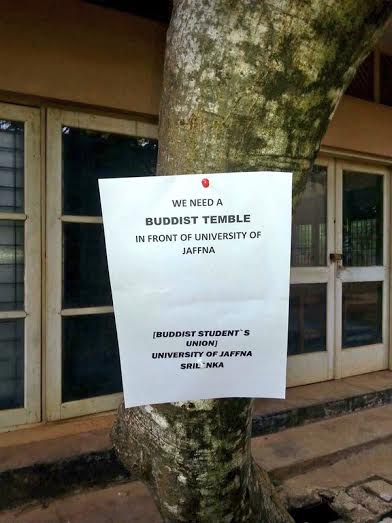
Buddhist society demand vihara at Jaffna Uni


A group identifying itself as the 'Buddhist student's union' have put up a posters calling for a Buddhist temple to be built in front of the University of Jaffna.

"We need a Buddist Temble in front of university of Jaffna," the posters read, with the "Buddist student's union University of Jaffna Sri Lanka" written at the bottom.

No measures taken to end impunity for torture in Sri Lanka – HRW

The Sri Lankan government took no significant measures to end impunity for security force abuse, including police use of torture, said Human Rights Watch (HRW) in their 2016 World Report.

Released on Wednesday, the HRW report went on to state that “at time of writing, the government also had not yet repealed the draconian Prevention of Terrorism Act (PTA), despite promises to do so, and continued to detain people under it”.

“While Sri Lanka has legislation prohibiting torture, the government failed to ensure disciplinary or criminal prosecutions against police officers and their superiors,” the report added, noting that “many alleged perpetrators remained in active duty or were merely transferred to another police station”.

“Victims of torture and their families faced a daunting path to redress and justice... Many reported ongoing harassment by the police when back in their villages,” it said.

Whilst acknowledging that “Sri Lanka’s new government has begun to address some of the country’s chronic human rights problems,” Brad Adams, Asia director at Human Rights Watch said “much remains to be done”.

40,000 dead is a ‘myth’ claims Sri Lanka’s disappearances commission chairman

Reports of over 40,000 Tamil civilians having been killed during the final stages of Sri Lanka’s armed conflict is a “myth” claimed the chairman of Sri Lanka’s presidential commission into disappearances on Wednesday.

Justice Maxwell Paranagama released a statement, criticising  a Channel 4 News report which detailed unresolved human rights abuses and continued military occupation in the North-East.

“Once again Mr Snow makes repeated references to the genocidal figure of 40,000 civilians killed in the final weeks of the war,” said Justice Paranagama, adding that “all available figures... makes the allegation of 40,000 a myth”.

He went on to address reports that the Sri Lankan army deliberately shelled ‘No Fire Zones’ declared during the closing weeks of the conflict by saying, “the LTTE never agreed to no fire zones… Therefore in international law they do not exist”.

He has previously rejected the UN Panel of Experts' estimated death toll of 40,000 Tamil civilians at the end of the armed conflict in 2009, as well as criticism from UN human rights chief Zeid Ra'ad al Hussain who called for the disbandment of the commission.