
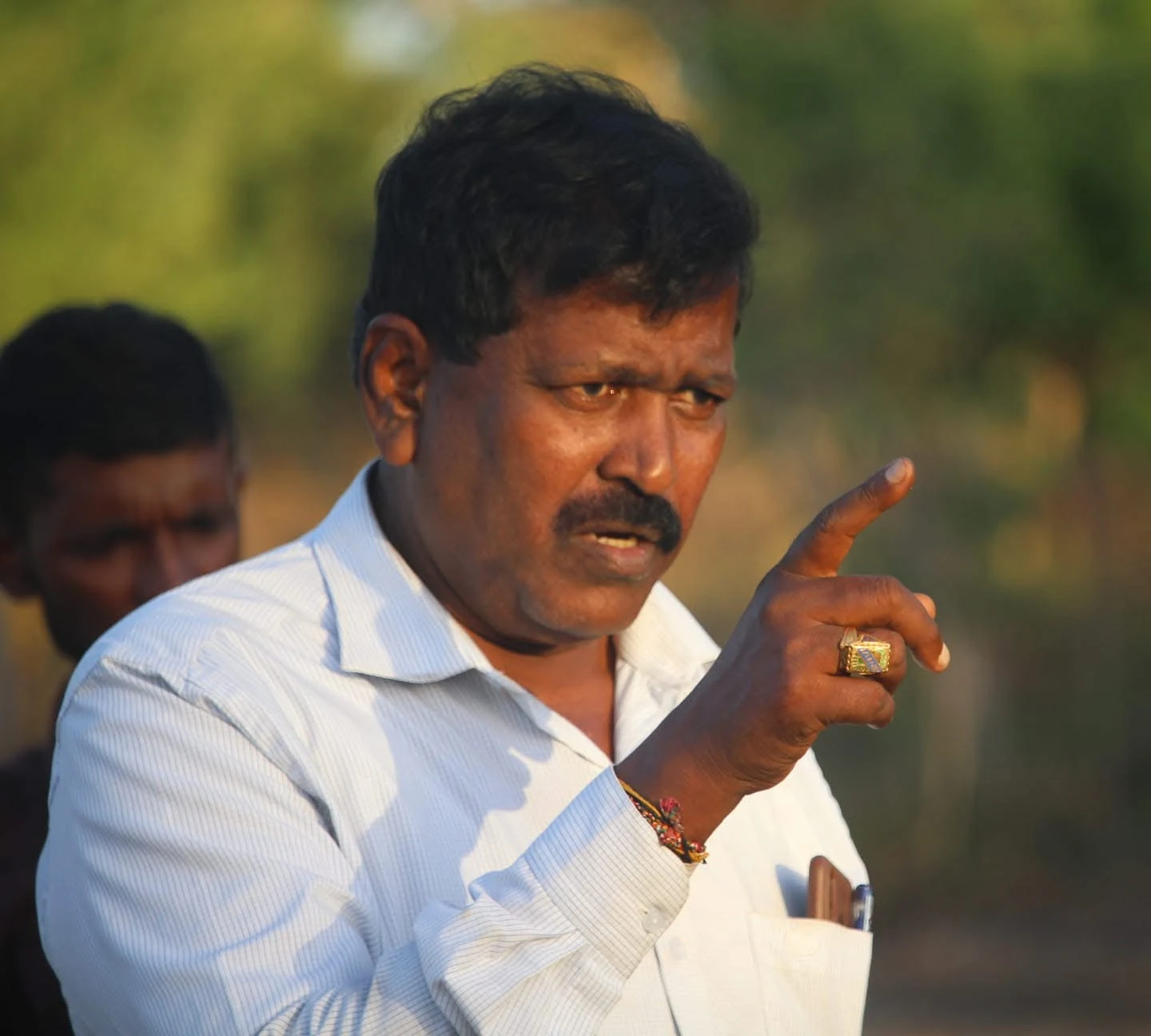
Vanni District MP Thurairasa Ravikaran has called for justice over the recent violence at Negombo Prison, urged an investigation into former Sri Lankan president Chandrika Bandaranaike Kumaratunga over allegations relating to the Chemmani mass graves, and demanded the release of lands still occupied by the military in Keppapulavu.
Addressing Sri Lanka's Parliament on Wednesday, Ravikaran linked the latest prison violence to the island’s longer history of prison massacres, state impunity, mass graves and military occupation of Tamil land.
Negombo and Sri Lanka’s history of prison violence
Ravikaran said the unrest that took place at Negombo Prison on 5 and 6 July had once again exposed the poor condition of Sri Lanka’s prison system.
At least 26 people, including seven prison officials and 19 inmates, were killed in two days of violence at Negombo Prison. More than 100 others were injured, in one of Sri Lanka’s deadliest prison incidents in recent years. The prison was reportedly holding around 2,400 inmates despite having a designed capacity of only 650, underlining the severe overcrowding that has long plagued Sri Lanka’s detention system.
Ravikaran said prison riots had occurred in Sri Lanka before, but argued that the July 2026 violence at Negombo differed from earlier massacres that he said had been planned and carried out with the involvement of the state.
Referring to the Welikada Prison massacre, Ravikaran said 53 Tamil political prisoners were hacked and stabbed to death by Sinhalese prisoners over two separate days in July 1983. He described the killings as an act of genocide against Tamils carried out by the Sri Lankan state. Ravikaran recalled the final wish expressed by Kuttimani before his death sentence was carried out, saying he had asked for his eyes to be donated to a blind person so that, even if he could not see Tamil Eelam, "at least my eyes may see it."
He further stated that testimony from survivors indicated prison officials had handed cell keys to Sinhalese prisoners, enabling the attacks.
Ravikaran argued that extensive evidence demonstrated state institutions had orchestrated prison violence and killings during that period.
He also cited the Bindunuwewa massacre, in which 27 Tamil youths held at a rehabilitation centre were killed and 14 others injured on 25 October 2000.
Ravikaran said the Sinhala newspaper Silumina had reported that the assault was planned and that police should answer for the killings. He also said posters in Sinhala calling for the flesh of "Tiger cubs" to be fed to dogs had appeared around the camp the day before the attack.
He added that Tamils had not received justice for the killings at Welikada, Bindunuwewa and Kalutara prisons.
Ravikaran said he hoped those affected by the recent violence at Negombo Prison would receive justice.
The Negombo violence has renewed scrutiny of Sri Lanka’s prison system, which rights groups have repeatedly criticised over overcrowding, prolonged remand detention, poor conditions, custodial deaths and torture allegations.
It also recalls other deadly prison incidents, including the Mahara Prison killings in 2020 and the 2012 Welikada Prison massacre, where at least 27 inmates were killed.
Calls for investigation into Chandrika Kumaratunga over Chemmani
Turning to the Chemmani mass graves, Ravikaran called for an investigation into former Sri Lankan president Chandrika Bandaranaike Kumaratunga.
He referred to statements allegedly made by Somaratne Rajapakse, who claimed that Kumaratunga had instructed him not to reveal the truth about Chemmani. Rajapakse, a former Sri Lankan soldier convicted in the 1996 rape and murder of Tamil schoolgirl Krishanthi Kumaraswamy, first revealed the existence of mass graves in Chemmani from the dock of the Colombo High Court.
At the time, he said bodies had been buried in Chemmani and claimed he could show where hundreds of people had been buried. Rajapakse later made further allegations about mass graves, torture camps and political cover-ups, implicating senior politicians and the Sri Lankan army.
Ravikaran said Rajapakse had alleged that former minister Jeyaraj Fernandopulle sent him a letter through a prison official, claiming it had been sent on Kumaratunga’s instructions. According to Ravikaran, the letter instructed Rajapakse not to disclose information regarding the mass graves and stated that steps would be taken to grant him a general pardon. Based on these allegations, Ravikaran said those connected to the Chemmani case were calling for Kumaratunga to be investigated.
He also urged the authorities to arrest all those responsible in connection with Chemmani and take strong legal action against them.
The Chemmani mass graves remain one of the most notorious symbols of Sri Lanka’s enforced disappearances and military violence in the Tamil homeland.
The allegations first emerged in the aftermath of the conviction of soldiers for the rape and murder of Krishanthi Kumaraswamy, her mother, brother and neighbour, after Krishanthi was stopped at an army checkpoint in Jaffna.
For families of the disappeared, the renewed attention on Chemmani comes amid ongoing excavations and repeated calls for independent international investigations into mass graves across the North-East.
Keppapulavu land protests enter third week
Ravikaran also raised the ongoing protest in Keppapulavu, where residents have been demonstrating continuously for 15 days demanding the release of their ancestral lands from Sri Lankan military occupation.
He noted that a large-scale protest was held on 5 July calling for the return of the lands.
According to Ravikaran, the military continues to occupy 59.5 acres of ancestral residential land belonging to 55 families, as well as 100 acres of Middle Class Allotment land belonging to four families. He said this amounts to a total of 159.5 acres belonging to 59 families.
Residents of Keppapulavu protested for the twelfth consecutive day earlier this week, demanding the release of lands that have remained under military occupation since 2009.
The demonstrators have repeatedly rejected claims that they accepted alternative plots in place of their ancestral property, insisting that the unconditional return of their original land is the only acceptable outcome.
Ravikaran said the occupied area includes a school, a temple and a playground, as well as valuable long-term crops. He further said residents had complained that the military had snatched a large number of their livestock and was producing and selling milk from them.
The parliamentarian added that residents also alleged the military was producing and selling natural fertiliser using local resources and had prevented them from accessing the Nanthikadal Lagoon for their livelihoods.
Keppapulavu has been one of the longest-running land struggles in the Tamil homeland. The continued occupation has prevented displaced Tamil families from returning to their homes, rebuilding their livelihoods and accessing community facilities central to village life.
Noting that Deputy Defence Minister Aruna Jayasekara is due to visit Mullaitivu District on 16 July, Ravikaran urged him to meet Keppapulavu residents and hold discussions with them regarding their demands.
His intervention comes as Tamil families across the North-East continue to demand the return of land held by the Sri Lankan military, alongside accountability for mass graves, enforced disappearances and decades of state violence.