
Sri Lanka's Commission to Investigate Allegations of Bribery or Corruption has launched an investigation into allegations concerning large quantities of gold reportedly taken into custody from Kumaran Pathmanathan, widely known as KP, following his capture in 2009.
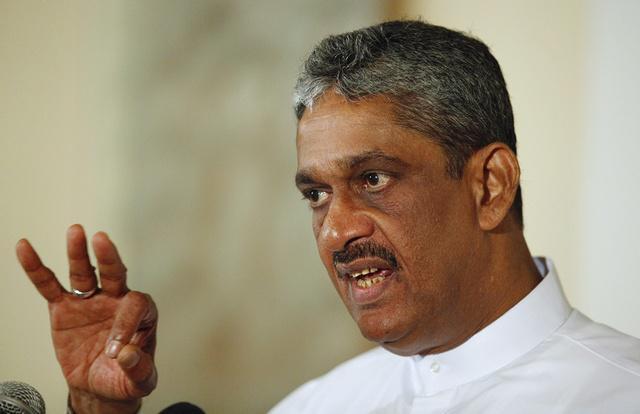
Former Army Commander Field Marshal Sarath Fonseka, himself accused of war crimes, appeared before the Commission on Thursday to give evidence in relation to the inquiry, local media outlet Newsfirst reported.
KP, who once oversaw the Liberation Tigers of Tamil Eelam's financial operations, was seized in Kuala Lumpur, Malaysia, in August 2009, in an operation involving Sri Lankan intelligence agencies. Brought to Sri Lanka, he was held not in the conditions of an accused war criminal but in what the state termed protective custody, and was welcomed by the then Defence Secretary Gotabaya Rajapaksa before going on to build close links with the Rajapaksa government and emerging as a vocal supporter of the very administration that had presided over the killing of tens of thousands of Tamils months earlier.
Recalling the meeting, KP later said the reception he received on being brought before Rajapaksa had left him feeling he was in safe hands.
He was released from custody in 2012 when the charges against him were withdrawn. In 2015, when the Janatha Vimukthi Peramuna petitioned the Court of Appeal for his arrest, alleging that his capture had in fact been a deal struck with the government, state lawyers told the court that KP had no criminal record in Sri Lanka and no links to any acts of terror, despite his decades procuring weapons for the LTTE. He was permitted to establish and run a network of orphanages and a government-aligned NGO, the North-East Rehabilitation and Development Organisation, in Kilinochchi, caring for children orphaned by the same war the Rajapaksa government had prosecuted.
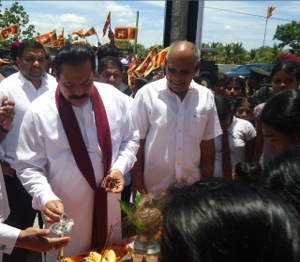
The investigation reportedly centres on allegations that several tonnes of gold believed to have been in KP's possession were taken over by state authorities following his capture, raising questions over the subsequent handling of those assets.
KP has previously denied holding any of the movement's assets. Speaking at the opening of one of his children's homes in 2021, he said he had been in hiding in Malaysia at the end of the war and had received only living expenses from the LTTE, insisting that had he controlled its wealth he would have used it to rescue the Tamil people trapped in the final months of the conflict. The bribery commission's inquiry now turns on what was in fact recovered from him in 2009 and where it went.
Speaking to reporters after giving evidence, Fonseka said he had been asked what he knew about the matter. "I was called to appear before the Commission regarding Kumaran Pathmanathan, also known as KP, who was arrested in 2009," he said, according to Newsfirst. "It has been reported to the Bribery Commission that certain quantities of gold in his possession had been taken over by the government and relevant security officials at that time, and I was asked what I know about it."
Fonseka stated that he had been serving as Chief of Defence Staff, rather than Army Commander, at the time of KP's capture, and said he did not possess details regarding any items that may have been taken into custody. "Therefore, if any items were taken into custody from him, I do not have details about them," he said, adding that he retired from the post of Chief of Defence Staff in November 2009.
KP's trajectory after 2009 has long been cited as one of the clearest illustrations of how the Sri Lankan state co-opted senior former LTTE figures while denying accountability to Tamil victims. In a 2020 interview, KP compared then president Gotabaya Rajapaksa to Nelson Mandela, called him "the right leader for the country", downplayed reports of war crimes and urged the Tamil diaspora to abandon its campaigns and instead invest in Sri Lanka, in remarks that drew widespread anger. He is also wanted in India in connection with the assassination of former prime minister Rajiv Gandhi.
The question of what became of the gold has resurfaced amid wider attention on the financial dealings of the final months of the armed conflict, which saw tens of thousands of Tamils killed by Sri Lankan forces. Fonseka, who has himself in recent months publicly criticised the Rajapaksas and accused them of betraying the country and its soldiers for political gain, has previously named KP among former LTTE figures who remained active in Sri Lankan politics under their patronage. No one has been held accountable for the disappearance of the assets reportedly seized from KP, and the Commission is now seeking to establish the chain of custody.