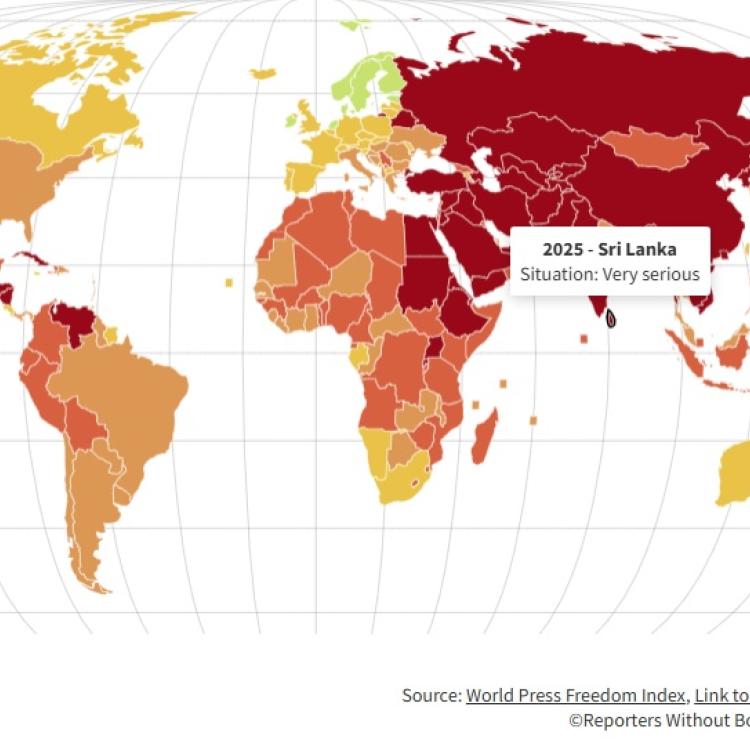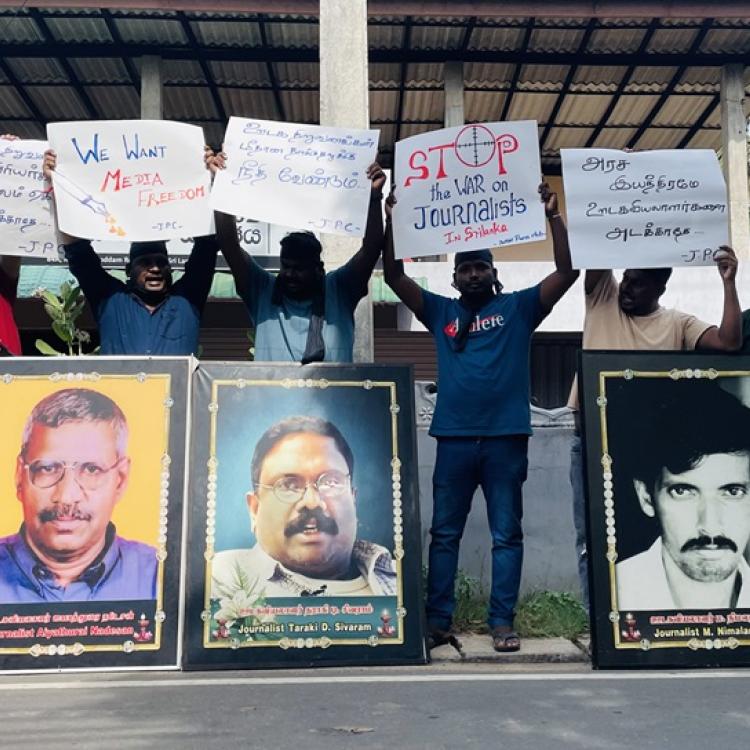
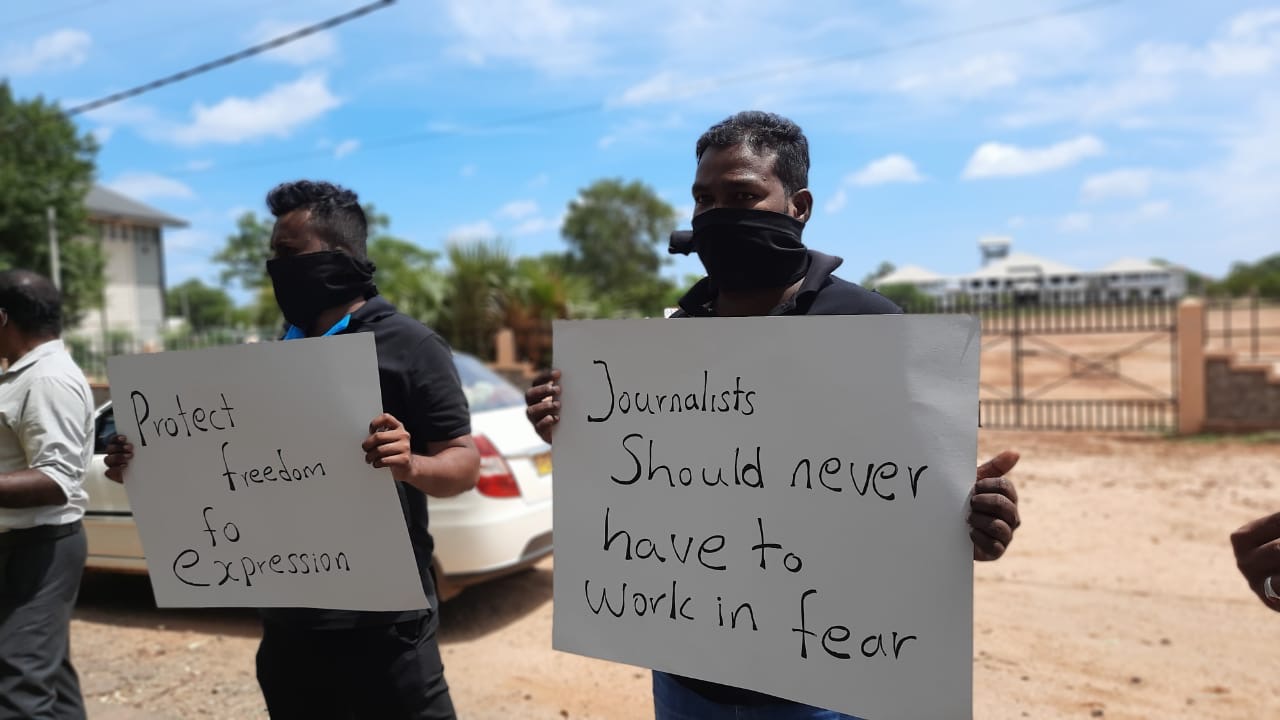
The Human Rights Commission of Sri Lanka (HRCSL) has issued a warning over what it describes as deeply troubling threats to freedom of expression on the island, particularly targeting journalists and online speech.
In a statement released on 3 February 2026, the Commission said it was “deeply concerned” by a growing pattern in which law enforcement authorities have launched investigations into allegedly defamatory speech, including the work of journalists. The HRCSL cautioned that such practices undermine constitutional guarantees and risk creating a climate of fear that stifles democratic debate.
The Commission highlighted what it termed an “egregious example” involving journalist Tharindu Jayawardena, who is also a member of the HRCSL’s Sub-Committee on the Freedom of Expression. Jayawardena was summoned for a police inquiry without being informed of the reasons for the summons. It later emerged that the inquiry stemmed from a complaint alleging defamation in his reporting on corruption and the misuse of public funds.
The HRCSL noted that the failure to inform Jayawardena of the reasons for his summoning constituted a breach of Circular RTM 101/CRTM 61, issued by the Inspector General of Police on 2 July 2025, which requires investigating officers to clearly state the reasons for summoning any individual.
Reaffirming constitutional protections, the Commission stressed that freedom of expression is guaranteed under Article 14(1)(a) of Sri Lanka’s Constitution and is central to citizens’ participation in democracy. This right, it emphasised, applies to all forms of expression and all media, including online platforms. Citing Supreme Court jurisprudence, the HRCSL recalled that constitutional protection extends not only to ideas that are favourably received, but also to those that “offend, shock or disturb the State or any sector of the population.”
While acknowledging that freedom of expression is not absolute, the Commission underscored that any restrictions must strictly comply with Articles 15(2) and 15(7) of the Constitution and meet the standards of necessity, proportionality and reasonableness. Unnecessary or excessive restrictions, it warned, pose a societal danger and can fuel public frustration and unrest.
Addressing defamation specifically, the HRCSL clarified that although protecting reputation and privacy is a legitimate aim, defamation in Sri Lanka falls exclusively within the jurisdiction of civil courts. It stressed that defamation is not a criminal offence under Sri Lankan law, following the repeal of Chapter XIX of the Penal Code by the Penal Code (Amendment) Act No. 12 of 2002. As such, the Commission stated unequivocally that the Sri Lanka Police have no authority to record or investigate complaints based solely on alleged defamation.
Despite this clear legal position, the Commission observed an increasing trend of political actors and influential figures filing complaints with police divisions, including the Criminal Investigation Department and the Computer Crime Investigation Division, over statements often made online that are alleged to be false or defamatory. The HRCSL recalled international human rights standards which require public figures to tolerate a higher degree of criticism than private individuals, and urged political leaders to respond through proportionate means such as public clarifications, rather than invoking law enforcement.
The statement also addressed the Online Safety Act (OSA) No. 9 of 2024, which has been widely criticised by civil society. The Commission reiterated its earlier position that the Act does not fully comply with the Supreme Court’s determination on the Online Safety Bill and that it could only have been enacted with a special parliamentary majority. In this context, the HRCSL warned that using the OSA to suppress freedom of expression particularly under the guise of preventing defamation raises serious constitutional concerns.
While recognising that online safety is a legitimate objective, especially for the protection of vulnerable users, the Commission argued that the current Act fails to meet this goal. It noted that the OSA largely replicates colonial-era criminal offences and does not adequately address genuine online threats such as phishing, malware, spyware, hacking or denial-of-service attacks. Following consultations with civil society, the HRCSL reported a broad consensus that the Act should be repealed and replaced through a consultative, expert-driven process.
The Commission issued a series of recommendations, including a call for the Ministry of Justice to declare a moratorium on the use of the Online Safety Act pending its repeal, for the Inspector General of Police to formally remind all police units that defamation is not a criminal offence, and for political leaders to refrain from filing police complaints over allegedly defamatory speech.