
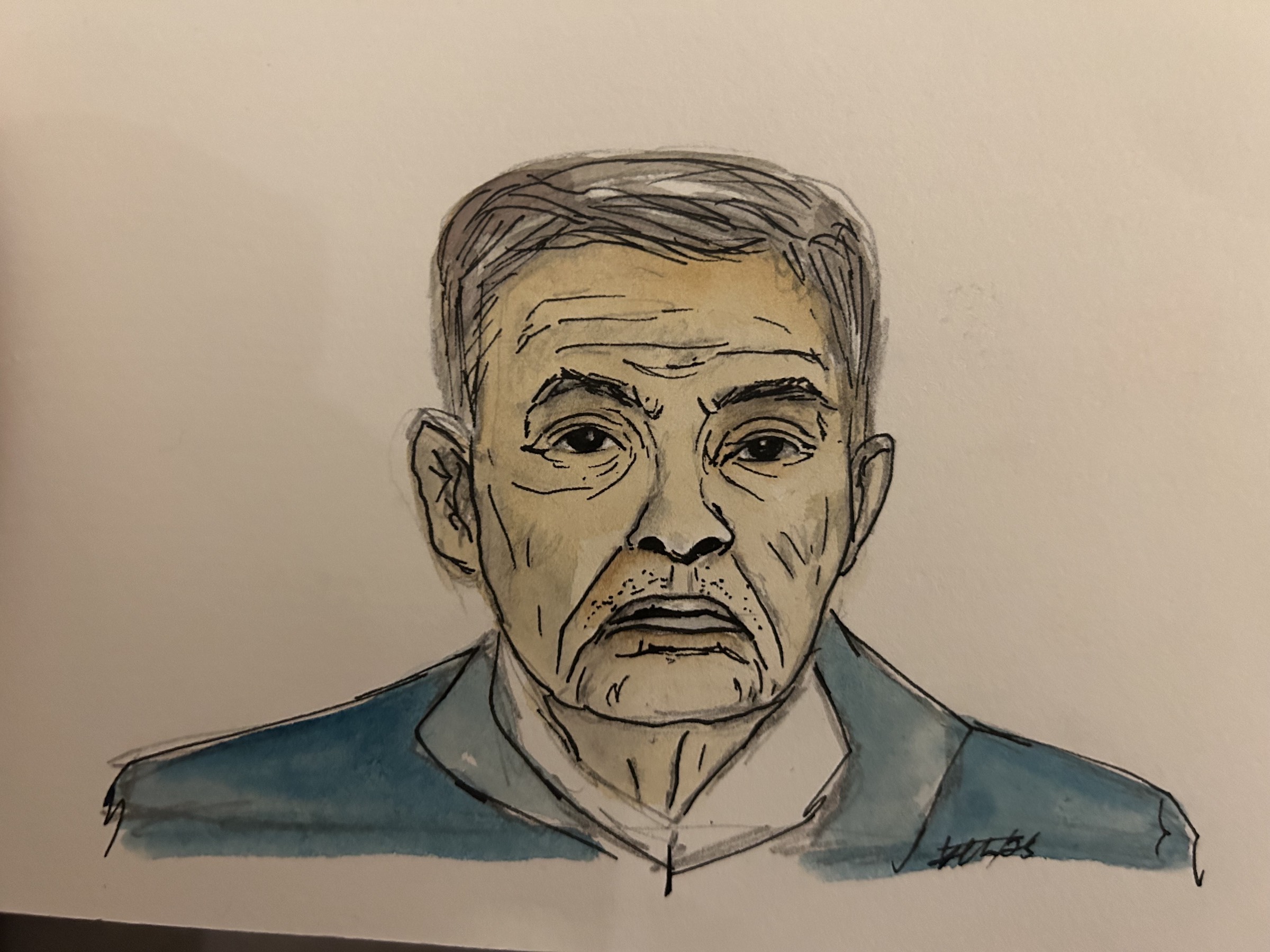
There will be few tears shed at the news that Ranil Wickremesinghe has been arrested by Sri Lankan authorities. Like many from Sri Lanka’s entrenched political elite, the former president and six-time prime minister has many questions to answer. For decades, Sinhala rulers have presided over corruption, repression and mass atrocities that have devastated the island. What is disappointing, however, are the charges brought against him.
Wickremesinghe’s political career is long, chequered, and fraught with controversy. But he was not arrested for his role in the Batalanda torture camp. He was not held for his time in government when the Jaffna Library was burned in 1981, nor for the slaughter of Tamils in the Black July pogrom of 1983. He was not detained for his repeated defence of war criminals and genocidaires. Instead, it is a single trip to London, allegedly funded with state money, that has brought him into custody.
This is telling. Sri Lanka has long been plagued by a culture of impunity. Crimes ranging from extrajudicial executions to enforced disappearances have been meticulously documented, including in successive UN reports. War criminals litter the island’s military and political establishment, from the Rajapaksa clan to Chandrika Kumaratunga. Wickremesinghe himself has been implicated in torture and murder, as the Batalanda Commission recorded. Members of the Sinhala left, now posturing as anti-corruption reformers, were amongst those detained and disappeared in that era.
That it is financial mismanagement, rather than complicity in murder, that has finally brought Wickremesinghe under the scrutiny of Sri Lanka’s judiciary reveals the true priorities of the state. It reeks of a deliberate refusal to confront the crimes that have caused the deepest suffering. Why is Wickremesinghe the first former president to be arrested, while those who commanded and oversaw the massacre of tens of thousands of Tamils walk free? Why are Sri Lankan soldiers who raped, tortured and executed Tamils on camera still at liberty?
It is not a lack of evidence. It is for lack of will. For the ruling regime, it is easier and politically more convenient to pursue opponents for narrow financial misdemeanours than to provide justice for mass killings, torture, and enforced disappearances.
The spectacle of Wickremesinghe’s arrest feels less like the triumph of the rule of law than the continuation of a familiar cycle of political opportunism and retribution. It is performative, aimed at a domestic Sinhala audience, and does nothing to advance accountability for the gravest crimes committed on this island. That is why there has been little celebration in the Tamil homeland. For those in the North-East, this is no victory.
Even after this arrest, the reality for the Tamil nation remains unchanged. The military continues to occupy vast swathes of land. Sinhala Buddhist colonisation is rampant. Human rights defenders and journalists, as the recent interrogation of Kanapathipillai Kumanan demonstrates, remain under harassment and surveillance. And as Human Rights Watch reminded the world just days ago, Tamil families of the disappeared face ongoing threats simply for demanding truth about their loved ones. This latest headline-grabbing arrest may be heralded in Colombo as proof that “no one is above the law.” But for Tamils, there is no solace to be found. They are not demanding prosecutions over airfare bills. They are demanding justice for torture, murder, and genocide.
The Sinhala state has no appetite for such reckoning. It is easier to arrest a retired president over a flight ticket than to confront the reality of the island’s blood-soaked history. That, more than anything, is why Tamils continue to insist that true justice cannot be delivered within Sri Lanka’s broken system. With yet another UN Human Rights Council session approaching, the international community must heed that call. Until there is genuine international accountability, justice will remain elusive.