.jpeg)
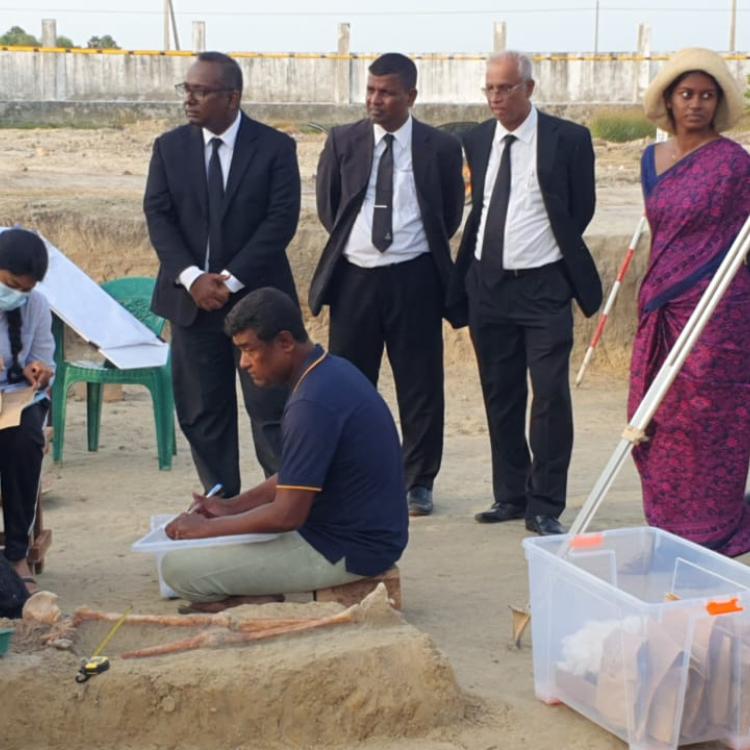
Over 200 people, including families of the disappeared, gathered to view dozens of items of evidence that were unearthed from the Chemmani mass graves earlier today, as more bodies continue to be identified at the site.
Some 54 items of evidence recovered from the graves, including a child’s toy, baby’s milk bottle, children’s shoes, a school bag, and glass bangles, were placed on public display for the first time. Over 200 people, including families of the disappeared, gathered to view the objects under court custody.
.jpeg)
Medical students from the University of Jaffna, judicial medical officers, and a physiology specialist supported the arrangement and management of the display. The Commissioner and Executive Director of the Office on Missing Persons (OMP) were also in attendance.
The display and call to the public were part of efforts to identify the remains of those buried at the site. It comes as six more human skeletal assemblages were discovered at the mass grave in Jaffna on Tuesday, bringing the total number of remains identified to 141, with 130 fully exhumed. Excavations are taking place under court supervision at two officially designated sites; Forensic Excavation Site No. 01 and Site No. 02, located at the Chemmani Siththupaththi Hindu Cemetery. Tuesday marked the 31st day of the second phase of exhumations, which were granted a 45-day extension by the Jaffna Magistrate’s Court.
.jpeg)
Due to the sensitive nature of the proceedings, the court issued strict guidelines regulating the public viewing. In an order dated 2 August, the Jaffna Magistrate’s Court declared the inspection to be part of an official judicial process and outlined eight directives, including:
• Only individuals over 21 were permitted entry, with priority given to families who had filed disappearance complaints.
• Personal details of attendees, including ID or passport numbers, were recorded.
• Photography, video recording, and electronic devices were strictly prohibited.
• Handling of any artefacts was not allowed.
• The presence of lawyers for affected families was permitted.
• Media were barred from filming during the proceedings.
•
The court warned that violations of these conditions would result in legal action. To accommodate the display, excavation work at the site was temporarily suspended from noon onwards.
Meanwhile, Ground Penetrating Radar (GPR) scanning of the cemetery has been completed, with approximately 20% of the surrounding area surveyed. Specific locations of interest have been identified for further investigation, and a detailed report is set to be submitted to the court shortly.
.jpeg)
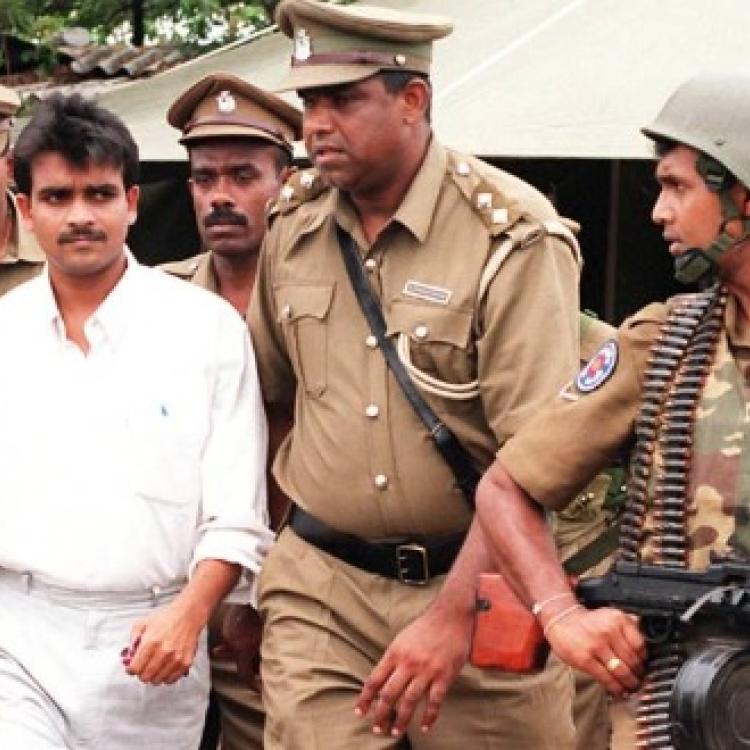
The Chemmani mass graves first gained international attention in 1998, after Lance Corporal Somaratne Rajapaksa, who was convicted in the Krishanthi Kumaraswamy rape and murder case, testified that hundreds of Tamils were executed and buried by the Sri Lankan military in Jaffna.
The current forensic investigation, which has already exhumed the remains of children still clutching schoolbags, has reignited global calls for an independent international inquiry into mass graves and the genocide committed against Tamils. Despite mounting evidence, no senior military officials have been held accountable to date.