
WORLD NEWS

World News

Latest news from and about the homeland

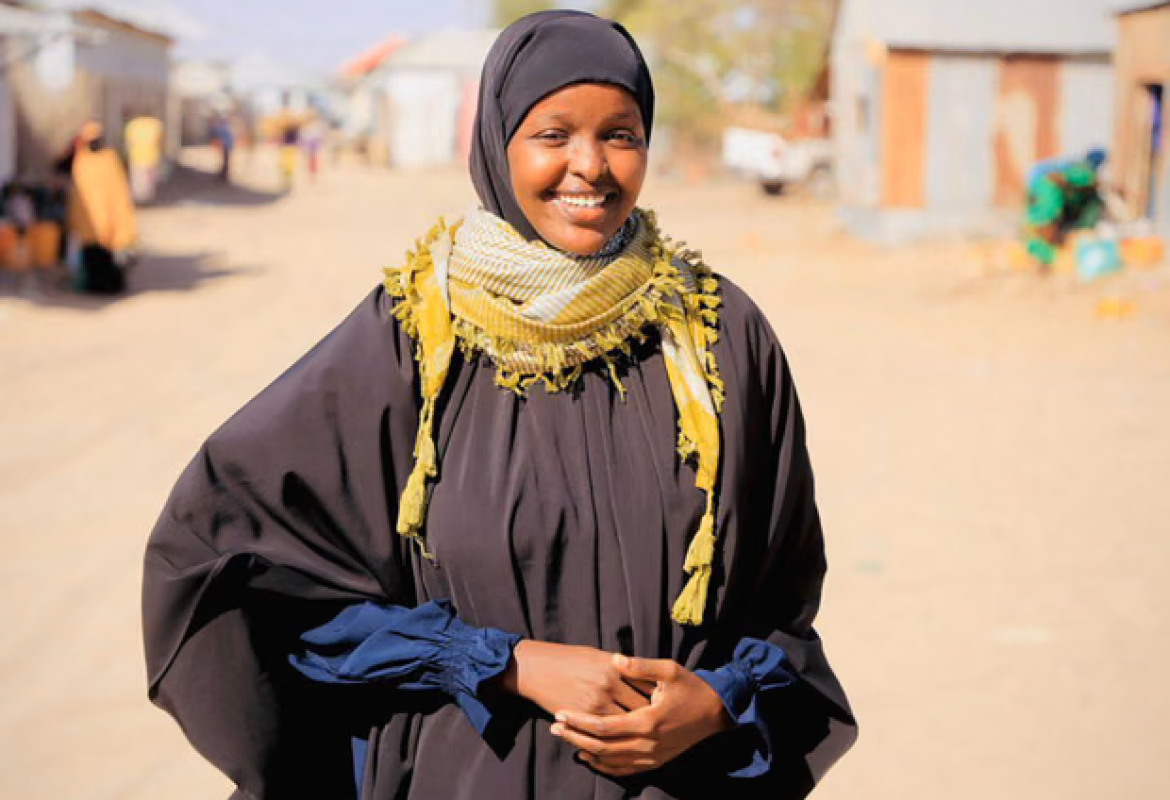
Sadia Moalim Ali, a 27-year-old nursing graduate and rickshaw driver from Somalia, has been sentenced to three years’ imprisonment after being convicted of insulting government institutions over comments she made on social media. Ali, who had posted on Facebook and TikTok, was sentenced on 25 June in a case that has sparked outrage in Somalia and renewed concern over the shrinking space for…

Libya and China’s pragmatism

Despite an attributed commitment to ‘non-interference’ in other countries, China is now well recognised for its pragmatism when it comes to international affairs. Libya is a case in point.

China had substantive investments in Libya and good relations with Muammar Gaddafi’s regime when the rebellion against it began this year.

Nonetheless, amid international outrage at the regime’s attacks on civilians, China stood aside at the UN Security Council vote in February on resolution 1973.

The resolution also imposed an arms embargo on Libya.

NATO adopted resolution 1973 as the mandate for its military intervention in Libya. However China also stridently criticised the NATO air campaign against Gaddafi’s forces.

As the opposition showed itself to be a credible challenge to the regime, Beijing began reaching out.

In early June the regime’s Foreign Minister Abdelati al-Obeidi was welcomed to Beijing. Barely two weeks later, so was the opposition’s top foreign affairs official, Mahmud Jibril.

On June 22, China recognized the opposition National Transitional Council (NTC) as "an important dialogue partner."

At the same time, Foreign Minister Yang Jiechi said:

"China is not seeking any private interest on the Libyan issue. China believes the Libyan issue is essentially Libyan internal issue."

Stressing "the future of Libya should be left to be decided by Libyan people," he urged the two sides in the Libyan conflicts to "truly give peace a chance," saying "this will work for the fundamental interests of the Libyan people."

However, as recently as late July, despite the UN arms embargo, Chinese arms firms were discussing weapons sales worth $200 million to the regime’s beleaguered forces. They include pistols, missiles and rocket launchers.

See The Telegraph’s report here.

Senior Kosovo leader to be tried for war crimes

A European Union judge has decided to put a senior Kosovo politician and former rebel leader on trial for the alleged execution and torture of Serb prisoners during the 1998-99 Kosovo war.

See AP’s report here.

Guatemalan war criminal to be extradited to US

Canadian authorities have ordered a former member of the Guatemalan military who is accused of war crimes, to be sent to the US to face charges of perjury.

Jorge Vinicio Orantes Sosa has been accused of lying to immigration authorities over whether he had committed a crime or been a member of a military organization when he applied for US citizenship.

In April, Spanish courts issued an extradition request and arrest warrant for Sosa, seeking to try him for charges of genocide, torture and extrajudicial killings.

Cameron calls for inquiry into ‘rendition’ allegations

British Prime Minister David Cameron has called for an independent inquiry into allegations that the British intelligence service MI6 was involved in the rendition of Libyan terror suspects.

CIA Documents discovered at an abandoned building in Tripoli suggest that MI6 worked with Libyan intelligence to forcibly move terror suspects to Libya, where they then may have been subjected to torture.

The secret documents suggest Britain facilitated the capture of Abdul Hakim Belhaj at Bangkok airport.

Suspected war criminal loses libel case

Former Serb paramilitary commander Dragan Vasiljković has lost a libel suit against The Australian, after the newspaper accused him of war crimes committed during the Balkans conflict between 1991 and 1994 in an article published in 2005.

During the trial, details emerged of the crimes Vasiljković is said to have committed, including rape, torture and his admittance to committing a massacre.

The editor-in-chief of The Australian and The Weekend Australian, Chris Mitchell, said at the commencement of the trial in 2009:

South Sudan plans new capital

The capital of the newly formed state of South Sudan will be shifted to Ramciel - believed to be the capital envisioned by John Garang, former leader of the Sudan People's Liberation Army.

Ramciel is a small town north of the main city Juba. The local population are widely known to be long-standing staunch advocates of independence.

“It is a beautiful land,” said Barnaba Marial Benjamin, South Sudan’s information minister. “This is a long-term plan for a capital while we continue with our priorities.”

Officials stated that Juba was initially considered as the capital, however, the 12-square-mile site needed for new government buildings would have involved the uprooting of indigenous communities.

There are indigenous communities in these areas. Unless they agree, we cannot just take their land,” explained Benjamin.

EU bans Syrian oil

European Union members announced a ban on all imports of Syrian oil Friday, as the Assad regime's brutal crackdown on civilian protesters continues.

The move comes over one week after EU officials announced sanctions on Syrian businesses and officials but stopped short of imposing a full oil embargo, reportedly due to concerns of the impact on civilians.

France extradites Rwandan genocide suspect to Belgium

A Rwandan genocide fugitive, who had an EU arrest warrant issued, has been extradited by French authorities to face trial in Belgium.

Fabien Neretse the former head of the Rwanadan Coffee Office and influential figure in the Rwandan government was wanted by Belgium authorities for his role in the 1994 genocide of Tutsis and participation in war crimes.

An arrest warrant was issued by a Belgian court earlier this year, after a criminal case was opened against him in 2004.

Canada seeks to build Holocaust memorial

Foreign Affairs Minister John Baird is leading efforts to build a National Holocaust Monument near the Canadian capital Ottawa, AFP reported.

Baird is setting up a five-member council, for which they are currently seeking nominations, which will oversee the efforts to fund, construct and maintain the monument.
"Canada remembers the suffering of the millions of innocent victims of the Holocaust," Baird said.

Khmer Rouge leaders deny charges as donors push for swift trial

Four former officials of the Cambodian Khmer Rouge have denied charges of genocide and war crimes, as ailing health looks set to push back their trials.

Japan, France and the US, major supporters of the UN backed tribunal, have been pushing for the trial to go ahead as quickly and fairly as possible.


See report by Voice of America
here.

The tribunal, also known as the Extraordinary Chambers in the Courts of Cambodia, was established after an agreement between the Government of Cambodia and the United Nations to try senior members of the Khmer Rouge for war crimes, crimes against humanity and genocide.


The current
judges on the Supreme Court Chamber of the tribunal includes recent Sri Lankan High Commissioner to the United Kingdom Chandra Nihal Jayasinghe.

Ou Virak, of the Cambodian Centre for Human Rights, said of the tribunal:

"[This] will be a cathartic moment for all Cambodians.

While the crimes of the Khmer Rouge were committed over a quarter of a century ago, they remain ingrained in Cambodia's collective psyche.

I hope that this trial – coming as it does so many years after the crimes alleged against the accused were committed – provides all victims with some sense of justice, however delayed that justice may be."
This call was echoed by Andrew Cayley, the international co-prosecutor in the case, who said that the crimes were probably the "most serious crimes committed since the Second World War" and "the Cambodian people still expect answers."

He went on to say,
"Certainly, the relatives of those who perished and the handful of those survivors who are left are seeking justice."