
WORLD NEWS

World News

Latest news from and about the homeland

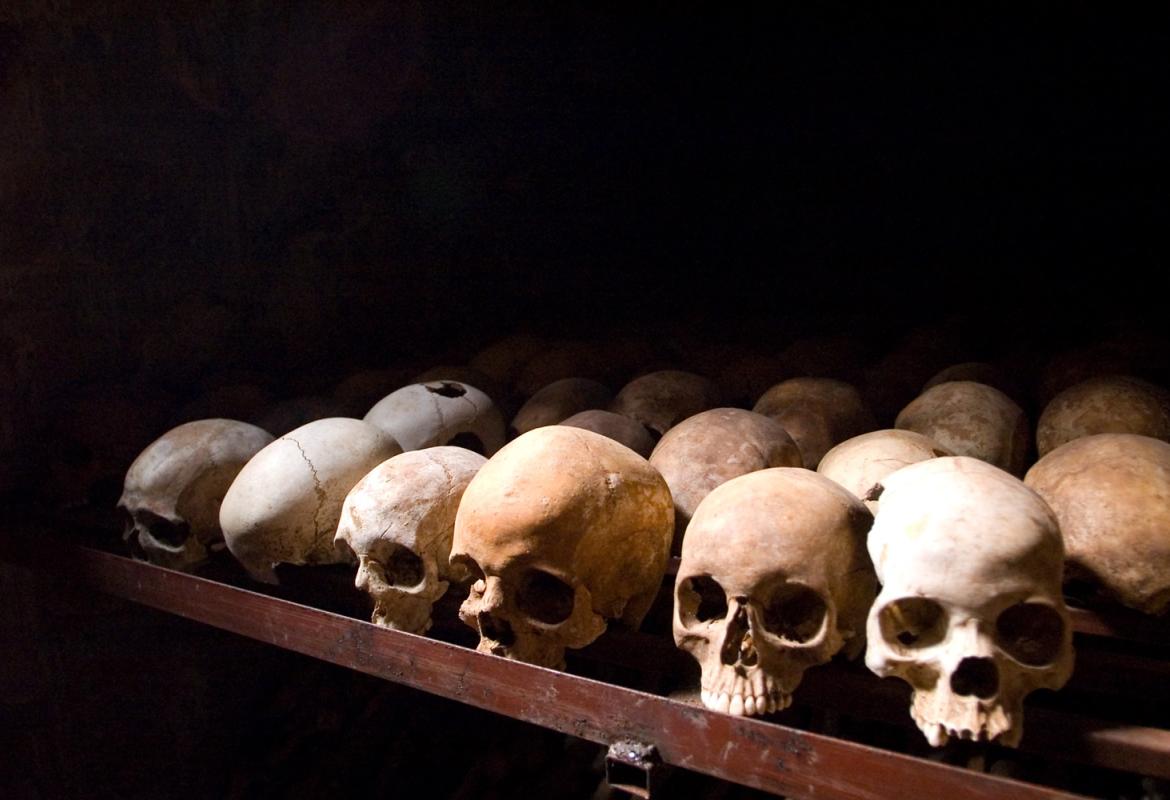
Rwandan genocide memorial in Nyamata (Fanny Schertzer) German prosecutors have arrested a German-Rwandan national on suspicion of complicity in genocide and 25 counts of murder during the 1994 genocide against the Tutsis in Rwanda. The suspect, identified only as Innocent S. under German privacy rules, was arrested in the central German state of Hesse on Wednesday. According to Reuters,…

Myanmar's first democratically elected civilian president sworn in

Myanmar has sworn in its first democratically elected president, the first elected civilian leader in more than 50 years.

Htin Kyaw an aide to National League for Democracy (NLD) chief Aung San Suu Kyi, takes over from Thein Sein, who introduced wide-ranging reforms during his five years in power with the junta.

Although NLD leader Aung San Suu Kyi is barred from the presidency, she has said she will rule by proxy, the BBC reports.

Agreement between Colombia and Farc risks impunity - HRW

The justice agreement between Colombian rebels Farc and the government could allow those responsible for systematic crimes, including the execution of civilians, to escape justice, Human Rights Watch said, in an analysis of the agreement.

“The agreement is a checkmate against justice,” said José Miguel Vivanco, Americas director at Human Rights Watch. “The web of loopholes and ambiguities in the agreement could guarantee that many of those responsible for false-positive killings, ranging from low-ranking soldiers to generals, will escape justice.”

Bangladesh considers dropping Islam as official religion

Islam may potentially be dropped as Bangladesh’s official religion in the wake of a number of attacks against the country’s communities of other faith.

The nation’s Supreme Court is currently hearing arguments in favour of removing Islam as the official religion of Bangladesh, reports the Independent.

Thousands march in Dublin to commemorate 1916 Easter Rising

Commemorations of the centenary of the Easter Rising began in Dublin on Friday, with thousands marching to remember the leaders of the uprising against the British empire, who were executed after the rebellion failed.

The procession, which began at the site of the executions of 14 rebels in 1916, was attended by Sinn Fein leader Gerry Adams and Northern Ireland Deputy First Minister Martin McGuiness.

Speaking to the crowds at Arbour Hill cemetery, where the rebels were buried, Mr Adams paid tribute to those executed, saying "a few hundred poorly equipped Irish men and women took on the might of the largest empire the world had ever seen".

Mr Adams, a former IRA commander, said the 1916 proclamation of independence "remains the mission statement for Irish republicans today".

Ukraine extends sanctions on Russia

 Ukraine extended its sanctions lust against Russia to include people and institutions involved in the detention of Ukrainian citizens.

The Ukrainian Security and Defence Council announcement came after Russia sentenced Ukrainian pilot Nadezhda Savchenko to 22 years in prison on Friday.

Obama visits Argentine 'Dirty War' memorial

US President Barack Obama visited a memorial commemorating victims of Argentina's military dictatorship, during his visit to the country.

The US is widely believed to have been involved in the coup which led to the dictatorship, under which an estimated 30,000 people were killed by the state.

Promising that the US would release more secret files to reveal its role in the 1976 coup, Mr Obama said the US was "too slow to stand up for human rights" in Argentina.

Former Bosnian Serb leader convicted for genocide by UN court

The former Bosnian Serb leader Radovan Karadzic has been sentenced to 40 years in prison after being convicted for genocide and war crimes in the 1992-95 Bosnian war.

United Nations judges in The Hague found Mr Karadzic to be guilty of 10 of 11 charges including genocide.

Mr Karadzic continued to deny charges, alleging that any atrocities committed were the actions of rogue individuals and not that of forces under his command. The former leader’s lawyer Peter Robinson, said he would appeal the decision.

The former leader was the only person with the power to intervene and protect those being killed during the massacres.

Syrian opposition ready for peace talks

The Syrian opposition on Thursday said an adequate basis had been set for ‘substantive’ peace talks when the parties meet at the UN later next month.

The opposition delegate Basma Kodmani, speaking after meeting the UN Special Envoy Staffan de Misturea, said,

“Out of these two weeks we come out with feeling that we have perhaps laid the basis for substantive talks in the next round.”

The UN special envoy said on Thursday that the target start date for the talks would be April 9.

South Sudan to face UN commission on rights abuses

An inquiry to investigate human rights abuses in South Sudan has been set up by the UN Human Rights Council during its 31st sitting in Geneva this month.

The three-member commission, the proposal of which was initiated by the US and Albania, will have a renewable one-year mandate.

South Sudan said it would cooperate with the commission, which will look at gang rapes and attacks on civilians, which may constitute war crimes.

Kurdish federal proposal is ‘an idea worth building on’ – NYT

The declaration of a federal region in northern Syria by Kurdish groups “could offer a model for decentralized governance in a federated Syria,” said the New York Times this week.

In an editorial entitled ‘The Kurds’ Push for Self-Rule in Syria’, it said “the Kurds are an ethnic group of perhaps 35 million in Syria, Iraq, Iran and Turkey, and they have long argued that they are the world’s largest ethnic group without a state”.

“They have suffered persecution and had their aspirations for self-governance crushed,” continued the New York Times, noting that “the American invasion of Iraq created an opportunity for Kurds living there to establish a semiautonomous region in northern Iraq, which has been reasonably successful”.

The editorial went on to conclude:

“The Syrian Kurds say they are not seeking total independence, only a democratic region in which they, Arabs and other ethnic groups can live together. This may be an idea worth building on as part of a political solution to end the war and the slaughter of civilians.”