
WORLD NEWS

World News

Latest news from and about the homeland

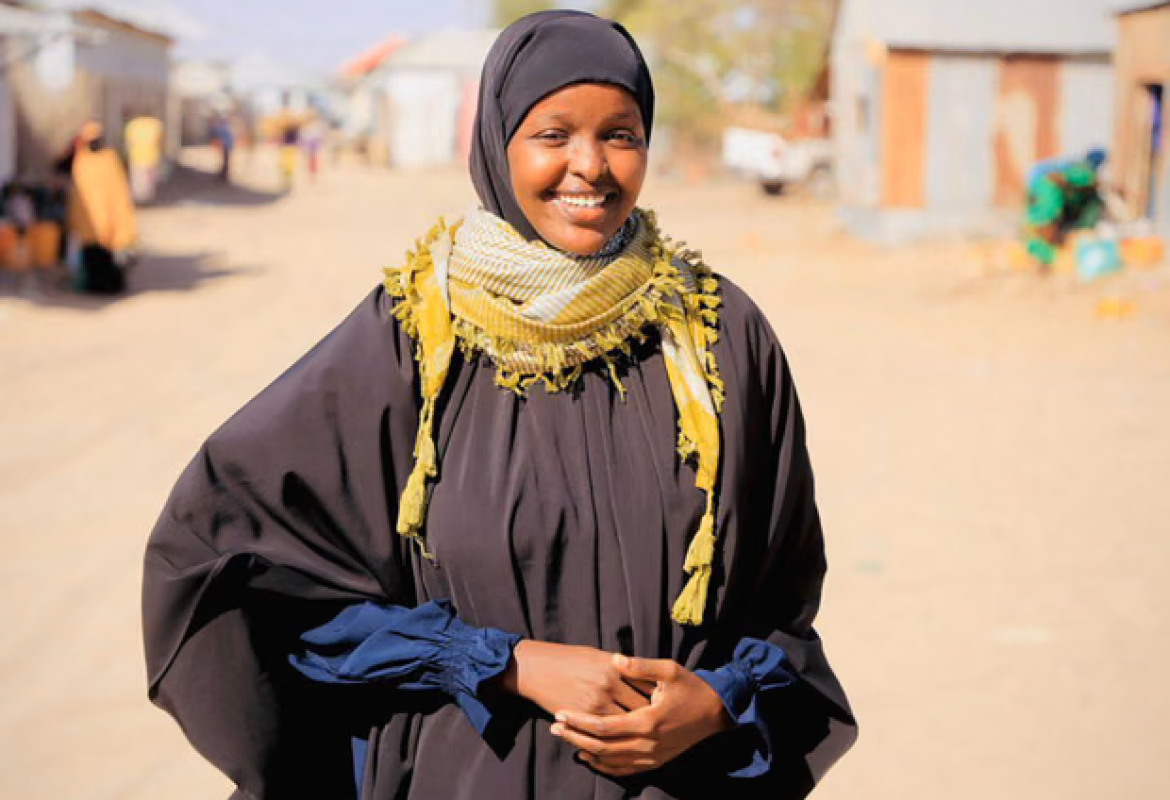
Sadia Moalim Ali, a 27-year-old nursing graduate and rickshaw driver from Somalia, has been sentenced to three years’ imprisonment after being convicted of insulting government institutions over comments she made on social media. Ali, who had posted on Facebook and TikTok, was sentenced on 25 June in a case that has sparked outrage in Somalia and renewed concern over the shrinking space for…

US calls on Myanmar to release disappeared journalists

The US Secretary of State Rex Tillerson called for the “immediate release of two Reuters reporters arrested in Myanmar.

Speaking on Friday, Mr Tillerson further called for “information as to the circumstances around their disappearances.”

The journalists, Wa Lone 31, and Kyaw Soe Oo 37, went missing on Tuesday after being invited to meet police officials over dinner in the northern outskirts of the city of Yangon.

British police arrest distributors of Kurdish newspaper

Two Kurdish women and two teenagers have been arrested to be questioned about the sale and distribution of Kurdish newspaper Yeni Ozgur Politika (New Free Politics),” reports the BBC.

The Kurdistan Solidarity Campaign described the arrests as “an attack on freedom of expression.”

The organisation added,

“The paper reports on political developments in Turkey and cultural aspects of Kurdish people’s lives. It has an important role for Kurds living across Europe, as Kurdish newspapers and radio stations in Turkey have been shut down due to sustained suppression by the Turkish state.

ICC prosecutor urges action over outstanding warrants by UN Security Council

The International Criminal Court's chief prosecutor this week urged the UN Security Council to take action over a number of outstanding arrest warrants. 

“I call on this Council to prioritise action on the outstanding warrants of arrest issued by the Court,” Fatou Bensouda told the Security Council in New York.

"There can be no justification for States Parties to fail to arrest a suspect against whom an ICC warrant of arrest has been issued, irrespective of that person's official status," she added. 

State of emergency declared in South Sudan 

More than 170 people have reportedly been killed in clashes in South Sudan, leading to President Salva Kiir declaring a state of emergency across the country.

The order allows the army to use force if civilians did not lay down weapons, reports the BBC.

Local MP Dharuai Mabor Teny added that more than 200 were also thought to have been injured in the latest flare-up of violence. “Right now, from both sides, we have 170 plus people who lost their lives. 342 houses have been burnt and almost 1,800 people displaced," he told Reuters.

Meanwhile, a spokesperson for Mr Kiir said they hoped the declaration of a state of emergency would help "curb the violence".

EU rebuffs Israel calls to recognise Jerusalem as capital

The European Union rejected calls by Israeli prime minister Benjamin Netanyahu to join the US in recognising Jerusalem as Israel’s capital.

During his first visit to the European Union headquarters in Brussels, Mr Netanyahu said the US decision helped peace, “because recognising reality is the substance of peace, the foundation of peace.”

Speaking after a breakfast meeting between Mr Netanyahu and EU foreign ministers, Sweden’s foreign minister Margot Wallstrom said no country voiced support for the US move, adding,

“I have a hard time seeing that any other country would do that and I don’t think any other EU country will do it.”

Nationalist parties in Corsica sweep elections with demand of more autonomy from Paris

Nationalists in Corsica have gained a majority in elections for a new regional assembly on the French Mediterranean island, reports the New York Times.

The coalition of moderate and hard line nationalists won 56.5 percent of the vote to defeat President Emmanuel Macron’s centrist party.

The nationalist parties on Corsica, an island of 320,000 people, have called for greater autonomy from Paris.

UN marks Genocide Prevention Day with calls to ‘do more’

UN Secretary-General António Guterres marked Genocide Prevention Day on Saturday, with a message that the international community ”must do more” to prevent genocide from occurring, rather than reacting.

“Genocide does not happen by accident; it is deliberate, with warning signs and precursors,” said the secretary-general, in a statement to mark the day. “Often it is the culmination of years of exclusion, denial of human rights and other wrongs. Since genocide can take place in times of war and in times of peace, we must be ever-vigilant,” he added.

Cartier to drop Myanmar’s ‘genocide gems’

Luxury jeweller Cartier announced that it will no longer be buying gemstones from Myanmar, following a campaign to boycott the purchase of “genocide gems” over the Burmese government’s military campaign against Rohingya Muslims, reports The Times.

The decision, announced last week, comes after a campaign to boycott Myanmar’s gem industry. Jewels from the country have been part of collections in luxury jewellery houses worldwide, costing several thousand pounds. Previous sanctions by the European Union and the USA targeted the jewel industry but have since been lifted.

France and Turkey to cooperate on reversing US recognition of Jerusalem as Israeli capital

France and Turkey’s presidents have agreed to work together to persuade the US to reconsider its decision to recognise Jerusalem as the capital of Israel.

Speaking to Reuters, a Turkish official said the two leaders agreed over the phone to make a joint effort to reverse the US decision.

The Turkish President also spoke to the presidents of Kazakhstan, Lebanon and Azerbaijan on Saturday.

Arab nations must consider sanctions against US to prevent recognition of Jerusalem as Israel's capital - Lebanon

Lebanon’s Foreign Minister Gerban Bassil called on Arab nations to consider economic sanctions against the US to prevent it moving its embassy in Israel to Jerusalem, reports Reuters.

 Speaking at a meeting of foreign ministers of the Arab League in Cairo, Mr Bassil said,

“Pre-emptive measures must be taken against the decision .. beginning with diplomatic measures, then political, then economic and financial sanctions.”