
Tamil Affairs

Tamil News

Latest news from and about the homeland

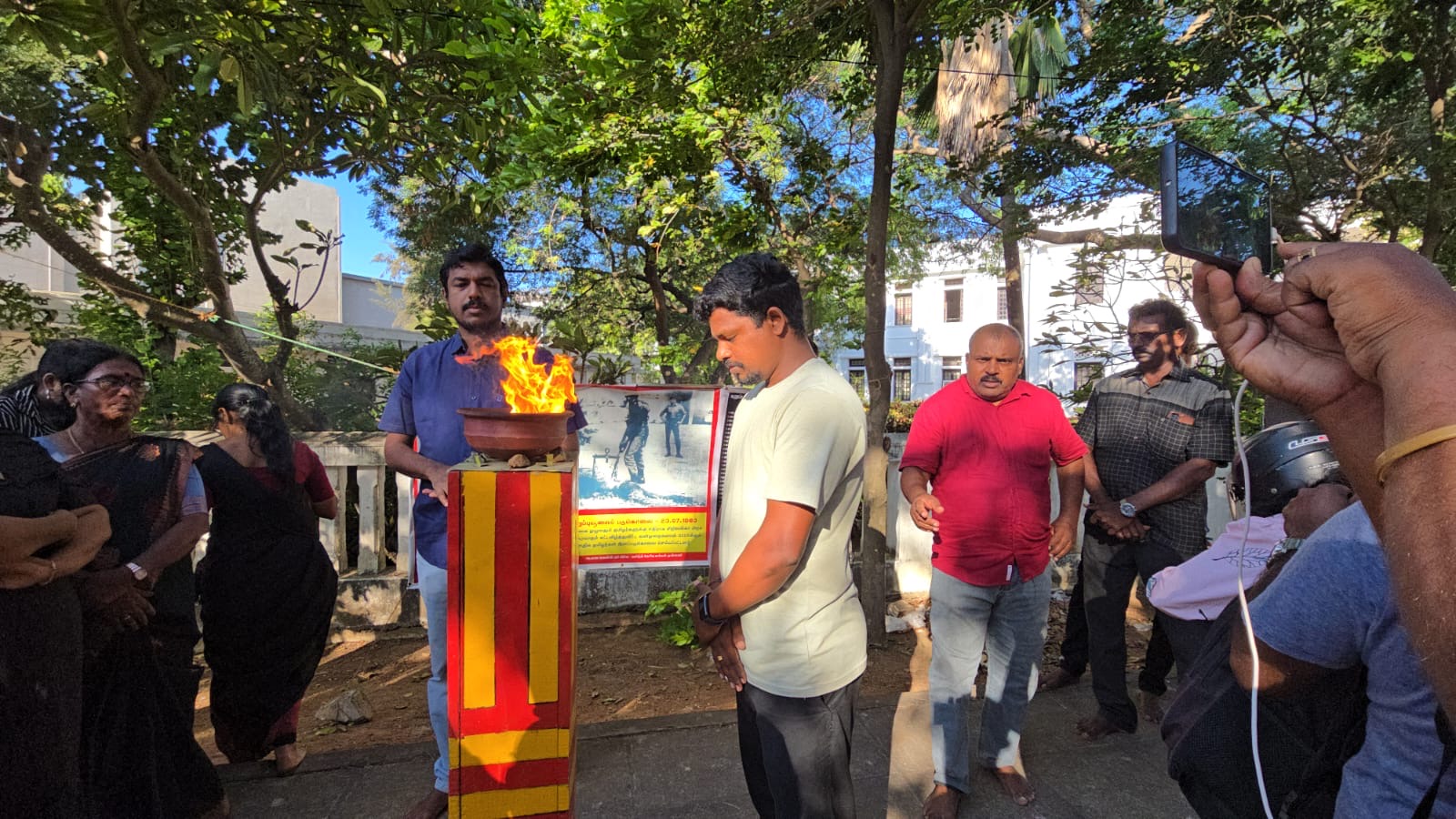
Commemorations were held across Jaffna over the weekend to mark 43 years since the Black July pogrom, honouring the thousands of Tamils killed in the anti-Tamil violence of July 1983 and the Tamil political prisoners massacred while in state custody. At the Thanthai Selva Auditorium in Jaffna, a common flame of remembrance was lit on Saturday, 25 July, and candles were lit in memory of the…

India-Sri Lanka agreement was proposed by Ranil says envoy

India’s High Commissioner Y K Sinha told reporters that a proposed economic agreement between India and Sri Lanka was proposed by Sri Lankan Prime Minister Ranil Wickremesinghe, as Sinhala opposition to the move continues.

Mr Sinha told reporters that the Economic and Technology Cooperation Agreement (ETCA) proposal was put forward last year and defended the move.

“The ETCA was proposed by Prime Minister Ranil Wickremesinghe when he went to India September last year,” Mr Sinha said. “Since then our officials have met and now just a few days ago, we have got a draft of the framework, which is the outline of the agreement from the government of Sri Lanka.”

The proposal came after Sri Lanka repeatedly rejected moves to sign a Comprehensive Economic Partnership Agreement (CEPA) with India, which Mr Sinha said “is [now] a dirty word here”.
‘Hands off war heroes’ warns Sri Lankan government minister

The leader of the Jathika Hela Urumaya (JHU) said he would not allow the international community to question Sri Lankan troops over reports of war crimes, as long as his party remains in government.

Minister of Megapolis and Western Development Patali Champika Ranawaka made his comments as he addressed a JHU People’s Forum on Saturday.

The party, led by Sinhala Buddhist monks, is currently in government as part of the United National Front for Good Governance, allied with the United National Party.

UN wants ‘credible investigation’ into Sri Lankan atrocities

The United Nations said that it wants “to make sure there is a credible investigation” into Sri Lanka’s violations of international humanitarian law in response to the Sri Lankan president rejecting foreign judges participating in an accountability mechanism.

The Office of the Spokesperson for the Secretary-General told journalists on Monday that “the Human Rights Council can evaluate for themselves how it's going, but we want to make sure there is a credible investigation into this”.

Responding to a question from Inner City Press, Farhan Haq, Deputy Spokesman for the Secretary-General said “we have made clear what our guidelines are for what a credible investigation will entail and so we will continue to be in dialog to make sure it happens”.
See more from Inner City Press here.

Commonwealth Secretary-General defends work on Sri Lanka

Commonwealth Secretary-General Kamalesh Sharma dismissed criticism of his organisation’s work on Sri Lanka during his tenure, claiming that it is only now that positive results are seen from his engagement regarding human rights.

In an interview with The Hindu, Mr Sharma defended the Commonwealth, stating it “is not a boutique organisation; it is a great global good”.

On Sri Lanka, the Secretary-General said,

“I made five visits to Sri Lanka, but you can’t keep on talking about it in public for the reason that work has to be done below the radar to carry political conviction”.

“The results become visible at the end,” claimed Mr Sharma.

Mr Sharma had come under immense criticism over his handling of Sri Lanka, as he engaged closely with then president Mahinda Rajapaksa – a man who stands accused of directing war crimes and crimes against humanity.

He was accused of being “shamefully silent” on Sri Lanka’s rights abuses by international NGOs and had previously written off calls for an independent investigation into war crimes as "impractical".

Members of the Commonwealth also criticised the Secretary-General, with Canada’s special envoy to the Commonwealth, Hugh Segal, accusing him of "acting as a shill [a stooge] for the Sri Lankan leadership, defending their every mistake".

Sri Lankan military permission needed to access hospital drinking water

The head of Poonakari hospital has had to seek permission from the Sri Lankan military in order to access drinking water from the previous hospital grounds which are now being occupied by the army, as a shortage threatens to affect the health of patients.

The hospital reportedly faces a severe water shortage and can no longer admit any new patients due to the lack of drinking water.

Located in Poonakari, also known as Pooneryn, the hospital was forced to move from its original site, which is currently being occupied by the Sri Lankan military. With a water crisis affecting the hospital, the only source of fresh water remains at the original site.

Northern Provincial Council member S Pasupathipillai said he was aware of the situation and lamented the fact that the Sri Lankan military remained stationed at the hospital.

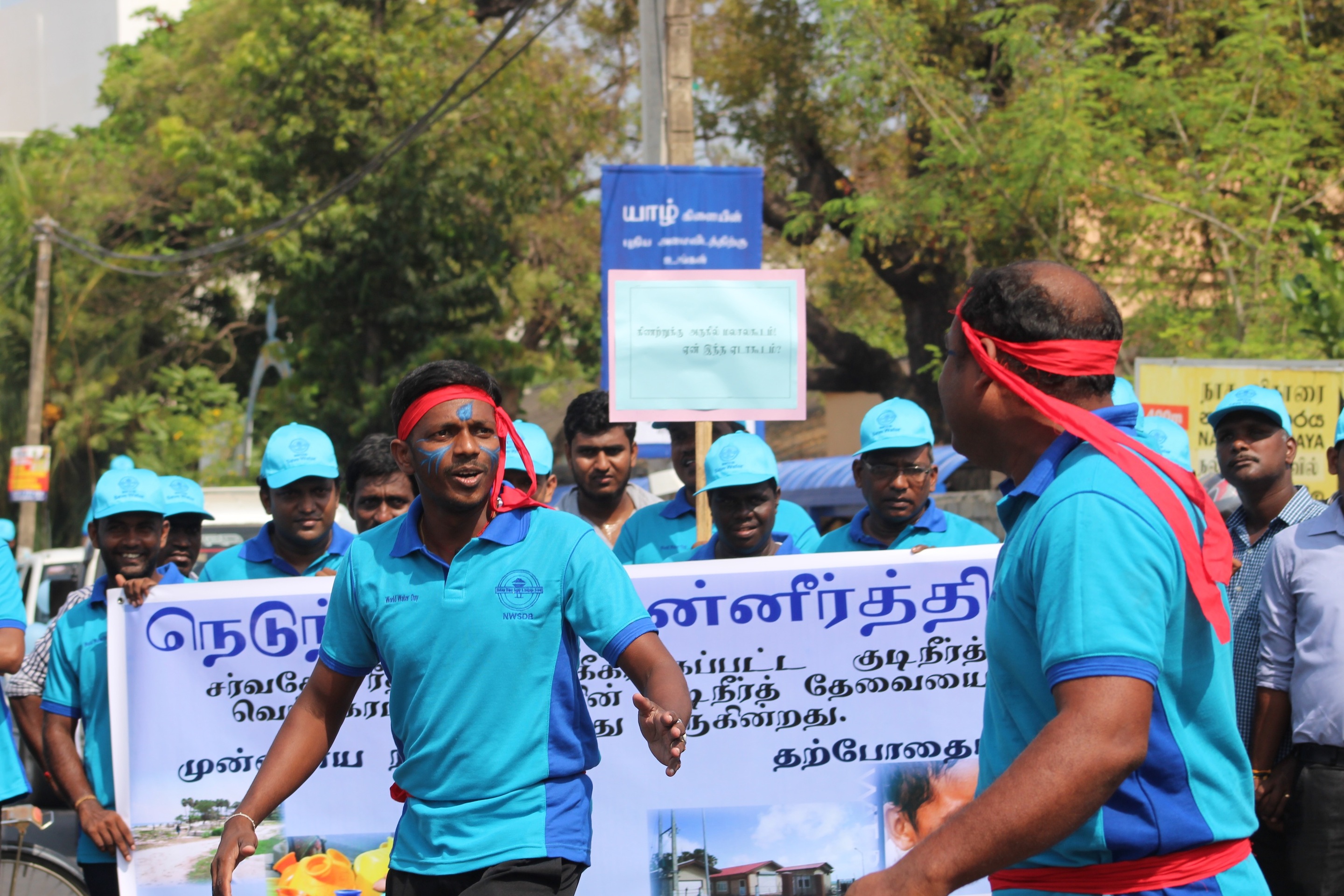
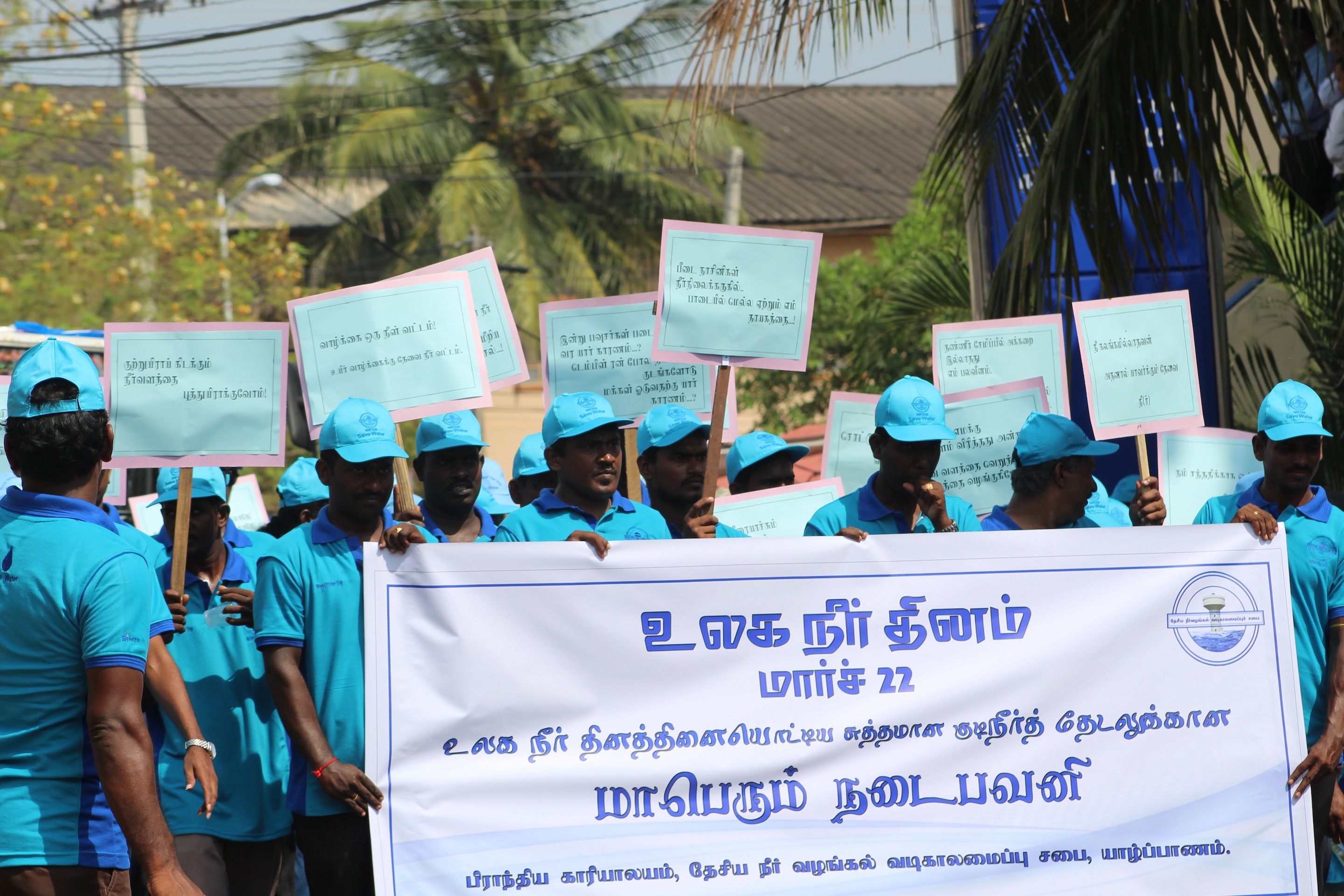
Rally marks World Water Day in Jaffna

A rally was held in Jaffna today to mark World Water Day and highlight the importance of clean water.

The rally saw hundreds of people march through the streets with placards calling for the preservation of clean water.

Sri Lanka will ‘never surrender to any country’ declares president

Sri Lankan President Maithripala Sirisena said his government would “never surrender itself to any country,” in a speech delivered at the Sri Lanka Muslim Congress (SLMC) convention this weekend.

Addressing the convention alongside Sri Lankan Prime Minister Ranil Wickremesinghe, Mr Sirisena denied accusations put forward by the Joint Opposition. “They say we surrender to other countries when we get into agreements with various countries,” he said.

“Let me assure that the government will never surrender itself to any country," the president declared.

Mr Wickremesinghe stated that no-one could topple the current government, despite the work of “conspirators,” reports the Daily Mirror.

Indian citizens arrested in North-East for violating visas

Sri Lankan police have arrested over a dozen Indian citizens over charges of violating their visa regulations, according to reports.

In Kattankudy two Indian nationals were arrested for reportedly selling textiles, whilst another was arrested in Mannar for selling sarees, reports Colombo Gazette.

Meanwhile The Island reports 12 Indian citizens were arrested in Kattankundy over the weekend.

Sri Lanka hopeful of ‘favourable’ outcome on EU fishing ban

The Sri Lankan government is sending a high-level delegation to the European Union in Brussels later this month, in order to negotiate the lifting of a ban on imports of fish caught in Sri Lanka.

The Chairman of Seafood Exporters Association of Sri Lanka (SEASL) and Managing Director of Global Sea Foods, Prabhash Subasinghe, was quoted by Xinhua as saying “We will conduct a decisive meeting with EU on the fishery ban issue and its outcome will determine our fishery export outlook to Europe in future”.

"We believe the outcome shall be favourable for Sri Lanka," he continued.

Sri Lanka slams UN Special Rapporteur report on caste-based discrimination

The Sri Lankan government rejected a United Nations Special Rapporteur report on caste-based discrimination on the island, labelling it “incorrect, inaccurate and misleading”.

Speaking at the UN Human Rights Council, Sri Lanka said a report by the UN Special Rapporteur on Minority Issues was “inaccurate and completely misrepresentative of reality in respect of society and societal formation or structures in Sri Lanka”.

UN Special Rapporteur Ms Rita Izsak-Ndiaye's report earlier this year mentioned Sri Lanka in part of its global overview of caste-affect groups.

The Sri Lankan government though rejected its findings. “It is completely incorrect to state that people in Sri Lanka are under pressure to follow caste based employment,” said Sri Lanka.

“Untouchability, as stated in the report is not a feature one would find in Sri Lanka society at all,” the representative continued. “The term “Dalit” has no relevance whatsoever in the context of Sri Lanka There is no community or caste identified by such nomenclature in Sri Lanka.”

Sri Lanka also claimed Ms Izsak-Ndiaye said three different castes existed on the island – “Sinhala, Sri Lankan Tamil and Indian Tamil” - and slammed it as “completely erroneous”.

However, the Special Rapporteur had in fact stated in her report that each of the three communities operated “three parallel caste systems” and that “caste discrimination is found in each one”.