
WORLD NEWS

World News

Latest news from and about the homeland

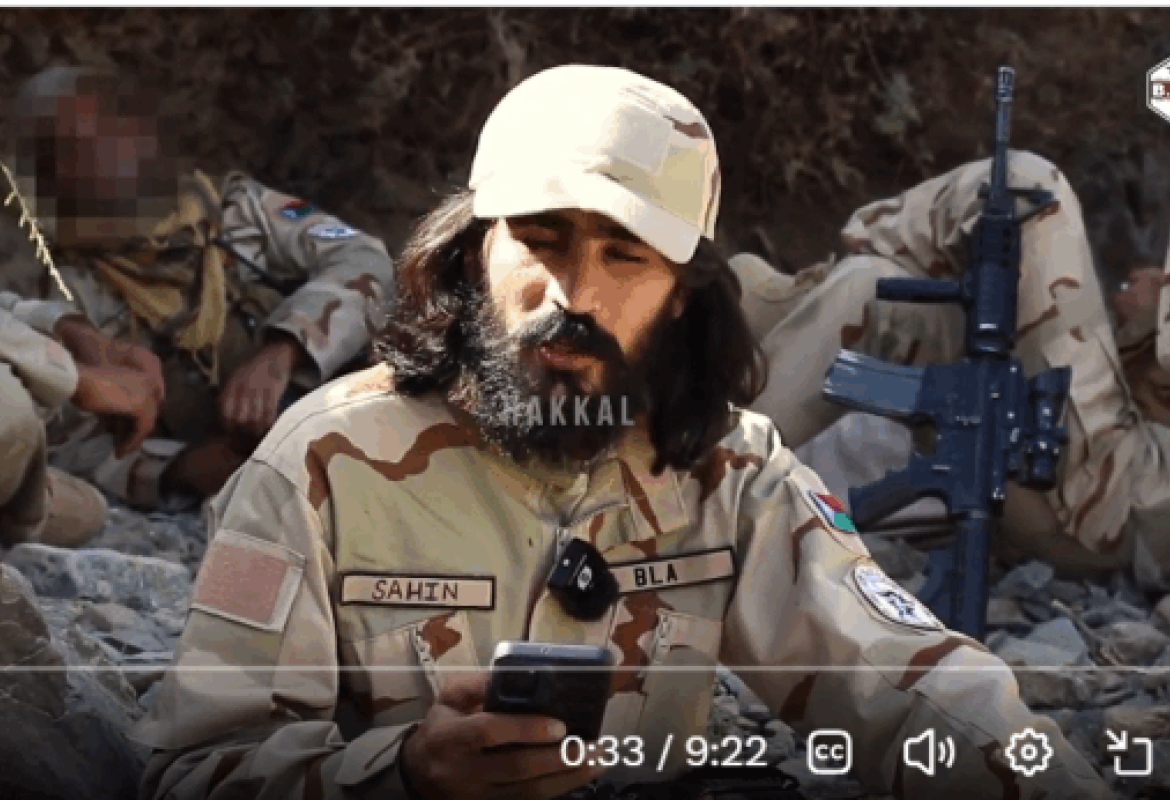
Photograph: Screenshot/ BLA video A fresh wave of extrajudicial killings and enforced disappearances has been documented across Balochistan this month, as Baloch rights groups recorded the recovery of several bodies of men who had earlier been forcibly taken, and appealed once more to international institutions that have largely ignored the province. The Baloch Yakjehti Committee (BYC)…

Swiss extradition of war crimes suspect to Bosnia angers Serbia

Swiss authorities have extradited a former Bosnian Muslim commander accused of war crimes to Bosnia instead of to Serbia, where he is wanted over similar charges.

The decision to send 48 year old Naser Oric to Bosnia instead of Serbia has angered Serb authorities, who called the decision "politically motivated” and “all but fair.”

Last year, Serbian authorities issued an international warrant for his arrest and Mr Oric was arrested by Swiss authorities whilst trying to cross into France some two weeks ago. As soon as Serbian authorities filed a request for his extradition though, the Bosnian government followed suit, announcing it had launched its own investigation into alleged war crimes.

Swiss authorities decided to send Mr Oric to Bosnia over Serbia, stating the decision had been made in “simplified proceedings”.

"For Serbia, it means that the war crimes issue is not a matter of justice but of politics," said Serbian Prime Minister Aleksandar Vucic.  Mr Oric, who stands "accused of the worst war crimes, has thus been practically released," he added.

However the Bosnian government reacted differently, hailing the decisions as "the only correct and fair" one. Bakir Izetbegović, the Bosniak member of the tripartite Presidency of Bosnia and Herzegovina, said Serbia’s move was "another attempt of Serbian justice to mistreat our citizens, despite the accords and protocols (on cooperation of two countries in war crime cases) failed".

Italian mayor says EU policy creates genocide

The mayor of an Italian town in Sicily slammed the European Union (EU) policy on asylum seekers who are struggling to reach the shores of Europe, stating that the stories told by those who fled resemble the Holocaust.

"We're living a genocide, and in a few years we Europeans risk being found responsible," said Palermo's mayor Leoluca Orlando, with thousands of refugees having died as they tried to cross the Mediterranean. "The stories told by survivors who make it to Sicily resemble the accounts told by survivors of Dachau and Auschwitz (concentration camps)," he said.

Kosovo rejects war crimes court

Kosovo’s parliament failed to approve measures to set up a special court to try former fighters accused of war crimes.

The vote, which fell short by 5 votes, was backed by the United States and the European Union, who alleged that former ethnic Albanian fighters with the Kosovo Liberation Army were guilty of war crimes.

Armenian genocide recognition is ‘irreversible’ says Armenian FM

Armenian Foreign Minister Edward Nalbandyan said the recognition of the Armenian genocide is an “irreversible” process, paying tribute to states that have recognised it.

In a joint press conference with Czech foreign minister Lubomir Zaoralek, Mr Nalbandyan highlighted recent statements made by the German president and Belgian Prime Minister, adding that they “deserve high evaluation”.

“All this proves that the Armenian genocide recognition process is irreversible,” continued Mr Nalbandyan.

IS claim Tunisian resort attack which leaves 39 dead

At least 39 people have been declared dead at an attack on a beachside hotel in Tunisia, in an attack claimed by the Islamic State (IS).

The attack at the Imperial Marhaba in Sousse, carried out by at least one gunman who opened fire on tourists, is the second major attack to have taken place in Tunisia this year, with 21 foreign tourists having been killed at the Tunis Bardo museum earlier this year. Tunisian, British, German, Irish and Belgian nationals were amongst the dead

In a statement released on social media, IS reportedly claimed responsibility for the attack, stating, "Our brother, the soldier of the Caliphate, Abu Yihya al-Kairouni, reached his target the Imperial hotel despite the security measures".

The attack came on the same day that suspected Islamist related attacks took place in France and Kuwait. At least 25 people were killed in the bombing of a Shi'ite mosque in Kuwait, an attack also claimed by IS, whilst a man was reportedly found decapitated with his body daubed with Islamic writing.

Commenting on the attacks, French President Francois Hollande said,
"there is no other link other than to say that terrorism is our common enemy".

Vatican signs treaty with State of Palestine

The Vatican has signed its first treaty with the State of Palestine, in a historic move that officially recognises the state.

The agreement, signed at Vatican City by the Holy See’s foreign minister, Archbishop Paul Gallagher, and Foreign Affairs Minister of the Palestinian National Authority Riad al-Maliki, drew immediate criticism from Israel, who expressed its “regret” at the move.

Archbishop Paul Gallagher said the Vatican hope the move would be a "stimulus to bringing a definitive end to the long-standing Israeli-Palestinian conflict, which continues to cause suffering for both parties".

Mr al-Maliki also welcomed the treaty, stating it would help "recognition of the right of the Palestinian people to self-determination, freedom and dignity in an independent state of their own, free from the shackles of occupation".

Palestine takes Israel 'war crimes evidence' to ICC

Alleged evidence of Israeli war crimes was taken to the International Criminal Court by Palestinian officials, including descriptions of military operations throughout the occupied territories and in particular last year’s war in Gaza, killings of civilians, illegal settlements and the treatment of Palestinian prisoners.

Xavier Abu Eid, a spokesman for the Palestine Liberation Organisation, said Palestinians had struggled for years in international forums to reach the International Criminal Court, the New York Times reported.

“Whoever says that the Palestinians are trying to politicise the ICC are in fact trying to deny the Palestinians a very basic right to justice,” he said. “We are showing our seriousness to support a preliminary investigation that has already started.”

South Africa threatens to leave ICC

The South African government has threatened to leave the International Criminal Court (ICC) after facing international criticism over the failure to arrest Sudanese President Omar al-Bashir, who is wanted on charges of genocide.

A cabinet meeting took place on Thursday, after which the government announced it was reviewing membership of the ICC "for a number of reasons". Stating that it was taking its international obligations "seriously", the government said it had "to balance its obligations to the ICC with its obligations to the AU and individual states".

Withdrawal from the ICC would be a "last resort", it added.

Minister in the Presidency Jeff Radebe, said “such a decision will only be taken when South Africa has exhausted all the remedies available to it”.

Rwandan president launches scathing attack on UK over arrest of spy chief

Rwandan President Paul Kagame gave a furious speech in parliament on Thursday, accusing Britain of “absolute arrogance and contempt” after the arrest of the head of Rwanda's intelligence services in London for war crimes.

Mr Kagame told parliament that British authorities "must have mistaken [General Karake] for an illegal immigrant. The way they treat illegal immigrants is the way they treat all of us". "Black people have become targets for shooting practice," he said. "We cannot accept that people treat us this way just because they can."

In a scathing speech to parliament the president vowed to take action, stating "we don't have the power of wealth, of military strength, of technology. But we have the power of the spirit. I am happy that people pick on us. We are the right people”. “We stand up to this and will always stand up to this," he added.

The arrested man, General Karake has appeared before a court in London, with a UK Foreign Office spokesperson saying his arrest “was a legal obligation, following the issue of a valid European Arrest Warrant".

SA court criticises government failure to detain al-Bashir

A South Afrcan court has criticised the government over its failure to prevent Sudanese President Omar al-Bashir from leaving the country, despite an arrest warrant by the International Criminal Court.

The court had ordered the president to remain in the country while it investigated whether he could be arrested, however he was allowed to leave by plane, with the tacit approval of the South African government.

Judge Dunstan Mlambo said there was reason to believe that the South African government had committed a crime by ignoring the court order, and gave the government 24 hours to explain its actions.

"If the state... does not abide by court orders, the democratic edifice will crumble stone-by-stone until it collapses," he said.