
OPINION

Opinion

Latest news from and about the homeland

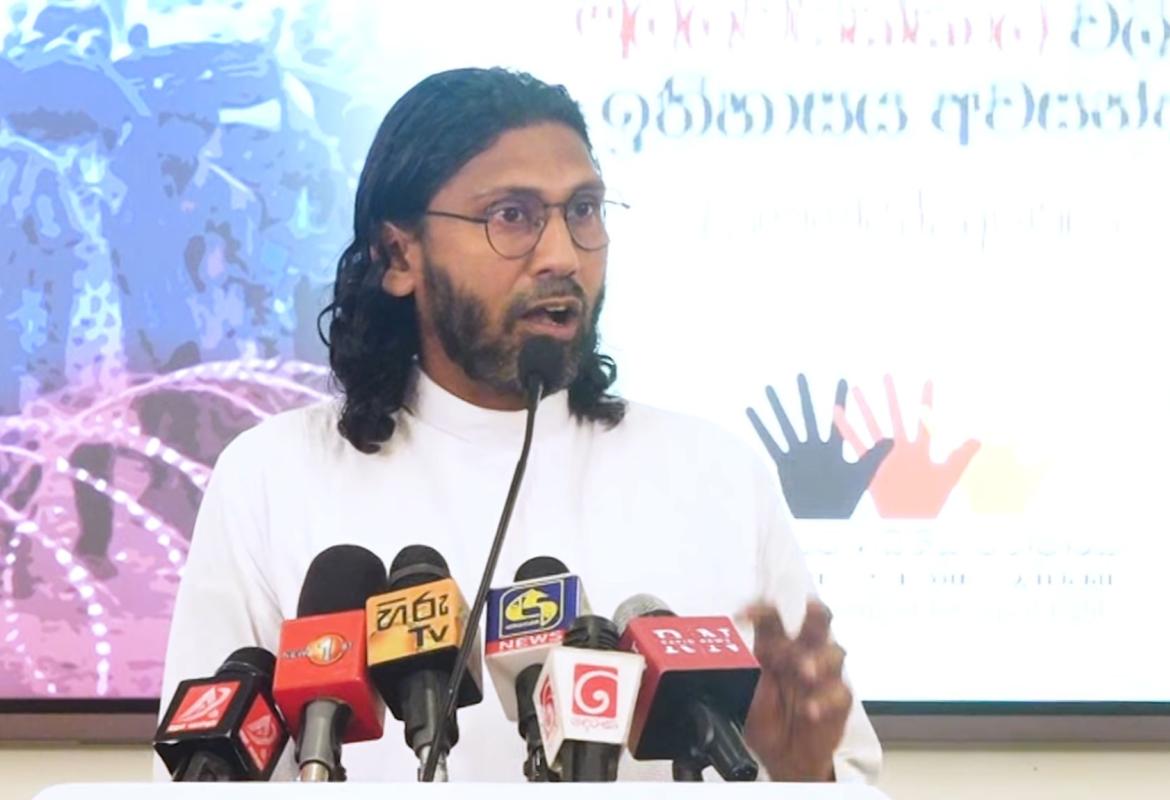
The full text of a speech delivered by Father Jeewantha Peiris on May 16, 2026, at the SEDEC Caritas Hall, at an event organised by the Movement for Equal Rights. _____ I think it is very important that in this evening’s discussion we ask the question of whether Mullivaikkal marks the end of history, because what we are still reading is history written by someone. Most of the time, we…

Revisiting Sri Lanka's bloody war

Writing in the New York Times, the panel of experts, appointed by the UN Secretary General, Ban Ki Moon to examine the final stages of the armed conflict in Sri Lanka - Marzuki Darusman, the former attorney-general of Indonesia, Steven Ratner, a professor of law at the University of Michigan, and Yasmin Sooka, the executive director of the Foundation for Human Rights in South Africa - urged the 19th session of the UN Human Rights Council to ensure that "Sri Lanka fulfills its responsibilities to all its people and to the rest of the world".

Our duty to Sri Lanka, and human rights'

Writing in the Guardian, Archbishop Desmond Tutu and former Irish President Mary Robinson, members of The Elders, global leaders working for peace and human rights, called on the UN Human Rights Council to "support a resolution that seeks accountability for the terrible violations of international law".

See their full piece here. Extracts reproduced below:

This week the UN Human Rights Council has an opportunity and a duty to help Sri Lanka advance its own efforts on accountability and reconciliation. Both are essential if a lasting peace is to be achieved. In doing so, the council will not only be serving Sri Lanka, but those worldwide who believe there are universal rights and international legal obligations we all share.

“In the absence of a credible and independent investigation into what happened in Sri Lanka, the Human Rights Council has an obligation to uphold human rights law and international humanitarian law during its upcoming 2012 sessions.,”

“Against this background, and continuing reports of human rights violations by the authorities, we urge the council to support a resolution that seeks accountability for the terrible violations of international law that have taken place, and establishes mechanisms to monitor progress on the steps the government is taking on accountability. If there is insufficient progress by the government in establishing a credible accountability process in the near future, we urge council members to support the establishment of an independent investigation.

India tries to charm its neighbours

Extracts from The Economist article on India's strategy in the region and China's role:

Memories in Sri Lanka of India’s troubled role in the long and bitter civil war appear to be fading. Meanwhile, India, officially, does not worry about signs of its neighbour’s dalliance with China.

That is despite the news last month that Chinese investors took 85% control of the project extending Colombo’s main commercial port, which handles goods traded almost entirely with India.

Virginia University student documents internment testimonies

After having visited Sri Lanka in January 2012, as part of a group of students from the University of Virginia’s School of Law, Calleigh McRaith has written a brief summary of testimonies that he gathered from IDPs and others interned by Sri Lanka.

Focusing on IDP settlements, former LTTE members and those trapped in Sri Lanka’s prison system, McRaith concludes,
“The program of rehabilitation and on-going detention without charge of surrenderees continues to breed distrust among Tamil populations in the North, and many are still struggling to rebuild their lives after they were severely disrupted by the IDP internment.”
Extracts have been reproduced below. See the full piece here.
"Upon arriving in the camp she and the other IDPs were placed under close surveillance while the Army questioned people and attempted to screen out LTTE members – she was subjected to a strip search and was forced to go to the bathroom in front of the Army men, as they would not allow the IDPs to leave the presence of the guards even for these private acts. She began crying while telling this part of her story, saying that she felt shame because of this degrading treatment. She said that no matter what the government did now to try to win her trust, she could not give it because of how she was treated in Menik Farm."

"Petty theft and rape of young girls, by both the Army and camp residents, remain problems even now for those still living in Menik Farm, and the current residents expressed concern that life in the camps was destroying their culture and morality. Furthermore, it was reported that when some members of Menik Farm met with workers from an Indian NGO to discuss the camp conditions, the drinking water in the camp was shut off for five days afterwards – with the camp authorities explicitly saying that the water was withheld as punishment for talking to the NGO."

"This internment, particularly the harsh conditions and extreme surveillance, was not justified as necessary to national security, and IDPs who were detained deserve some sort of remedy for this violation of their rights. The government should also be sharply criticized for this policy, and further investigation should be conducted into the IDPs claims that the internment was a cover for maintaining control over the Tamil population. Furthermore, some IDPs are still living in Menik Farm, and their concerns about rape in the camps and the government-created obstacles to resettlement on their lands should be addressed."

"The bright vision painted by the government was a far cry from the reports I heard from people who had gone through rehabilitation."

Britain pushes initiative to gather evidence of Syrian crimes

“On top of this, we must end any illusion the regime has that it can act with impunity in Syria. There is no doubt that mass murder is being committed. Some 6,000 people have already been sacrificed to the regime's brutal determination to cling to power. Those carrying out these crimes may well think that they will get away with it.

Time for a reality check on the Sri Lankan civil war'

In his blog in The Independent, journalist Emmanuel Stoakes calls for an independent inquiry into alleged war crimes.

See below for extracts.

"It has been around a thousand days since the conclusion of the war. In that time the response of the government to allegations of abuses, up to and including the LLRC report has been unconvincing, redolent of political self-service rather than an authentic attempt at truth and reconciliation.

War crimes in Sri Lanka'

Former BBC foreign correspondent based in Sri Lanka and Iran, Frances Harrison, writes in the Dawn newspaper, Friday.

See here for original article.

The article has been reproduced in full below:

My brothers' keepers'

In its latest edition, The Economist writes about the Rajapakse clan's stranglehold on Sri Lanka.

See below for extracts.

Time to put principles into action at UN Human Rights Council

Louise Arbour, President and CEO of the International Crisis Group and former UN High Commissioner for Human Rights, writes a piece entitled “Tamils await their peace dividend”, for the Globe and Mail.

Extracts have been reproduced below. See the full piece here.

Sri Lanka’s killing fields are ‘beyond the boundary’

Ahead of the English Cricket team’s planned tour of Sri Lanka in March, former Member of European Parliament Robert Evans has written in the Tribune Magazine, calling on the tour to be cancelled and for a full independent international investigation into war crimes.

See the full piece here. Extracts have been reproduced below.

"The reality is somewhat different and in truth, there is probably no worse or more dangerous time for an England team to travel to this troubled and divided nation."

"The case to cancel the tour is augmented in the light of Jon Snow’s ‘Sri Lanka’s Killing Fields’"

"Despite being faced with the ‘evidence’ in this video, authenticated by the UN, the Sri Lankan Government has dismissed the tapes as fabricated and refuses to initiate a proper investigation or take any action against the accused soldiers."

"But neither the international community nor the International Cricket Council should accept this position... An England cricket team should not tour a country where the Government stands accused of such appalling atrocities and refuses to investigate them."

"Apologists for apartheid claimed then that politics and sport were completely separate, and that the internal politics of South Africa were nothing to do with cricket. Nelson Mandela being imprisoned for 27 years because for the colour of his skin was not for some, a reason to isolate South Africa from international cricket."

"Fast forward forty years and there are few people who will argue that Mike Gatting, Graham Gooch and their rebel tours helped the cause. Likewise those who condone apartheid today are silent, dangerous and very few in number."

"In the light of this international condemnation, it would be naive and provocative at the very least, for Andrew Strauss or anyone else to lead an England team to play tests in Colombo and Galle. With perhaps as many as six of the possible England team being South African born, the politics and sport arguments will be familiar to them."