
WORLD NEWS

World News

Latest news from and about the homeland

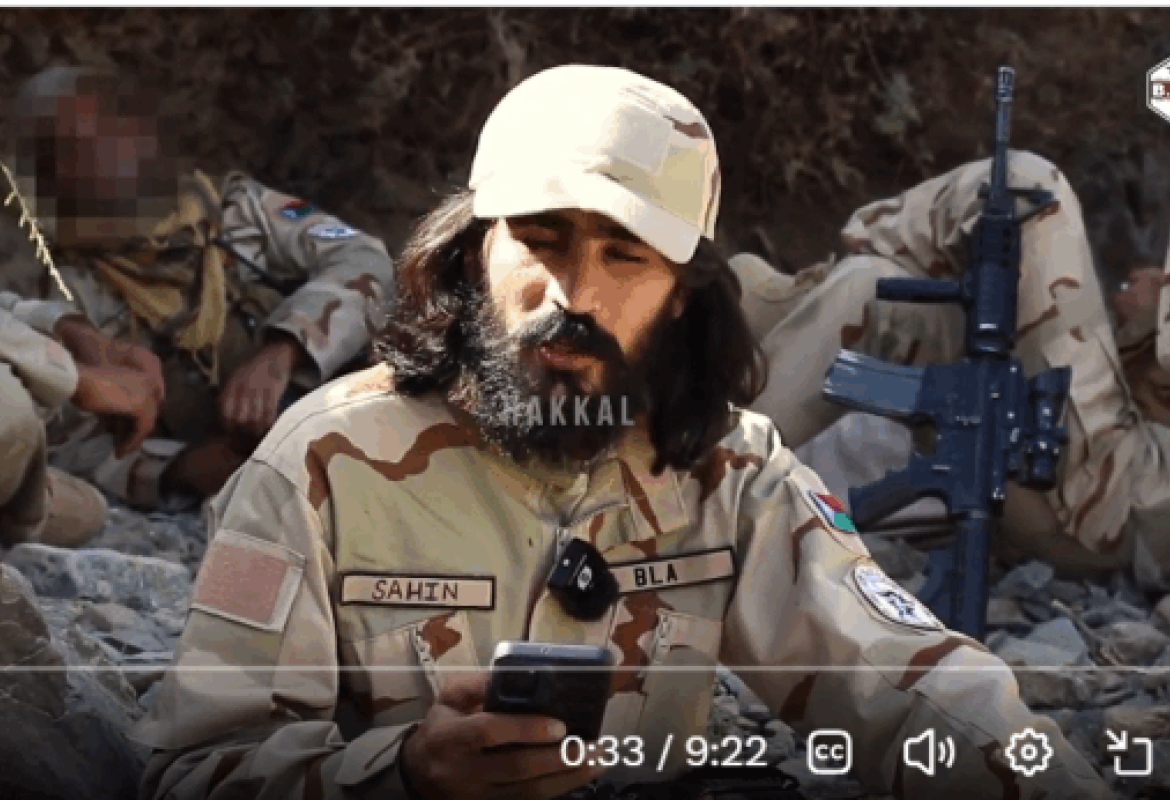
Photograph: Screenshot/ BLA video A fresh wave of extrajudicial killings and enforced disappearances has been documented across Balochistan this month, as Baloch rights groups recorded the recovery of several bodies of men who had earlier been forcibly taken, and appealed once more to international institutions that have largely ignored the province. The Baloch Yakjehti Committee (BYC)…

CAR armed factions agree to ceasefire agreement including accountability for war crimes and genocide

Armed factions in the Central African Republic agreed to a peace accord that entailed disarmament and accountability for war crimes committed over the two years of conflict.

The agreement signed by 10 groups and the CAR defence ministry on Sunday at the country’s capital, Bangui, also detailed that those involved in the ’crime of genocide, war crimes and crimes against humanity’ would be denied amnesty.

Scottish devolution plans do not go far enough says Nicola Sturgeon

The British government’s plans to devolve powers to Scotland do not go ‘far enough’, said the leader of the Scottish National Party (SNP) on Monday.

Nicola Sturgeon added that the prime minister had ‘no right’ to rule out a second referendum on independence and said that she planned to hold a meeting with David Cameron in the near future, reports the Independent.

EU to call for military action against Libyan people smuggling networks

The European Union has established military attack strategies in Libya to target people smuggling networks which have been deemed to contribute to  a rise in migrant refugees attempting to travel to Europe through treacherous conditions.

The UK is drafting a UN Security council resolution to authorise such a mission, which would be headed by Italy leading a coalition of 10 countries including the UK, France and Spain.

Houthis move to accept ceasefire plan as UN criticises Saudi strikes in Yemen

Houthi militants have moved towards accepting a proposed 5-day ceasefire in Yemen, as the United Nations representative in the country criticised airstrikes being carried out by the Saudi Arabia-led coalition.

The ceasefire could begin on Tuesday if both sides agree, however the Houthis warned that "any military violation of the ceasefire from al Qaeda and those who stand with it and support it and fund it will be responded to by the army and security and the popular committees".

A Houthi statement also pledged to deal “positively” with the ceasefire and any humanitarian efforts in the country.

The latest development comes as the UN humanitarian co-ordinator for Yemen, Johannes Van Der Klauuw, said he was "deeply concerned" by Saudi Arabia led airstrikes against the Houthis, saying the conflict “is taking a dreadful toll on civilians”.

Preventing atrocities now — and in the future

Jared Genser is an associate of the Carr Center for Human Rights Policy at Harvard University. This article was first published in the Washington Post on April 24, 2015.

Three years ago, President Obama created the Atrocities Prevention Board to help fulfill his important recognition that the prevention of mass atrocities is a “core national security interest and core moral responsibility.” With ethnic conflict boiling in Burma, South Sudan and the Democratic Republic of the Congo, among other places, such a mechanism has never been more important. Although the board’s operations have been classified, there have been some visible successes. But much remains to be done.

Russia seeks extradition of 93-year old suspected Nazi from Canada

Russian prosecutors are seeking the extradition of suspected Nazi collaborator, 93-year old Vladimir Katriuk, from Canada.

Mr Katriuk, who lives in Ormstown, Quebec, and has Ukrainian and Candian citizenship, volunteered to serve in the SS battalion 118 and was personally involved in the “genocidal massacre” of the Belarusian village of Khatyn on March 23, 1943, also known as the Khatyn massacre, according to a statement from the Russian embassy in Ottawa.

Indonesia releases Papuan political prisoners

The Indonesian government has released five Papuan political prisoners, as President Joko Widodo promised reforms.

The president told media on Saturday, restrictions on foreign journalists in the restive province of West Papua, which have been in place for decades, will be lifted.

The five political prisoners – convicted over a 2003 raid on an Indonesian military weapons arsenal – were granted clemency by Widodo in a ceremony at Abepura prison, in the provincial capital Jayapura.

Dozens of Papuan activists remain in prison, many for protesting against the government and raising the banned Morning Star flag of Papua, both considered acts of treason by the government.

Israeli banks ordered to adhere to international sanctions programmes on Russia

Israeli banks were ordered to adhere to sanctions programmes set up by the US and EU last year, reports Haaretz.

The Bank of Israel instructed all Israeli banks to adhere to the sanctions programme in a letter from its Banking Supervision Department.

“The sanctions regimes are complicated, with different consequences. There are international sanctions against certain parties and businesses in Russia,” the central bank wrote in its letter.

Former Egyptian President Mubarak sentenced to 3 years in prison

Former Egyptian president Hosni Mubarak was sentenced to three years in jail in a retrial of  a corruption case on Saturday.

The court’s judge, Hassan Hassanein, on Saturday, announced,

“The ruling of the court is three years in prison without parole for Mahomed Hosni Mubarak and Gama Mohamed Hosni Mubarak and Alaa Mohamed Hosni Mubarak.”

Charges against Mr Mubarak for conspiring to kill protesters during the uprising in Tahrir square were dropped, reports Reuters.

WHO declares Liberia free of Ebola

The World Health Organisation declared Liberia free of the Ebola virus, after 42 days passed since the last reported new case in the country.

“The outbreak of Ebola virus disease in Liberia is over,” the WHO said in a statement, after 4,700 people had died from the illness in the country. Over 11,000 people are thought to have died in the region form the disease since last year, as Guinea and Sierra Leone continue to battle the virus.

Liberia's President Ellen Johnson Sirleaf told the BBC,