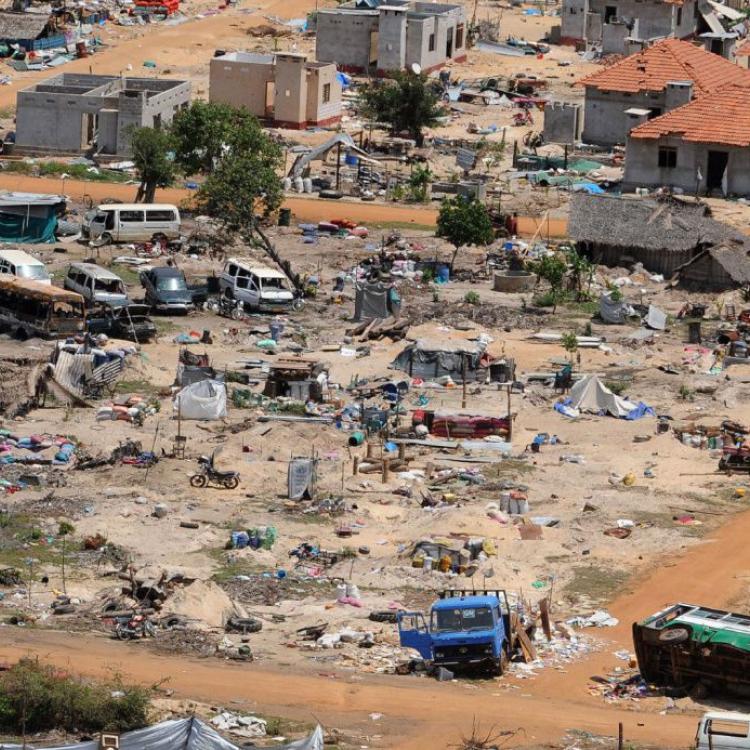
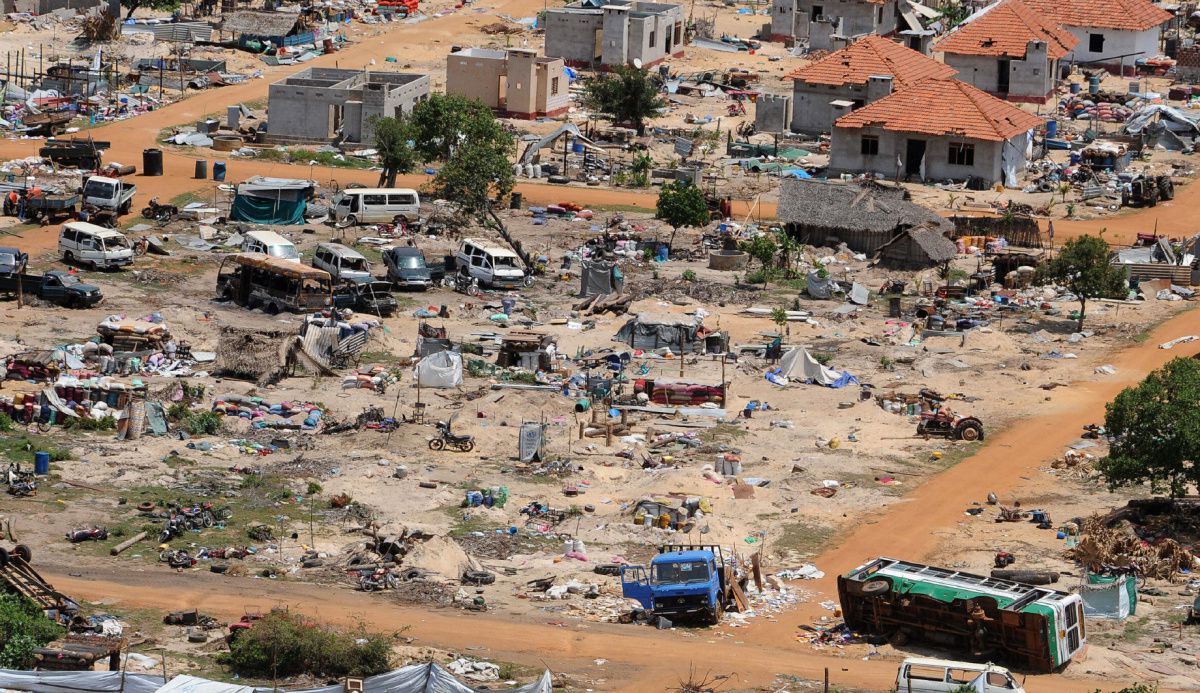
The aftermath of the Mullivaikkal genocide photographed days after it concluded.
On June 3rd, Sri Lankan Foreign Affairs Minister Vijitha Herath met with the Palestinian Ambassador to Sri Lanka, Ihab Khalil. Following the meeting, Sri Lanka reaffirmed its support for the right of the Palestinians to statehood, expressed deep concern regarding the “current humanitarian situation in Gaza,” and reiterated its commitment to a two-state solution.
In return, the Palestinian representative expressed appreciation for Sri Lanka’s stance on Palestine, the continuous solidarity and support within regional and international institutions, and a recent donation of USD 1 million to the Gaza Children’s Fund through UNRWA.
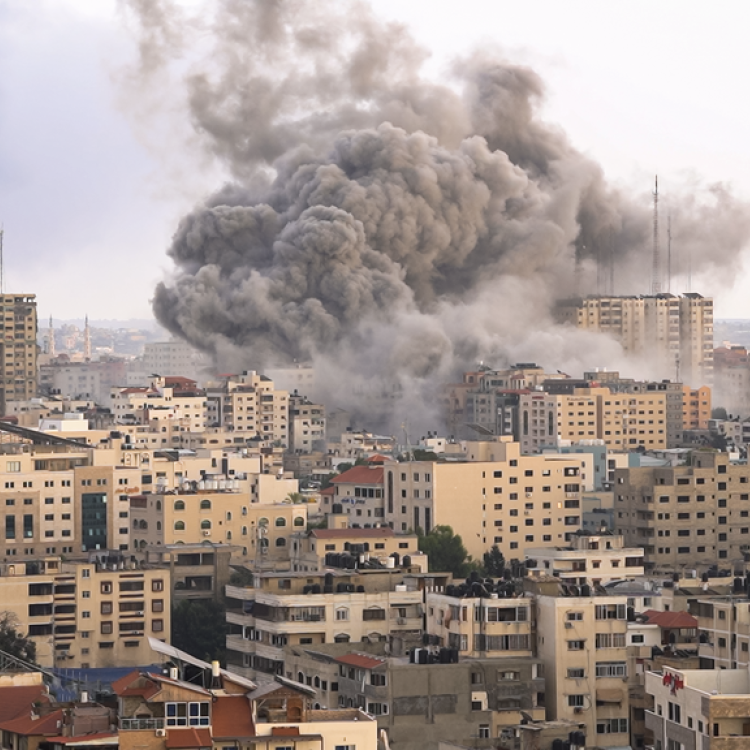
While Sri Lanka’s support for Palestine is noteworthy amidst Israel’s ongoing genocide of Palestinians in Gaza, the hypocrisy of this stance reveals itself on two levels. First, the government’s support for Palestine contradicts its deepening ties with Israel historically and more recently. Second, supporting Palestinian rights while denying the genocide orchestrated against Tamils underlines the selective solidarity exhibited by the Sinhala-Buddhist nationalist state.
Sri Lanka and Israel: Deepening Ties
The Foreign Minister’s meeting with the Palestinian envoy occurred shortly after several engagements between Sri Lankan officials and Israel’s new ambassador, Reuven Javier Azar. The Israeli representative met with various Sri Lankan parliamentarians last month, discussing enhanced cooperation between the two countries in multiple areas, including security, agriculture, tourism, science, medicine, digital technology, trade and investment.
Labour relations between the two countries have also strengthened since October 2023, as the government has signed agreements that have sent tens of thousands of Sri Lankan workers to secure employment in sectors such as agriculture, construction, hospitality and sanitation. Minister Rathnayake defended Sri Lanka’s deepening ties with Israel, arguing that “Sri Lanka will act like several countries, including Saudi Arabia, China, and Russia, who stand with Palestine but continue ties with Israel for diplomatic and economic purposes.” Last year, Sri Lanka also opened a consulate in Haifa.
Although Sri Lanka upholds an image of solidarity with the Palestinian people on the world stage, this portrayal conveniently ignores this deepening relationship with the Israeli state, well before this latest episode of genocidal violence in Gaza.
In fact, Sri Lanka relied on advice from Israeli experts on expanding Sinhala-armed settlements on the Tamil people’s land by creating border villages, similar to how Israel colonized and expanded settlements on traditional Palestinian lands. A notable example is the Mahaweli Development Programme, a large-scale irrigation-based agricultural program that facilitated the settlement of Sinhalese farmers in the Northern Tamil areas. In 1977, Mossad, Israel’s intelligence agency, provided support by recruiting Israeli academics to write scholarly papers explaining the importance and feasibility of the scheme to lobby the World Bank for funding. In return, Solel Bonah, a major Israeli construction company, received a large contract to design and develop the Sinhalese settlements. Today, Israel continues to develop illegal settlements to further fragment the Palestinian state, as Sri Lanka similarly builds Sinhalese settlements across the Tamil homeland to disrupt contiguity.
Israel was also a major weapons supplier to Sri Lanka during the armed conflict against the Liberation Tigers of Tamil Eelam. In the 1990s and 2000s, Sri Lanka bought unmanned aerial vehicles from Israel, which were tested and used on Palestinians in Gaza. These drones were instrumental in Sri Lanka’s brutal offensive during the culmination of the armed conflict, as humanitarian sites were attacked and nearly 170,000 Tamil civilians were killed in the Mullivaikkal genocide in May 2009.
Sri Lanka also purchased Israeli-made aircrafts, patrol boats, and sea-to-sea missiles. The Kfir jets, for example, were used by the Sri Lankan Air Force to bomb a Tamil orphanage during the Sencholai massacre, killing 53 school girls. Donald Perera, former Air Force Commander, Chief of the Defence Staff, and Ambassador to Israel, has openly admitted Israel’s support for Sri Lanka and even expressed his appreciation for this relationship. In 2010, a year after the culmination of its genocidal military campaign, he said, “For years Israel has aided our war on terror through the exchange of information and the sale of military technology and equipment,” and that Sri Lanka “received billions of dollars in aid.”
As such, the historical and ongoing relationship between Sri Lanka and Israel contradicts the island-state’s global image of solidarity with Palestine. This cooperation directly affects Palestinians, revealing how statements of support on one hand ring hollow when the other hand is used, in the backrooms of diplomacy, to deepen ties with a fellow oppressive state. Military cooperation strengthens the security state that terrorizes both Tamils and Palestinians; economic relations exacerbate the dispossession, displacement and genocide of Palestinians; and diplomatic engagement conveniently ignores Israel’s continuous history of settler-colonialism, apartheid, and ethnic cleansing.
Moving Forward: Accountability, Justice and Solidarity
Sri Lanka’s disregard for Israel’s breaches of international law is not surprising, as the admission of these injustices would also force the Sri Lankan state to reckon with its own past and present. It would push the ethnocratic state, bound by the tenets of Sinhala-Buddhist nationalism, to acknowledge and rectify the war crimes and genocide committed against the Tamil people, conveniently concealed under the disingenuous rhetoric of “fighting terrorism.”
Instead, over the past sixteen years, Sri Lanka has continuously denied genocide and even lobbied against the recognition of it as such; staunchly refused an international investigation into human rights violations committed during the armed conflict; and repeatedly repressed the Tamil people’s right to remember and commemorate the loss of their loved ones. Without any hint of justice and accountability, the Sri Lankan state is rapidly colonizing the Tamil homeland by grabbing land, expanding Sinhalese settlements, and advancing the Buddhization through the development of Buddhist viharas (temples). Meanwhile, the Sri Lankan state also continues to extend its militarization of the North-East, including by entrenching its military presence in schools, businesses, resorts and tourist activities across the North and East of the island.
The lack of accountability and justice for Tamils created the blueprint for evading responsibility for genocide. Consequently, the international community has greenlit the ongoing genocide in Gaza as international actors fail to take any meaningful action to stop the carnage, similar to its inaction in 2009. Israel is borrowing from Sri Lanka’s playbook by denying humanitarian aid, shelling hospitals, and displacing civilians into so-called “safe zones” before bombing and converting designated humanitarian spaces into killing fields. Sri Lanka has even been cited as a model to emulate to achieve Israel’s objectives, underscoring the dangerous precedent set sixteen years ago. Like Sri Lanka once did, Israel is committing mass atrocities with complete impunity.
Although Sri Lanka expresses its support for the Palestinians, a closer look reveals that its allegiance is deeply entrenched toward Israel, perhaps unsurprisingly due to the parallels between Sinhala-Buddhist chauvinism and Zionism. Both ideologies are bound by similar historical and enduring foundations of ethnonationalism, state violence, militarization, displacement, dispossession, ethnic cleansing and genocide.
If the Sri Lankan state was serious about solidarity, beyond empty statements and symbolic gestures, it should sever all relations with Israel, including military, economic and political. Crucially, it must stand up and hold itself accountable for the atrocities and genocide committed against Tamils by allowing for an independent international investigation. Without such concrete actions, Sri Lanka will only exhibit selective solidarity for its self-interest, and at worst, continue to set the example of how to conduct grave human rights violations with total impunity. Sri Lanka’s hypocritical double standards are on display for the world to see – it must take decisive action to achieve any real sense of accountability, justice and solidarity.
_____
Rahul Balasundaram is a staff writer at the Tamil Guardian.