.jpeg)
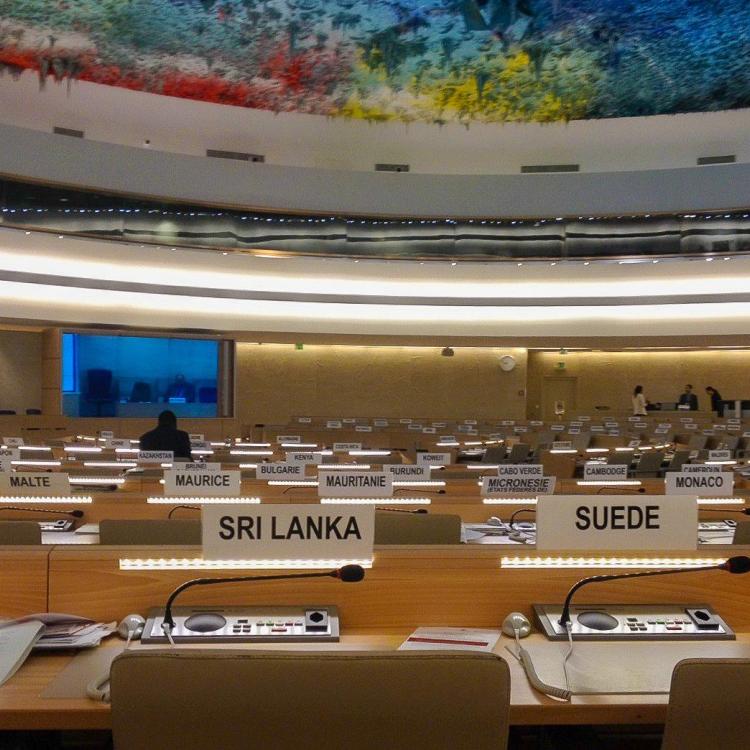
Sri Lanka’s Foreign Minister Vijitha Herath addressed the 60th session of the UN Human Rights Council in Geneva on Monday, where he insisted that accountability for mass atrocities would only be pursued through domestic processes, once again rejecting longstanding calls for international accountability for the Tamil genocide.
Herath claimed that Sri Lankan president Anura Kumara Dissanayake’s administration had embarked on a “historic journey towards transformational change,” outlining what he described as progress on governance, reconciliation and human rights. “We are firmly and genuinely committed to working towards a country that respects and celebrates the diversity of its people,” he told delegates.
The minister pointed to recent legislation on corruption, proposals to repeal the draconian Prevention of Terrorism Act, and plans to establish a Truth and Reconciliation Commission (TRC) as evidence of Colombo’s willingness to reform. He also claimed that the government had taken “proactive measures”. This comes despite continued arrests under the PTA and ongoing military occupation of the Tamil homeland in the North-East.
.jpeg)
Herath claimed that “external action will only serve to create divisions” and dismissed the UN-mandated Sri Lanka Accountability Project, insisting that prosecutions for unlawful acts would take place solely through “an independent national process”. He added that consultations were also underway to establish a "Truth and Reconciliation Commission".
The remarks echo the stance of successive Sri Lankan governments, which have consistently rejected international calls for justice for atrocities committed during the armed conflict. The UN has repeatedly warned that Sri Lanka’s domestic mechanisms, including the Office on Missing Persons (OMP), lack independence and credibility, with victims’ families across the North-East denouncing them as tools of whitewash.
Just this week, excavations at the Chemmani mass grave in Jaffna uncovered hundreds of skeletal remains, including children and piled bodies, reinforcing Tamil demands for international prosecutions. Despite such evidence, Colombo continues to block any international role. Herath however told the Council that the government were providing resources for the excavations at the Chemmani mass grave site. A court hearing will be held later this month where a proposed budget and interim report on the excavations will be submitted.
In Geneva, Herath lauded the government’s inclusivity, highlighting the election of women, Malaiyahar representatives and a visually impaired MP to parliament. He spoke of welfare measures, infrastructure projects and budget allocations to the North-East, while portraying Sri Lanka as a country “embracing diversity as a strength.”
Yet Tamil civil society and human rights defenders have condemned these speeches as hollow, noting that surveillance, intimidation and militarisation persist in the North-East, while accountability for enforced disappearances, massacres and sexual violence remains absent.
UN High Commissioner for Human Rights Volker Türk, who visited Sri Lanka in June, has urged Colombo to accede to the Rome Statute of the International Criminal Court, release long-term detainees, and allow international expertise. His report stressed that Sri Lanka had “an opportunity to implement transformative reforms” but warned that justice could not be delayed indefinitely.
Herath’s response in Geneva made clear that Colombo will resist any such measures, appealing instead for the Council to “collaboratively join hands” with the government and abandon external accountability.
For Tamils, who for years have turned to the UN as a forum to voice their demands, Sri Lanka’s defiance is a stark reminder that justice will not come from Colombo.