
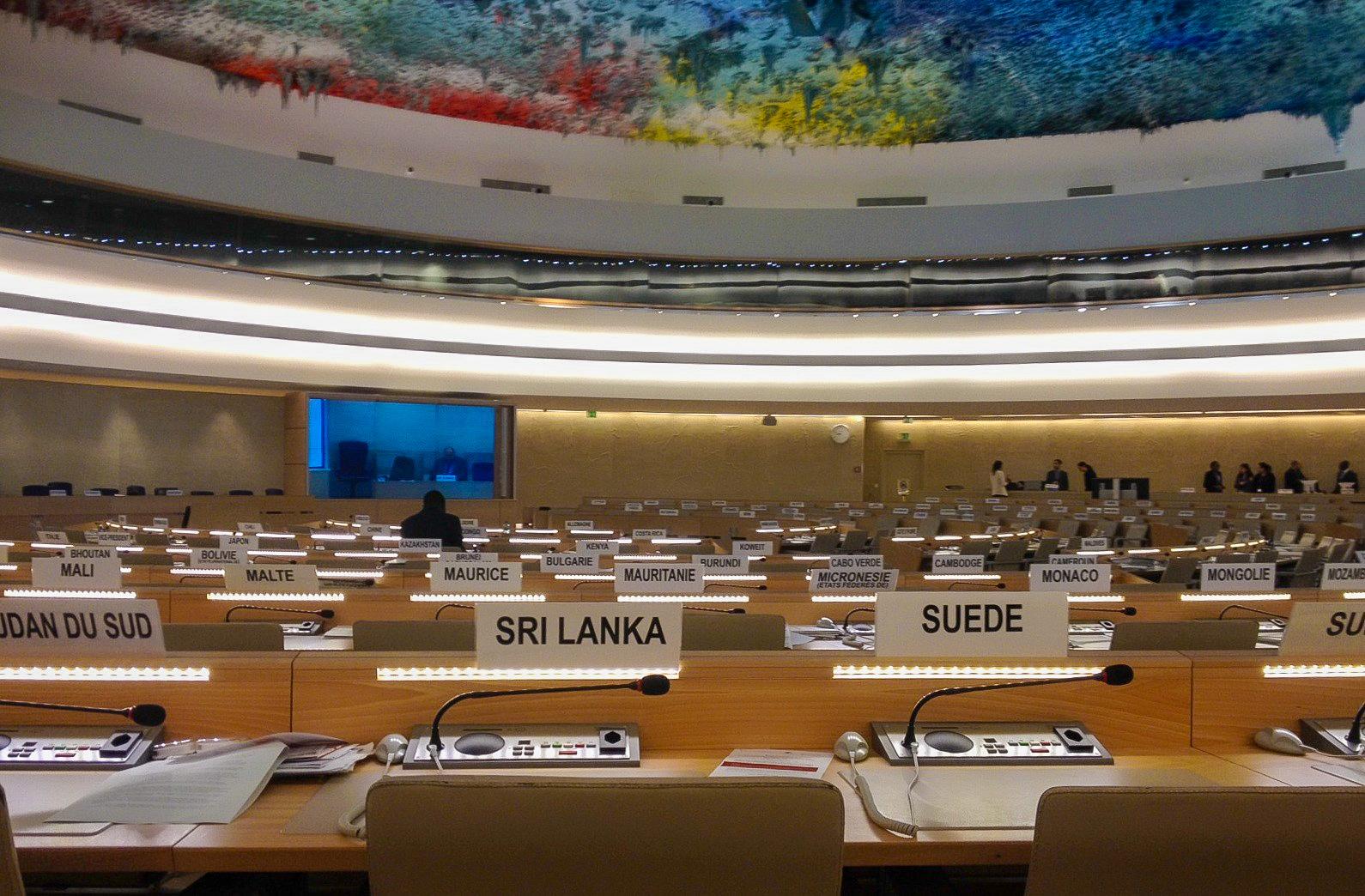
A new report from the United Nations Human Rights Office has called on the Sri Lankan government to address the “human rights violations and international crimes” as well as the “root causes” of the island’s ethnic conflict – but stopped short of endorsing a fully internationalised accountability mechanism.
The 18-page report, released today in Geneva, urges Colombo to “break from the past” and take “transformative” action to address the legacy of mass atrocities committed during and after the armed conflict. UN High Commissioner for Human Rights Volker Türk described the moment as “an opportunity” for the Sri Lankan state to restore the rule of law, acknowledge the state’s responsibility for atrocities, and end the systemic discrimination and militarisation that has defined Tamil life for decades.
“Today, an opportunity presents itself for Sri Lanka to break from the past, with the leadership pledging a fresh direction on long-standing issues, including delivering justice to victims, restoring the rule of law, and eliminating discrimination and divisive politics,” Türk said. “This process should start with a clear and formal acknowledgment of the violations, abuses and crimes that occurred, including during the civil war, of the responsibility of the State and security forces personnel, as well as non-state armed groups such as the LTTE, and of the enduring impact of this violence on victims and communities.”
He emphasised that the “pain and suffering of victims remains palpable” and that their demands for truth and justice “must be addressed.”
Tamil activists however warn that, without international enforcement, the recommendations risk becoming yet another addition to a long list of ignored UN findings.
International accountability
For several years, Tamil have repeatedly argued that domestic accountability is impossible in Sri Lanka due to the same “entrenched” culture of impunity the UN report now highlights.
And though the report acknowledges the “Government of Sri Lanka has declined to engage with the project and has continued to reject accountability-related resolutions at the Human Rights Council,” the High Commissioner still goes on to say that Colombo has the “primary responsibility” to investigate and prosecute crimes under international law.
He adds that this process “can be complemented and supported by international means.”
The report goes on to describe the work of the OHCHR Sri Lanka Accountability Project, which now contains over 105,000 items of evidence in its secure repository. “This repository serves as a unique resource to support truth and justice efforts, capturing patterns of international crimes including enforced disappearances, unlawful killings, torture, sexual and gender-based violence, and violations affecting children,” it said.
However, it goes on to acknowledge the complete lack of accountability for crimes committed, stating, “despite these efforts, OHCHR is not aware of any individual who has been publicly prosecuted and tried for international crimes related to the conflict”.
“After several years of calling on the Sri Lankan government for accountability, this latest report is doing the same thing again, but expecting different results,” said Ranjan*, a British Tamil activist who has worked on the issue of accountability at Geneva.
“This is not the first time the UN has told Sri Lanka what must change.”
“There is misplaced faith on this government which has proven itself both incapable and unwilling over the last year to address any of these issues.”
“The question is, when Sri Lanka refuses to act, will the world do anything about it? Or will we be back here again, years later, with another report and the same unfulfilled promises?”
Patterns of abuse that persist across governments
While welcoming limited government gestures, the report warns that intimidation of civil society actors, human rights defenders, journalists, and the families of the disappeared remains routine.
It notes that despite repeated promises to repeal the PTA, the government continues to use it to arrest and detain people arbitrarily, alongside reports of torture and deaths in custody.
Tamil civil society organisations say this underscores a reality they have been warning about for years: that successive Sinhala-led governments, regardless of political party, have maintained the same repressive security structures built during the war, and have no real incentive to dismantle them without external pressure.
The report called the use of torture and other forms of ill-treatment, “routine… notably in places of detention”.
The report’s recommendations echo long-standing Tamil calls for the release of all political prisoners, return of all military-occupied land, and acceding to the Rome Statute of the International Criminal Court (ICC).
Read the full text of the report here.