
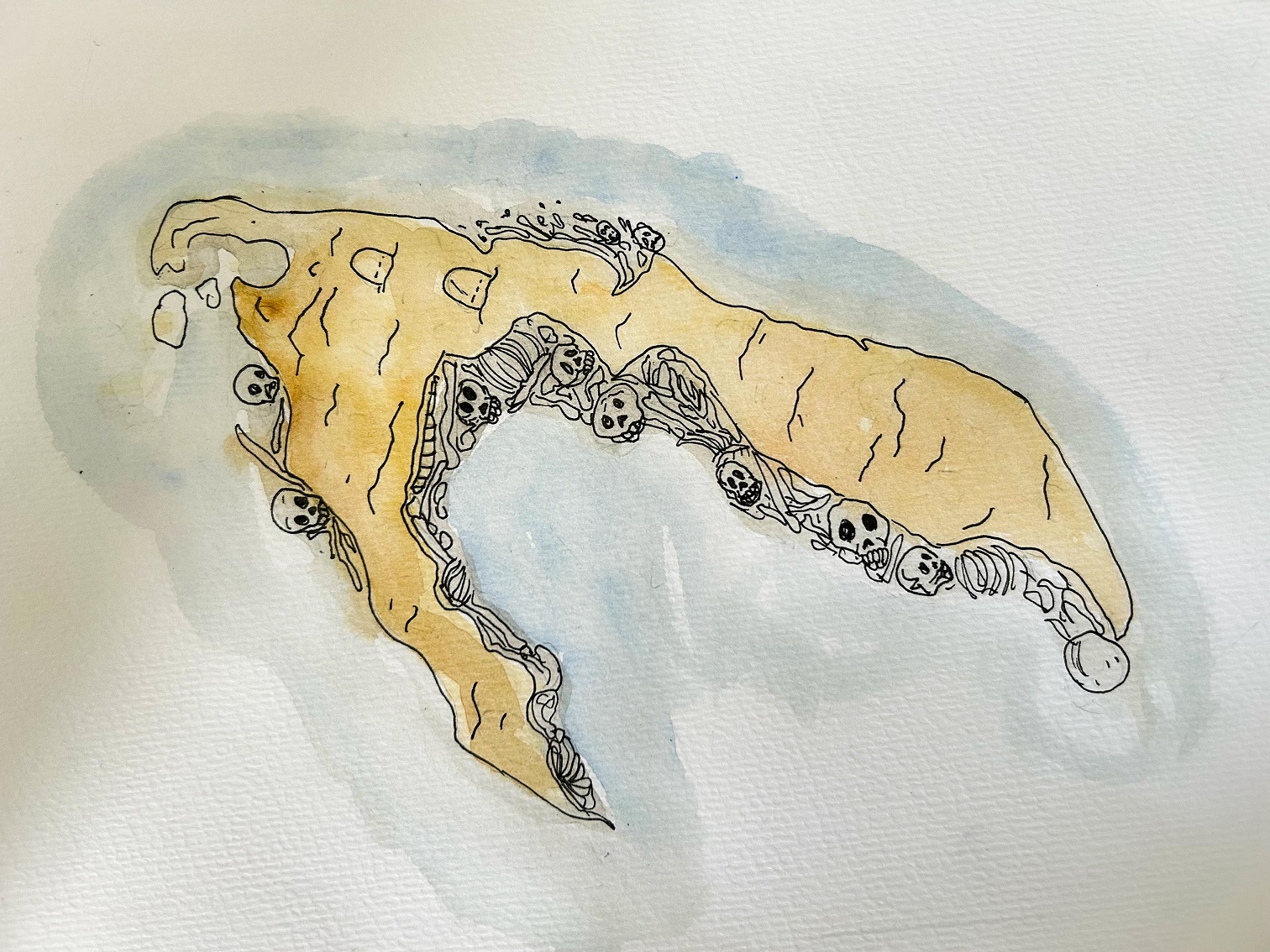
Artwork: Keera Ratnam
Volker Türk is no stranger to Sri Lanka. The UN human rights chief has repeatedly addressed the island’s enduring ethnic conflict at the Human Rights Council over the past year. He has denounced the ongoing torture and sexual violence, called for the perpetrators of human rights violations to be held accountable, and demanded that the “root causes” of the turmoil be addressed. Yet, as he prepares to visit the island later this month, little has shifted since his speeches in Geneva. Even with a new regime in power, the same climate of impunity remains. There is little prospect of progress for the High Commissioner in Colombo. Instead, it is the Tamil North-East, and Mullivaikkal in particular, where he must go.
Türk’s visit will be significant. It will mark the first time a UN High Commissioner for Human Rights has visited the island since Zeid Ra’ad Al Hussein in 2016. At that time, the then-government agreed to establish a “hybrid” court with international judges and prosecutors to finally hold those responsible for the crimes of 2009 to account. That fragile promise quickly disintegrated. Since then, successive regimes have openly rejected UN resolutions on accountability for atrocities — including the current National People’s Power-led government.
Sri Lanka’s ongoing refusal to deal with those crimes must form the cornerstone of Türk’s visit. His timing matters. With wars raging in Sudan and Palestine, the decision to visit Sri Lanka underlines how justice for the massacres at Mullivaikkal remains of global importance. Sri Lanka has been invoked repeatedly in recent months, including at the UN Security Council, as a cautionary example of the consequences of inaction and impunity. Indeed, the brazen assault on international humanitarian law unfolding in Gaza, and the unwillingness or inability of the international community to stop it, mirrors what happened at Mullivaikkal. Many have argued that it laid the groundwork for the horrors the world is witnessing today. The failure to account for the genocide continues to reverberate.
In visiting Sri Lanka, the High Commissioner can play a role in speaking out against such crimes. Across the world, the UN is increasingly being seen as toothless at best, and complicit at worst, when it comes to tackling human rights violations. Disillusionment and frustration with the global body and the current international order are widespread, particularly among Tamils, who have waited years for justice. Türk must clearly demonstrate that on the island, and around the world, it is with the victims and survivors he stands.
This will mean having frank and uncomfortable conversations with Sri Lankan officials. For years, the state’s strategy has been one of obfuscation — offering hollow domestic mechanisms whilst knowing it faces little consequence for refusing to comply with resolutions. To this day, following more than a decade of UN Human Rights Council resolutions, not a single political or military leader has been brought to justice. The human rights chief must be clear that this impunity can no longer continue. Diplomatic niceties cannot be allowed to paper over the continued refusal to reckon with these crimes.
There are clear concerns among Tamils that this visit will be used by the government to whitewash its record; superficial photo shoots alongside government officials, reverent engagements with Sinhala Buddhist monks, and empty assurances that serve only to legitimise a regime that remains hostile to genuine accountability. Türk must not allow his visit to become part of this theatre. The NPP government rejects the notion that systemic crimes occurred let alone the need for justice for them, maintains repressive legislation, and continues to engage in incessant land grabs in the Tamil homeland. All of these are issues that Türk himself has denounced openly. Engagement without firm condemnation of the state’s actions risks becoming complicity.
For guidance, he should listen to the Tamil families of the disappeared. These are the indomitable women of Eelam who have been on the frontlines of the struggle for justice for more than 3,000 days. The same mothers who marched through the streets holding photographs of their abducted children then are still there today, demanding the same answers.
They have put forward two simple demands.
First, that Türk meet with them directly to hear their concerns and understand their pain. Last year, the High Commissioner himself warned that “tens of thousands of families of the disappeared are still looking for their loved ones and face intimidation, arrests and violence in their search.” Meeting with them would not be a mere symbolic gesture. It would be an act of solidarity with some of the most courageous human rights defenders on the entire island.
Second, they have asked that he visit Mullivaikkal, the very site where tens of thousands of Tamils were massacred in 2009. He would not be the first senior human rights figure to do so. Amnesty International’s Secretary General visited on May 18 last year as thousands gathered to commemorate the genocide. Such a visit would send a powerful signal to Colombo and to the world that the atrocities which took place on that beach have not been forgotten, and neither has the pursuit of justice.
This is a wound that continues to fester. Even as Türk visits the island, the bones of Tamils are still being unearthed in mass graves; mothers are still protesting; and the North-East remains under military occupation. This visit must not become another chapter in the UN’s long history of failed engagement with Sri Lanka. It must instead be a moment where survivors are heard, their demands amplified, and the principle of accountability reaffirmed.
As international law and order come under fire around the world, the UN High Commissioner for Human Rights must demonstrate how the global body will live up to its mandate and to his own office’s commitments.
That begins at Mullivaikkal.