Traders in Jaffna have petitioned Sri Lanka’s Minister of Trade, Wasantha Samarasinghe, to allow the import of goods through the Kankesanthurai (KKS) port, including clothing and vehicle spare parts.
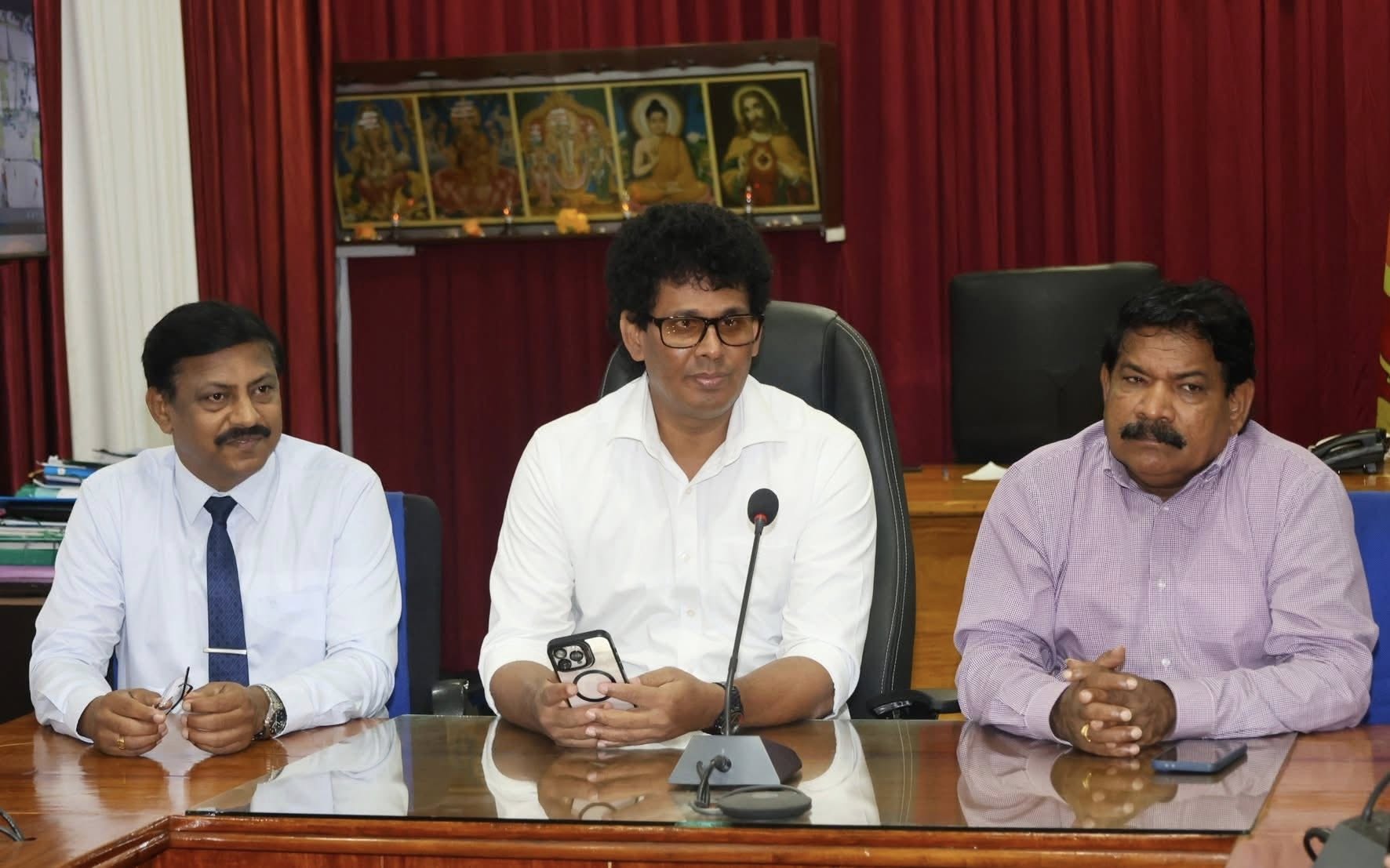
During his visit to Jaffna, Samarasinghe held a discussion with the Jaffna District Chamber of Commerce, where traders outlined their request. They emphasised the need to establish proper storage facilities in the district and sought approval to bring in shipments of between 350 and 500 metric tons through KKS port. The minister assured them that steps would be taken to grant the necessary permissions.
District Secretary M. Pradeepan noted that KKS port is currently used solely for passenger transport, but argued that enabling imports would be a boost for the local economy. He added that storage facilities belonging to the Sri Lankan Navy in Jaffna comprise three sections, with one allocated to the Provincial Council and another to the Food Department. Renovation work, however, would be required before the facilities could be used for trade.
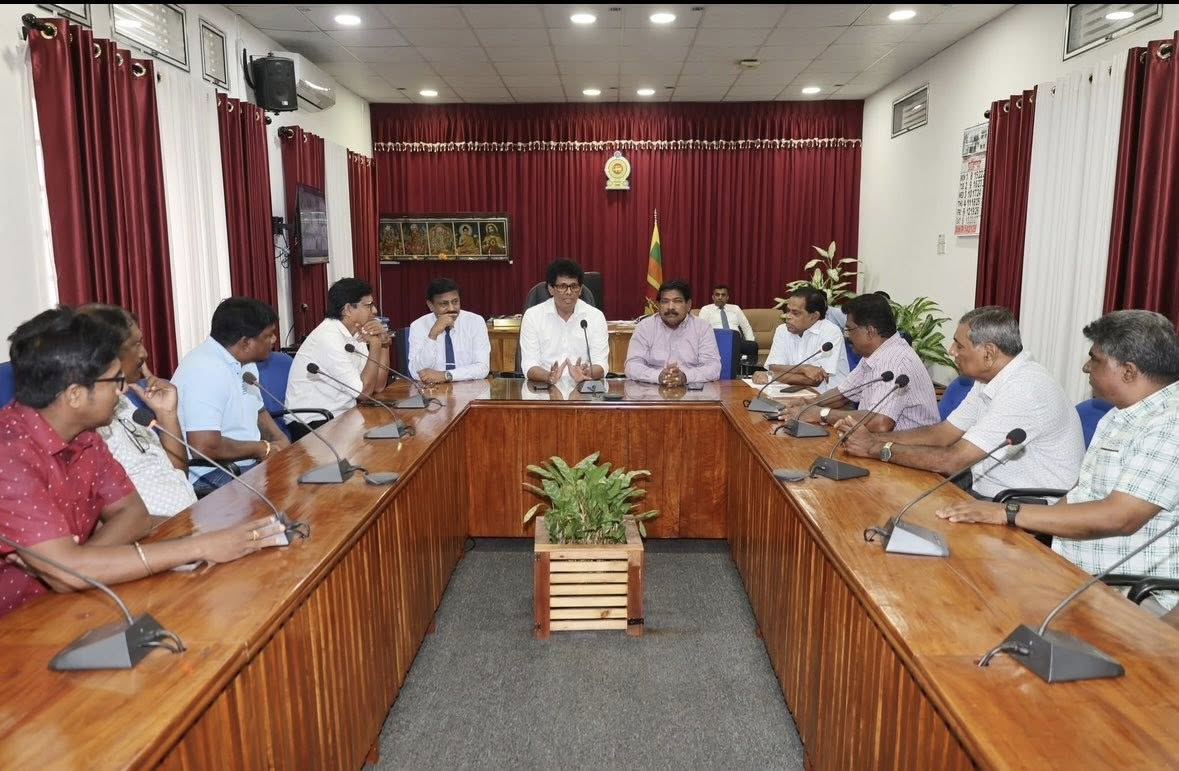
Samarasinghe instructed the Chamber of Commerce to formally submit proposals regarding renovation and storage requirements.
The discussion was attended by Fisheries Minister Ramalingam Chandrasekar, Members of Parliament K. Ilangumaran and S. Sripavanandharasa, Special Assistant to the District Coordination Office S. Kapilan, and representatives of the Chamber of Commerce.
KKS port, once under tight military control and only gradually reopened after decades of closure, remains a politically sensitive site in the North. Vast swathes of land around the key port continue to remain under Sri Lankan military occupation.
Traders in Jaffna argue that its use for imports could ease costs and improve access to goods. Tamil civil society has long raised concerns over militarisation and the continued occupation stifling local livelihoods in the North-East.