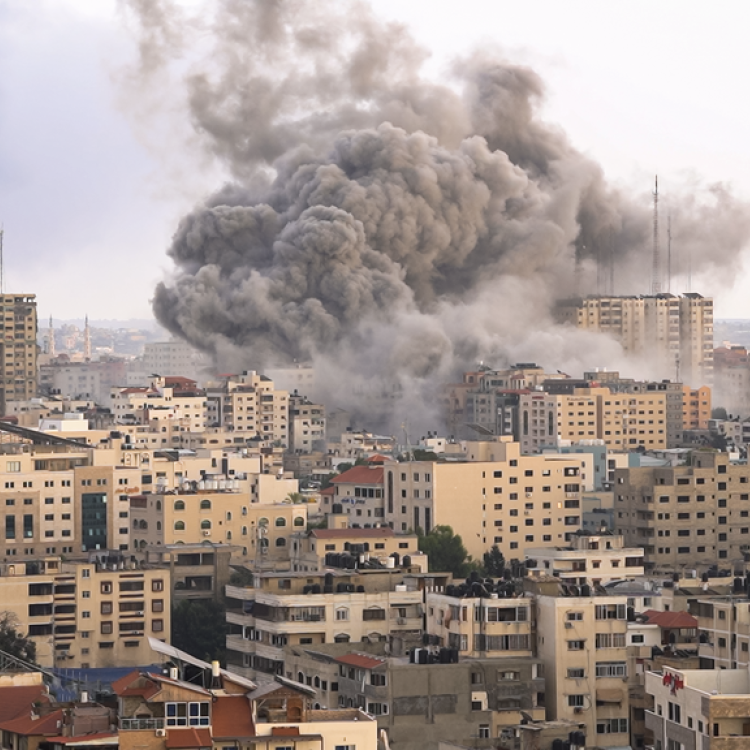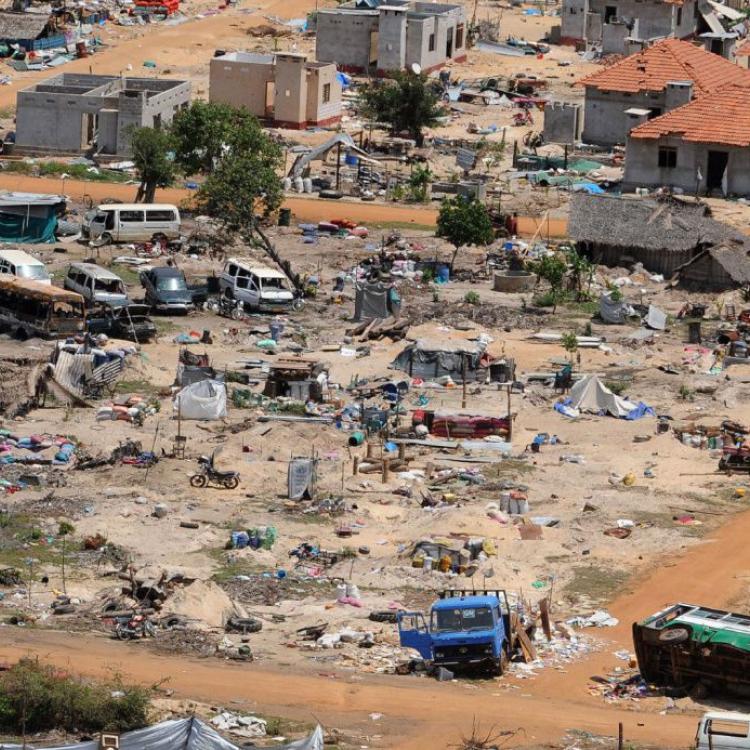

Self-styled "leftist" Israeli platform Telem published an article suggesting that Israel should replicate Sri Lanka’s approach to defeating “terrorist organizations”, comparing the offensive in Gaza to the 2009 genocide in Mullivaikkal.
The article, written by Nevo Spiegel, a Research Fellow at the Molad Institute – the Center for the Renewal of Democracy, and a doctoral student in philosophy at Tel Aviv University, argues that Sri Lanka defeated the “Tamil rebels” using disproportionate military force combined with "political means".
Spiegel claims the Israeli government did not aim to defeat Hamas but instead to eliminate Palestinian nationalism which has resulted in the survival of Hamas and the strengthening of Palestinian nationalism.
In the piece, Spiegel articulates that one of the main examples of a defeat of a guerrilla organization through military force is Sri Lanka’s military subjugation of the Liberation Tigers of Tamil Eelam (LTTE). He argues that Sri Lanka achieved this by the "elimination of the Tamil leadership, to the conquest of large areas, to the massive bombing of areas considered a humanitarian haven and the killing of thousands of civilians".
"A study of the Sri Lankan strategy indeed reveals many similarities to the way the Netanyahu government and the IDF conducted the war in Gaza," he adds, stating "the strategy in question is indeed immoral and inappropriate".
"At the same time, the government controlled the information coming out of the battle zones and freed itself from the shackles of international norms," he wrote. "As a result, the military structure of the Tamil Tigers collapsed."
The author continues to argue that the Sri Lankan government relied on political steps to achieve victory by asserting, “Unlike Israel, where any discussion of Palestinian sovereignty was rejected as illegitimate, political discourse in Sri Lanka never ruled out the possibility of partial Tamil sovereignty.”
He goes on to claim "the majority Sinhalese group even agreed to grant [Tamils] some semblance of self-government".
"Political discourse in Sri Lanka never ruled out the possibility of partial Tamil sovereignty," he added.
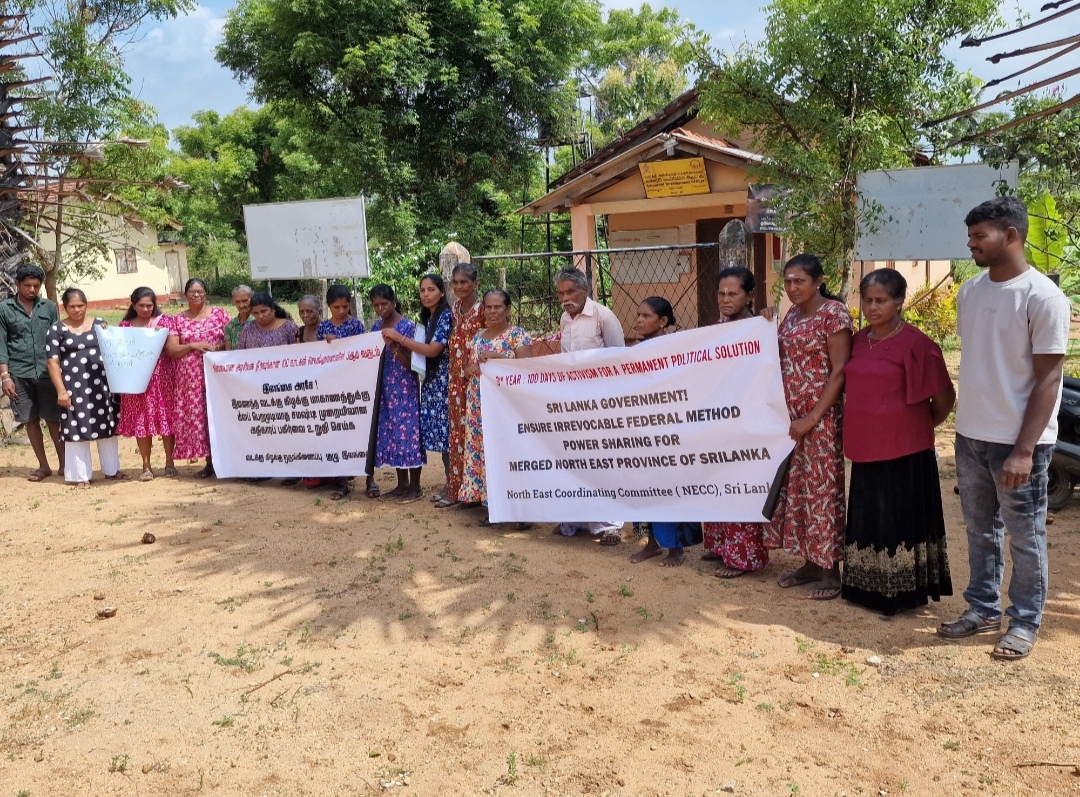
Tamils protesting for federalism earlier this year.
It is unclear what "self-government" Spiegel is describing, as Tamils across the North-East continue to agitate for their political rights. Throughout the decades of armed conflict, Sri Lanka repeatedly broke ceasefire agreements and failed to meaningfully devolve power to the Tamil people in the aim of maintaining a unitary state, despite the Tamils’ aspirations for an independent state. Spiegel asserts that the Rajapaksa government promoted governance reforms that strengthened local governments, while in reality, successive governments on the island have rejected devolution of power since the end of the armed conflict.
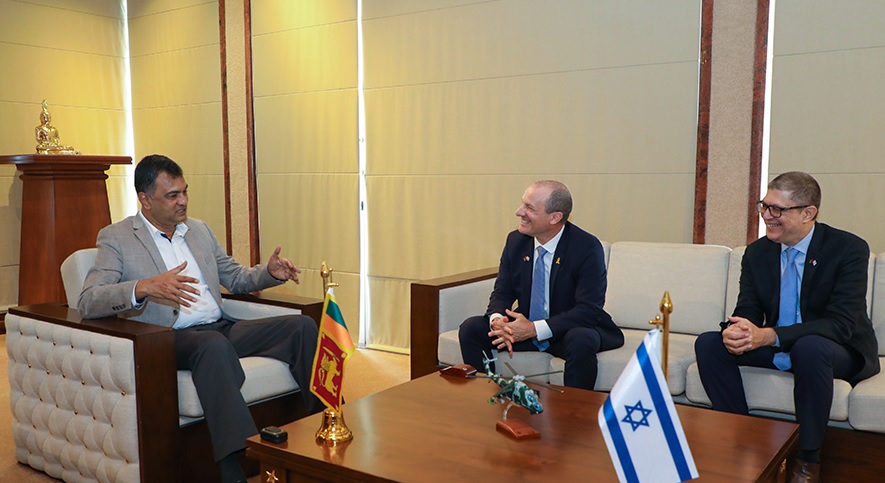
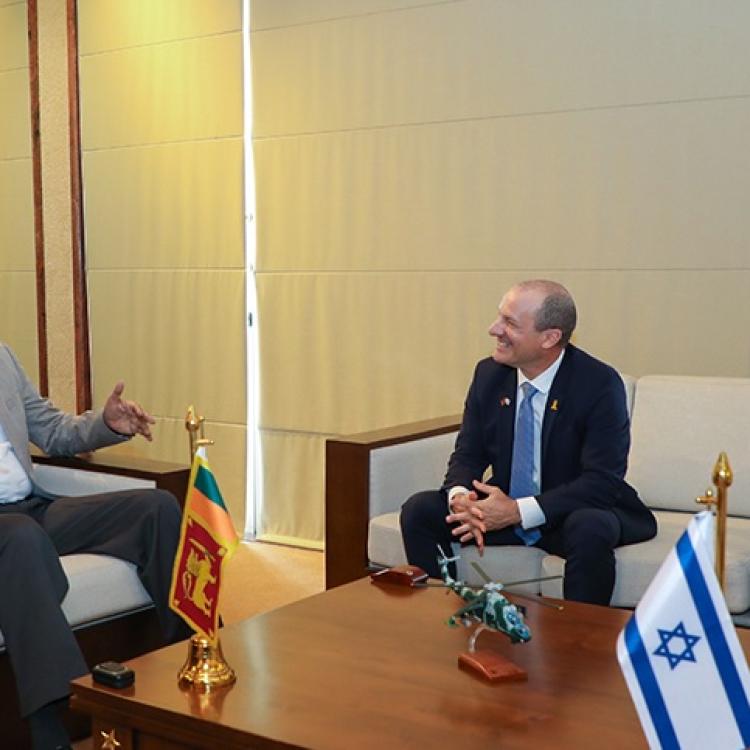
Israel’s Ambassador to Sri Lanka meets Sri Lanka’s Defence Secretary earlier this year.
The author also writes that the Sri Lankan government gradually withdrew direct control over Tamil areas, even though the North-East remains occupied and disproportionately militarised, with some areas having one soldier for every two civilians.
He further adds that the Sri Lankan government made transitional justice efforts and launched rehabilitation programs for former combatants. Those "programs" involved rape, torture and arbitrary disappearances, and the Sri Lankan state continues to reject any international investigation into war crimes. The detention of Tamil civilians under the Prevention of Terrorism Act (PTA) still persists to this fay.
Spiegel concludes that “the guerilla organization was eliminated, but there was no attempt to eliminate the Tamil national identity, but to integrate it into the Sri Lankan framework,” despite the Tamil people’s continued resistance against the integration within the unitary state structure.
Ultimately, the author writes that Israeli Prime Minister Benjamin Netanyahu’s government alienated itself from tactics beyond the use of force, in contrast to Sri Lanka’s actions, to the detriment of its objectives.
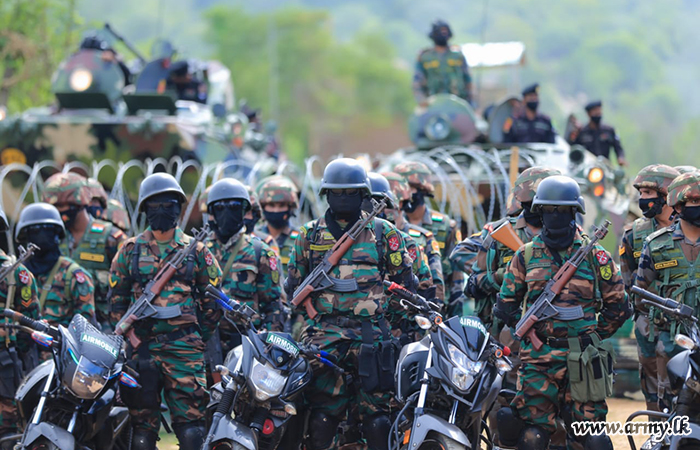
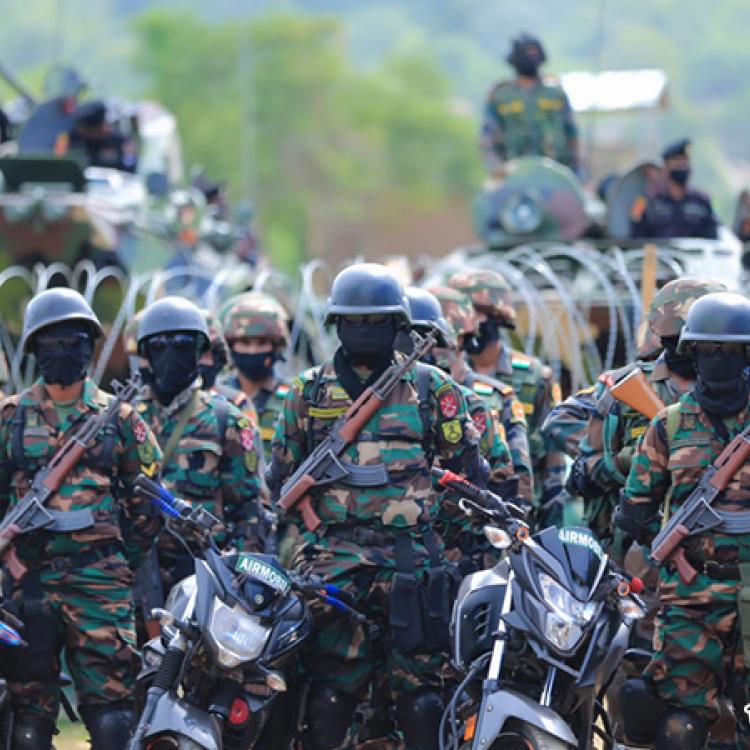
File photograph: Sri Lankan soldiers.
Many have drawn parallels between Israel's and Sri Lanka’s military tactics, which have been both labelled as a genocide by international organisations, academics and various governments. Last week, a ceasefire was announced under the first phase of the United States President Donald Trump’s peace plan.
According to official figures, 67,938 Palestinians, including at least 20,179 children, have been killed as a result of Israeli attacks on Gaza since October 2023, although the real death toll is much higher, with thousands still under the rubble. Despite the ongoing ceasefire, Israeli attacks have continued to kill Palestinians, including nine people across the Gaza Strip on Tuesday.
Telem describes itself as "leftist" and "a written platform – print and online – for an in-depth discussion of the challenges facing the State of Israel in general and progressive Zionism in particular".