
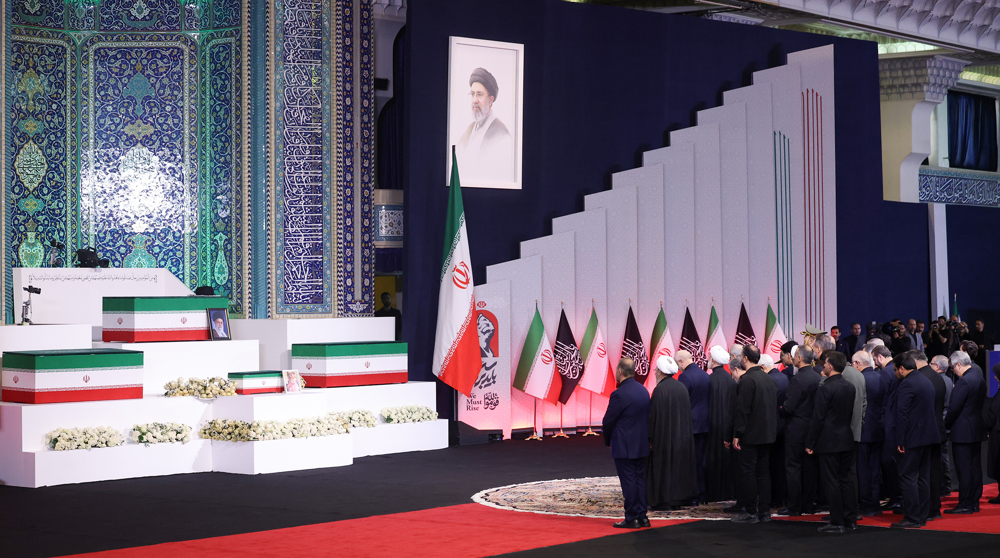
Sri Lanka has sent Deputy Speaker Dr. Rizvie Salih to Tehran to represent Colombo at the state funeral ceremonies of Iran’s late Supreme Leader Ayatollah Ali Khamenei.
Khamenei, 86, was killed in a joint United States-Israeli air strike on his compound in February, ending a 36-year tenure at the head of the Islamic Republic.
Iran began a week of mourning and funeral ceremonies on Friday, with foreign leaders and delegations visiting the site in Tehran where Khamenei’s body is lying in state.
The main ceremonial funeral services are scheduled to take place in Tehran over the weekend, with further rites expected to continue before his burial in Mashhad on 9 July.
Salih is expected to represent Dissanayake at the official functions in Tehran. He was received by Iranian government officials and Sri Lankan embassy officials after arriving in the Iranian capital.
Iranian officials earlier said senior officials and leaders from more than 30 countries were expected to attend funeral ceremonies, while later state-linked reports said representatives from around 100 countries would take part in the wider mourning events.
Russia is expected to be represented by Dmitry Medvedev, the former president and deputy chairman of the country’s Security Council. China has sent He Wei, vice-chairman of the Standing Committee of the National People’s Congress.
Sri Lanka’s decision to send a senior parliamentary figure to Tehran places Colombo among the states publicly paying respects to Khamenei at a moment when Iran remains locked in confrontation with Israel and the United States.
It also underscores the long relationship between Sri Lanka and Iran, which has spanned successive Sri Lankan governments and deepened during the final years of Colombo’s war against Tamils.
Sri Lankan leaders paid tribute to Khamenei after his killing in March, with Foreign Minister Vijitha Herath visiting the Iranian embassy in Colombo to sign a book of condolences.
“Today l offered my deepest condolences to the Islamic Republic of Iran on the death of His Eminence Ayatollah Ali Khamenei. Our bilateral ties broadened significantly under his tenure. Sri Lanka remains appreciative of lran's friendship. Our thoughts are with the Iranian people.”
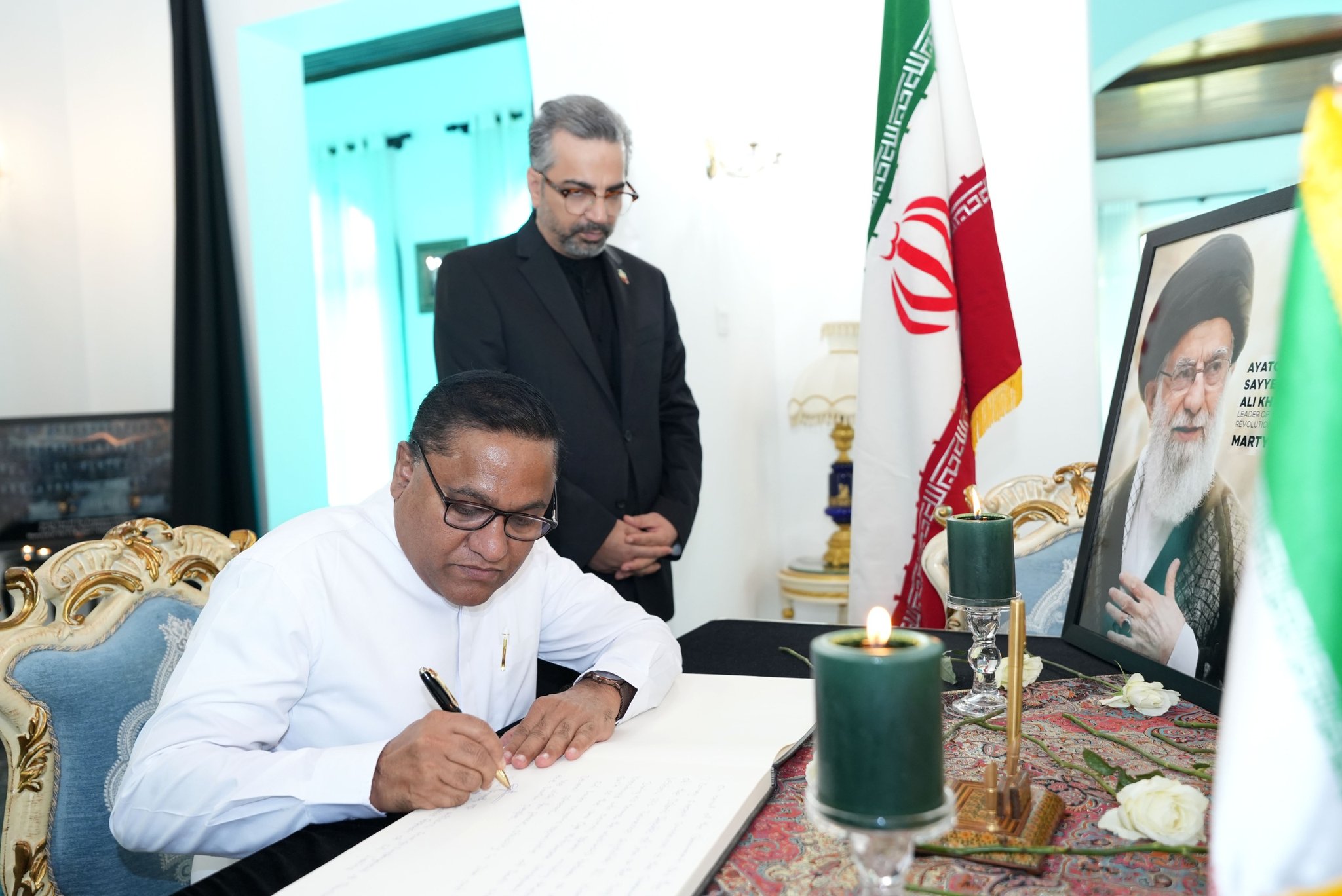
Former Sri Lankan president Ranil Wickremesinghe, Opposition Leader Sajith Premadasa and Sri Lanka Podujana Peramuna General Secretary Sagara Kariyawasam also visited the Iranian embassy to convey condolences.
Those tributes reflected the depth of Colombo’s ties with Tehran during Khamenei’s rule.
In 2004, then Sri Lankan president Chandrika Bandaranaike Kumaratunga met Khamenei during an official visit to Tehran. Mahinda Rajapaksa later met him during the Non-Aligned Movement summit in 2012, while Maithripala Sirisena also met the Iranian leader during a visit to Iran in 2018.
Iran was one of the states that supported Sri Lanka during its brutal war against Tamils, alongside Israel and other international backers.
Tehran reportedly supplied around US$150 million worth of arms to Sri Lanka in 2005, as the state intensified its military campaign against the Tamil people.
In 2007, after LTTE commandos destroyed aircraft at the Anuradhapura airbase during Operation Ellalan, Colombo reportedly turned again to Iran for financial assistance to replace destroyed aircraft and acquire military equipment.
The ties continued long after the end of the armed conflict.
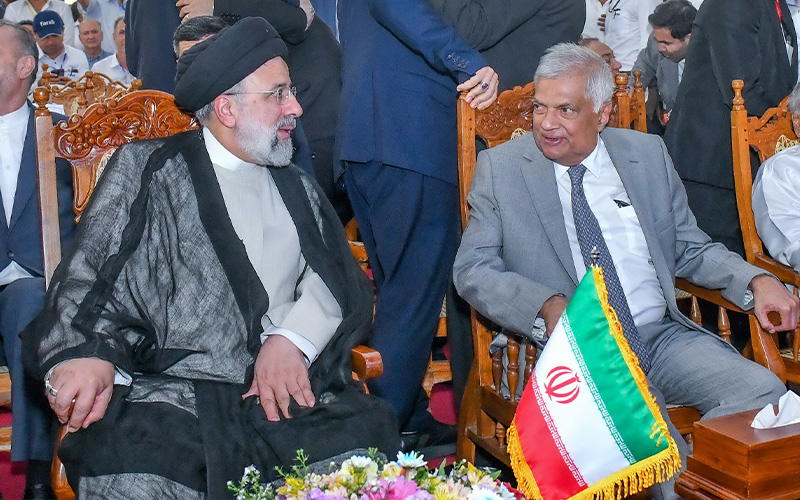
In April 2024, Sri Lanka hosted Iranian president Ebrahim Raisi just hours after the United States warned that countries engaging in business with Iran could face sanctions risks.
Raisi visited the island to inaugurate the Iranian-funded Uma Oya hydropower project, while Colombo and Tehran discussed further cooperation in development, energy, trade and technical services.
Sri Lanka had also used tea exports to pay off US$251 million in outstanding oil dues to Iran, structuring the arrangement to avoid breaching United States sanctions.
For Colombo, Iran has long offered fuel, infrastructure finance, diplomatic backing and, at key moments, military assistance without the human rights conditions raised by some Western states. That has made Tehran an attractive partner for successive governments seeking external support while resisting accountability for mass atrocities committed against Tamils.
At the same time, Sri Lanka has tried to maintain close ties with Iran’s adversaries.
Colombo continues to deepen military and economic engagement with the United States, while also maintaining growing labour, trade and diplomatic links with Israel.
This balancing act came under sharp scrutiny earlier this year after the Iranian warship IRIS Dena was struck by a United States torpedo off the southern coast of Sri Lanka.
The United States later admitted sinking the Iranian vessel, which had issued a distress call near Galle after being hit in the Indian Ocean.
Sri Lanka’s navy and air force launched a rescue and recovery operation, bringing injured Iranian sailors ashore and recovering bodies from the waters off the southern coast.