
Tamil Guardian 11 February 2012
US state department officials visit Vanni |
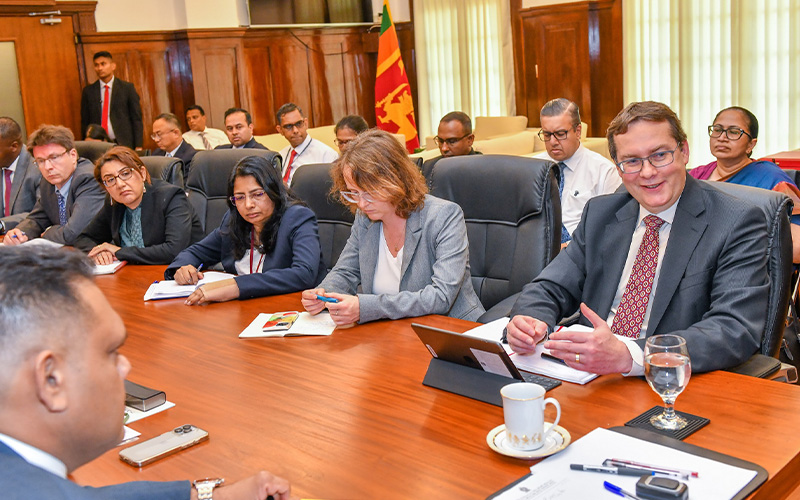
The US ambassador at large for war crimes, Stephen Rapp, led a team of US officials, including the assistant secretary of state for South and Asian affairs, Robert O'Blake, to Vanni.
The delegation collected eye-witness testimonials from Tamil civilians in Mullaitheevu and Kilinochchi districts, reported Tamilnet.
See here for article on Tamilnet.
|
|
|
|
Tamil Guardian 10 February 2012
Without truth, grievances remain 'dangerously unresolved' |
Writing in the Dawn newspaper, former BBC foreign correspondent based in Sri Lanka and Iran, Frances Harrison, highlighting the "living hell" experienced by Tamils during the finally stages of the armed conflict in 2009, argues that "without the truth, reconciliation and forgiveness are simply not possible and the grievances that led to conflict in the first place remain dangerously unresolved".
See here for original article.
Extracts reproduced below:
"A preliminary investigation by the United Nations said Sri Lanka’s “conduct of the war represented a grave assault on the entire regime of international law” concluding that up to 40,000 Tamil civilians may have been killed in just five months."
"There are indications that the death toll could be even higher."
"Colombo has promoted its victory over the Tigers as a new way to defeat terrorism, dubbed “the Sri Lankan option”.
"This is in fact a terrible euphemism for a scorched-earth policy, failure to distinguish between combatants and civilians and removing independent witnesses."
"The traumatised survivors describe a living hell."
"Desperate parents contemplated running into the sea with their children to commit suicide because they couldn’t bear the idea of dying one by one."
"When the Tigers were finally obliterated on May 18, 2009, the killing didn’t stop. In the final hours eyewitness saw the mopping-up operation as soldiers threw grenades in bunkers where injured rebels lay, unable to flee."
"Some of the last civilians who walked out say thousands of dead bodies lay sprawled on the ground, rotting in the tropical heat."
[more]
|
|
|
|
The Independent 10 February 2012
'Time for a reality check on the Sri Lankan civil war' |
In his blog in The Independent, journalist Emmanuel Stoakes calls for an independent inquiry into alleged war crimes.
See below for extracts.
"It has been around a thousand days since the conclusion of the war. In that time the response of the government to allegations of abuses, up to and including the LLRC report has been unconvincing, redolent of political self-service rather than an authentic attempt at truth and reconciliation.
"Even some of the most ardent patriots who instinctively rally to Rajapaksa must be growing weary of reflexive cries of “lies and propaganda!” every time new allegations surface. Any panacea’s placebo comforts dim with overuse.
"For this reason, among many others, Sri Lanka should allow for an independent inquiry into crimes that are alleged to have occurred during the endgame of the war - to decisively prove the inference of its representatives that there is nothing to hide.
"Having said that, here’s a thought: if America can table such a motion and expect a response, why shouldn’t the armed forces of Tommy “we don’t do body counts” Franks, and all Bush’s men not expect the same over, say, certain events in Fallujah, Haditha and Abottabad?
"And doesn’t Sri Lanka’s failure to self-examine convincingly also apply to Britain’s pathetic Hutton report on Iraq?
"Sri Lanka must be held open to international scrutiny for its alleged war crimes- Britain and America too.
"But don’t hold your breath."
Time for a reality check on the Sri Lankan civil war - The Independent (10 Feb 12)
|
|
|
|
Tamil Guardian 09 February 2012
Sri Lankan Major General exposed government's abductions to US - Wikileaks |
Prasad Samarasinghe, a Major General in Sri Lanka's army and former military spokesperson to the Sri Lanka High Commission in London informed the US about the Rajapaksa adminstration's use of abductions as "political retribution against those though to be disloyal to the Rajapaksa administration", and the prosecution of scapegoats to "appease the international community", according to a US embassy cable, dated 6th June 2007.
Major General Samarasinghe is also the chief signal officer of the army and chief controller at the centre for research and development at Ministry of Defence. He was also the commander for three separate brigades in Jaffna, vanni and Trincomalee, Colonel General Staff, 22 Division Headquarters, Trincomalee, Colonel General Staff, Directorate of Operations, Army Headquarters, Assistant Military Secretary, Army Headquarters and the Centre Commandant, Sri Lanka Signal Corps.
[more]
|
|
|
|
Tamil Guardian 09 February 2012
Sri Lankan minister threatens to attack journalists |
Douglas Devananda, a Sri Lankan minister and leader of the paramilitary group, EPDP, threatened physical attacks on journalists, reported Tamilnet.
In an article published Thursday, Tamilnet quoted Devananda as saying,
“I told my [paramilitary] boys to beat up these journalists. But, the boys are not paying attention. It seems I have to go in person and do it to make these journalists behave"
His remarks were made during a meeting held at the Jaffna District Secretariat to unemployed graduates, when he learned that the Jaffna edition of Thinakkural had exposed the diversion of funds from school development in Vanni, to a swimming pool showcased by Mahinda Rajapaksa.
See here for Tamilnet article.
See related articles:
Paramilitaries monopolise Jaffna cable TV through violent intimidation (10 Jan 2012)
2007 US cable: Sri Lanka killing through Tamil paramilitaries (16 Dec 2010)
|
|
|
|
The Economist 09 February 2012
'My brothers' keepers' |
In its latest edition, The Economist writes about the Rajapakse clan's stranglehold on Sri Lanka.
See below for extracts.
'The past months have brought strikes, riots and protests by students, railwaymen, prisoners and public workers. The opposition Tamil National Alliance swept local elections in the north, leaving the president’s party in the dust. Ranil Wickremasinghe, the main Sinhalese opposition leader, no ball of energy himself, claims to see wide “protests and agitation against unfulfilled promises”.'
'Hushed café talk about a “Colombo spring” overstates things, but Mr Rajapaksa may remember how such grumbles and protests helped his own rise to power. Most outsiders focus on his headaches abroad.'
'In March the United Nations will consider a resolution on Sri Lanka over suspected killings of thousands of Tamil civilians and rebel prisoners in the last days of the war. Last month Hillary Clinton, the secretary of state, said America would vote against Sri Lanka. A retired senior official frets about an “adversarial lock” closing on his country.'
'Yet matters at home may be more troubling. Furious recriminations followed the murder in October of a senior politician, an old friend of the president, in a shoot-out with a fellow MP. Rumours of graft in infrastructure deals persist. A big investor calls the government “extremely corrupt and arrogant”. In the past this businessman went along with kickbacks of a “few million dollars: this is a developing country, after all”; but he balked once demands rose to tens of millions of dollars to win tenders for projects funded with Chinese loans. The bribes, he suggests, are split between Chinese state-owned partners and members of the ruling clique. Morals aside, he says this makes it impossible to turn a profit. He has been threatened, including with violence, for speaking out.'
My Brothers' Keepers - The Economist (11 Feb 2012)
|
|
|
|
Tamil Guardian 09 February 2012
Rudd urged to act over Sri Lanka |
Australian Foreign Minister Kevin Rudd has been under fire for failing to respond to Sri Lanka’s Lessons Learnt and Reconciliation Commission report, despite assurances that he would.
The report, which was released in December 2011, has already been criticised by both the Canadian and British governments, as well as facing further condemnation from human rights groups.
Greens Senator Lee Rhiannon, cited the Australian government’s collaboration with Sri Lanka over asylum seekers fleeing the island towards Australia as a possible reason for the delaying, telling reporters in Canberra,
"Foreign Minister Kevin Rudd has waived aside growing international concern about Sri Lankan war crimes for months citing the need to wait for the LLRC report."
"It is almost two months since the LLRC report was released, yet Mr Rudd remains tight-lipped."
"War crimes and crimes against humanity were committed in our region, and we have a responsibility to speak out against it and ensure those that were responsible are held to account."
However, a spokesperson for the Minister’s office said that the government would "make its views known shortly" and stated,
"The government has consistently urged Sri Lanka to investigate all allegations of crimes committed by both sides to the conflict."
|
|
|
|
|
|
Tamil Guardian 08 February 2012
South African Tamils demand international investigation |
 |
|
Photograph IOL News
|
Tamils in South Africa staged a protest on 4th February demanding an international investigation into the allegations of war crimes and crimes against humanity in Sri Lanka.
The protest, organised by the Tamil Federation of Gauteng (TFG), was held in Lenasia, south of Johannesburg.
Nadas Pillay, president of the TFG said,
“Today, February 4, 2012, Sri Lanka celebrates Independence Day and projects to the world that it has a stable country with a democracy. But while it looks fine from the outside, within the country it has inequality among its citizens, no freedom of speech or association, people in transit camps, and no meaningful democracy,”
“With this oppressive regime we see a ray of hope that comes from the United Nations report.
“We in particular would like to emphasise the fundamental recommendation from the report that highlights the call for an international investigation within Sri Lanka.”
“Today we lay this wreath for all the people that have lost their lives, people that were persecuted, mercilessly killed, and for those people that to date have families who don’t know if they are dead or alive. Our role is to create awareness to the people of South Africa and the world."
“Therefore we are asking the South African Government and other governments that are part of the Security Council to vote in favour of an international investigation. This fight is not about the Tamil-speaking people but a fight for humanity.”
|
|
|
|
Tamil Guardian 08 February 2012
TNA holds talks with US war crimes envoy |
Members of the Tamil National Alliance met with US Ambassador-at-Large for War Crimes Issues, Stephen Rapp, who is on a 4-day visit to Sri Lanka.
Mr Rapp and TNA leader R. Sampanthan and MP M A Sumanthiran held discussions relating to the issues faced by Tamils on the island.
The visit comes as the US is gearing up for the UN Human Rights Session in Geneva later this month.
The US is thought to be preparing a resolution against Sri Lanka and is actively engaging with other countries garnering support for it.
Senior US officials Robert Blake and Maria Otero are also due to visit Sri Lanka later next week.
Obama war crimes envoy to visit SL – report
|
|
|
|
Tamil Guardian 07 February 2012
Tamils on 'walk for justice' meet EU representatives |
Tamil activists, on the second day of the 'Walk for Justice', met with representatives of the European Union and Members of the European Parliament, and urged them to push for an independent, international investigation at the 19th session of the UN Human Rights Council (UNHRC).
The EU representatives felt the demands were both "reasonable" and "timely", and pledged to create discussion regarding passing a resolution calling for such an investigation at the EU parliament, said activists.
The 'Walk for Justice' activists began their journey Sunday at the European Parliament in Brussels, demanding accountability and justice for victims of war crimes and crimes against humanity in the North-East of Sri Lanka.
|
|
|
|
Tamil Guardian 07 February 2012
‘Killing Fields’ production team nominated for Nobel Peace Prize |
An ITN team have been nominated for the Nobel Peace Prize, for producing Channel 4’s documentary “Sri Lanka’s Killing Fields”, a film that revealed the atrocities committed against civilians during the dying weeks of the civil war in 2009.
The nomination for the 2012 Nobel Peace prize was put forward by British Member of Parliament Siobhain McDonagh and Australian Senator Lee Rhiannon, after they wrote to the selecting committee on the 1st of February.
With graphic evidence of war crimes and crimes against humanity being committed against civilians, the documentary was first broadcast in July 2011 clocking over 1 million views in the UK. It has since been screened on national television in Australia, India, Denmark, Norway and Belgium. A follow-up film entitled "War Crimes Unpunished" will reveal more evidence of the atrocities committed during the war and is set to be screened later this year.
The letter to the Norwegian Nobel Committee details “timely and ethical journalism” displayed by the team and states,
“At a time when the failure of existing UN institutions is increasingly noted in relation to safeguarding human life and preventing brutal wars, the contribution of a documentary such as ‘Sri Lanka’s Killing Fields’ in bringing to light not only this failure in the context of the war, but also promoting the need for reviewing and revitalising the UN’s capacity in cases similar to the Sri Lankan war, are immense."
“By bringing to light the breaches of international conventions by the Government of Sri Lanka in a bold manner and by piecing together numerous forms of evidence in a coherent way, the value of independent journalism to the building of a peaceful global order in the century ahead has been amply demonstrated by the ITN team.”
The full letter has been reproduced below.
[more]
|
|
|
|
Tamil Guardian 07 February 2012
Senior US diplomats to visit SL for war crimes talks |
The US State Department said on Monday two senior diplomats are due to visit Sri Lanka later this month for talks about war crimes committed during the final months of the military conflict against the LTTE.
Assistant Secretary of State for Central and South Asian Affairs Robert O. Blake and Under Secretary of State for Civilian Security, Democracy and Human Rights, Maria Otero are visiting the island from February 12-14.
Issues to be discussed with Sri Lankan officials include "peace, accountability and reconciliation processes".
The visit comes just before the UN Human Rights Council Session commences in Geneva at the end of the month.
It is thought the US will push for a resolution to increase pressure on Sri Lanka to probe war crimes.
"The US is mounting pressure on us this time, but we should be able to get over the difficulties because we have strong support from India," a government source in Colombo told AFP on Sunday.
|
|
|
|
Tamil Guardian 06 February 2012
Buddhist Stupas for Army to be built in all provinces |
Sri Lankan President Mahidna Rajapaksa laid the foundation for a Buddhist Stupa dedicated to Sri Lankan Army soldiers in Anuradhapura earlier this week, the first of such religious monuments to be built across the country.
The Stupa in Anuradhapura will be built from 30 million bricks and 40,000 cement bags, with similar Stupas “giving due recognition to the memory of those War Heroes who defended the country from threat of separation”, being built in each of the provinces of the country.
Since May 2009, over 28 statues of the Buddha have also been constructed along the A9 highway, the main road leading into Jaffna.
Commenting on these statues and the forceful construction of Buddhist monuments in the North-East of the island, the Sunday Leader said,
“The comedy of this charade (what else can one call it?) is that these statues are placed in areas where little or no Buddhists reside."
"This has caused a stir amongst the local Tamil communities who whisper (yes they can still only whisper or speak of it in hushed tones too afraid to make public their protests) that this is just one more example of Sinhala chauvinism stamping on the cultural and religious sensitivities of the Tamil community.”
“Alongside statues there has also been a Dagoba built in the Mankulam town. What is striking is that the majority of these statues have been erected towards the North end of the roads beyond Vavuniya, an area that is strictly Tamil, having a 30 year history of conflict with Sinhala parties (i.e. the Sri Lankan Army). A Buddhist statue was erected in Kanakarayankulam, near a tank, causing the Tamil community of the area to voice resentment.”
See the full piece, entitled “Misguided Buddhist Zealots” here.
See our earlier posts:
‘Lotus Tower’ construction commences in the Buddhist kingdom (20 Jan 2012)
Only 49,000 to go (08 Jan 2012)
|
|
|
|
Tamil Guardian 06 February 2012
Expropriation bill ‘biggest issue’ for US projects in Sri Lanka |
The Vice President of the International Executive Service Corps stated that the “biggest issue” in providing loans for US enterprises to carry out projects in Sri Lanka, is the much berated expropriation bill.
The bill, which allows the government to acquire enterprises and assets deemed to be underperforming, has been criticised by numerous organisations, including Moody’s credit rating agency and the Economist Intelligence Unit.
Whilst the International Executive Service Corps (IESC) signed an agreement with the American Chamber of Commerce in Sri Lanka (AmCham SL), Conconi spoke out against the bill, saying that affected the premium on Political Risk Insurance.
Overseas Private Investment Corporation (OPIC), a US government institution, provides the financial backing for Political Risk Insurance, which includes political violence and expropriation. Conconi said that such projects in Sri Lanka now faced an insurance premium between 2-5%, noting that Pakistan premium is currently at 3.5%.
See our earlier posts:
Expropriations concern foreign investors – EIU (23 Nov 2011)
Indian investors caught out by expropriation act (20 Nov 2011)
Moody's slams government's expropriation bill (14 Nov 2011)
|
|
|
|
Tamil Guardian 06 February 2012
13th Amendment 'full of flaws' says TNA |
The Tamil National Alliance (TNA), widely criticised for its perpetual dithering, slammed the 13th Amendment to Sri Lanka's constitution as "full of flaws" on Saturday.
The TNA's spokesperson, MP Suresh Premachandran, said,
“If the government is genuinely committed to it, there is no need for them to have a dialogue with us. Today, the 13th Amendment is full of flaws. The government can devolve powers to the governors of the provincial councils instead of empowering the boards of ministers. It is a constitutional lacuna,”
“The provincial councils need land, police and fiscal powers. If the Centre is involved in all these matters, the hands of the provincial councils will be constitutionally tightened,”
Drawing attention to the protracted, and futile rounds of talks over the past year, Premachandran added,
“We have not discussed the devolution of land and police powers. Also, we have not touched the topic of the re-merger of the north and the east.”
|
|
|
|
Tamil Guardian 05 February 2012
Virginia University students' ‘unfriendly’ visit in Sri Lanka |
A group of students from the University of Virginia’s School of Law visited Sri Lanka as part of a Human Rights Study Project (HRSP).
Eight students spent their time interviewing many people, including judges, military and government officials, NGO’s and individuals within camps, to study different areas of human rights within Sri Lanka.
Here is a description of the group’s experience by the President of the HRSP, John Akin:
"The current government of Sri Lanka has a history and a reputation of being very unfriendly to NGOs and human rights organizations.
"The second day we were in the country, we were told the Ministry of Defense would like to speak with all of us, and they would be sending a car in the morning to come and get us.
"They brought us into the Ministry, and we met with a number of military officials before finally meeting the Chief of National Intelligence.
"They wanted to know what we were doing in the country, and after speaking with us told us that we could meet with anyone we wanted, but they wanted to make sure we met with the ‘right people.’
"We were very aware of the potential consequences for the people we were interviewing with after that day and much more careful with our actions and profile in the country.”
|
|
|
|
Tamil Guardian 05 February 2012
Exhibition in Westminster highlights Tamil genocide |
 |
|
Gavin Barwell, Conservative MP, Croydon Central. Photographs Tamilnet
|
British MPs and peers endorsed the call for an international, independent investigation, at an exhibition organised by the All Party Parliamentary Group for Tamils (APPGT) and the British Tamil Forum (BTF). Photographs Tamilnet.
[more]
|
|
|
|
|
|
|
|
Tamil Guardian 11 February 2012
Saudi king criticises Russia and China's veto |
The king of Saudi Arabia, in an uncharacteristic outburst, criticised the veto of the UN Security Council resolution on Syria as "absolutely regrettable".
In a national televised address, King Abdullah said,
“We are going through scary days and unfortunately what happened at the United Nations is absolutely regrettable,”
“No matter how powerful, countries cannot rule the whole world,”
“The world is ruled by brains by justice, by morals and by fairness.”
The Saudi king's address comes as the Assad regime continues to face increasing international isolation.
Following on from the US, UK, EU and Gulf states, ejecting Syrian diplomats and ambassadors, Libya's new leaders gave Syria's charge d'affaires and his staff 72 hours to leave Tripoli.
|
|
|
|
Tamil Guardian 10 February 2012
Sanctions on Iran an opportunity to increase trade - India |
Citing the increasing sanctions imposed on Iran, India's minister of trade, Rahul Khullar, said Friday, there is no reason why India should not "tap that opportunity", and announced the visit of a "huge" Indian delegation to IRan later this month.
Khullar is reported to have said,
“If Europe and the US want to stop exports to Iran, why should [India] follow suit? Why shouldn’t we tap that opportunity?”
Earlier this week, the Nancy Powell, the US Ambassador-Designate to Delhi, has said that she hoped to see Indian-Iranian trade "significantly reduced", adding,
“This is going to be a very important topic and one of those that I will be dealing with very seriously and very early in my tenure."
Khullar's remarks come as a number of Indian officials have publicly defended Indian-Iranian ties, underscoring Delhi's decision that it will only abide by UN sanctions.
Previously Indian prime minister, Manmohan Singh, had said,
“We sincerely believe this issue can be and should be resolved by giving maximum scope to diplomacy.”
Last month during a visit to the US, Pranab Mukherjee, India’s Finance Minister said,
“Iran is an important country for India despite US and European sanctions on Iran."
Commenting on India's decision, the UK newspaper, The Times, remarked in its Saturday editorial,
"It is hard to see why Britain should actively sponsor India’s taking a permanent seat in the United Nations Security Council if it is prepared to be so cavalier with one of the world’s most evident threats."
|
|
|
|
Tamil Guardian 09 February 2012
Guinea Minister charged for massacre in 2009 |
A minister has been charged for the role he played in a massacre that killed scores of people in the Guinean capital Conakry in 2009.
Over 157 people were killed and at least 100 women were raped during an attack by Guinean troops on civilians protesting against military rule.
Colonel Tiegboro Camara is the most senior official charged in coinnection with the killings.
Camara, the current minister in charge of fighting drugs trafficking and organised crime, was named in a report by Human Rights Watch (HRW) as being in command of the soldiers who attacked over 50,000 protesteers.
"Ensuring justice for the 2009 victims and their families would help break the cycle of violence, fear, and impunity that has blighted the lives and hopes of so many Guineans for so many years," Corinne Dufka, senior West Africa researcher for HRW, said on Thursday.
|
|
|
|
Tamil Guardian 09 February 2012
Twentieth Tibetan self-immolation reported |
A man, believed to be a monk, has set himself alight in South-Western China, protesting against the Chinese government, becoming the 20th such person to do so in the past year alone.
The condition of the person is unknown, but marks an increasingly violent time in the region, the likes of which have not been seen since deadly riots in 2008. Protests against Chinese authorities have been growing over the past year, along with the self immolations, through which at least 13 people have died.
Reports have also indicated that China has fired three officials in the region for failing to crack down on the unrest, which they allege has been instigated by the “Dalai clique”.
Lobsang Sangay, the leader of Tibetans' self-declared exile government, commented,
"Any human being given a choice would like to live rather than die, but Tibetans inside Tibet are giving up their lives ... for Tibet and Tibetan people because the occupation of Tibet is unacceptable."
The Tibetan New Year is set to take place on February 22nd, for which Sangay alleged “hundreds of convoys” of armed Chinese military personnel were mobilising into the Tibetan regions.
Sangay, who is currently in India, went on to state,
"If the Chinese government think that the Tibet issue can be solved through violence, intimidation, then it's not going to happen, because the Tibetan spirit is strong,"
See our earlier posts:
Clashes in Tibet after self-immolation (14 Jan 2012)
2 more Tibetans self immolate in China (09 Jan 2012)
Cultural genocide fans self-immolations – Dalai Lama (07 Nov 2011)
|
|
|
|
Tamil Guardian 08 February 2012
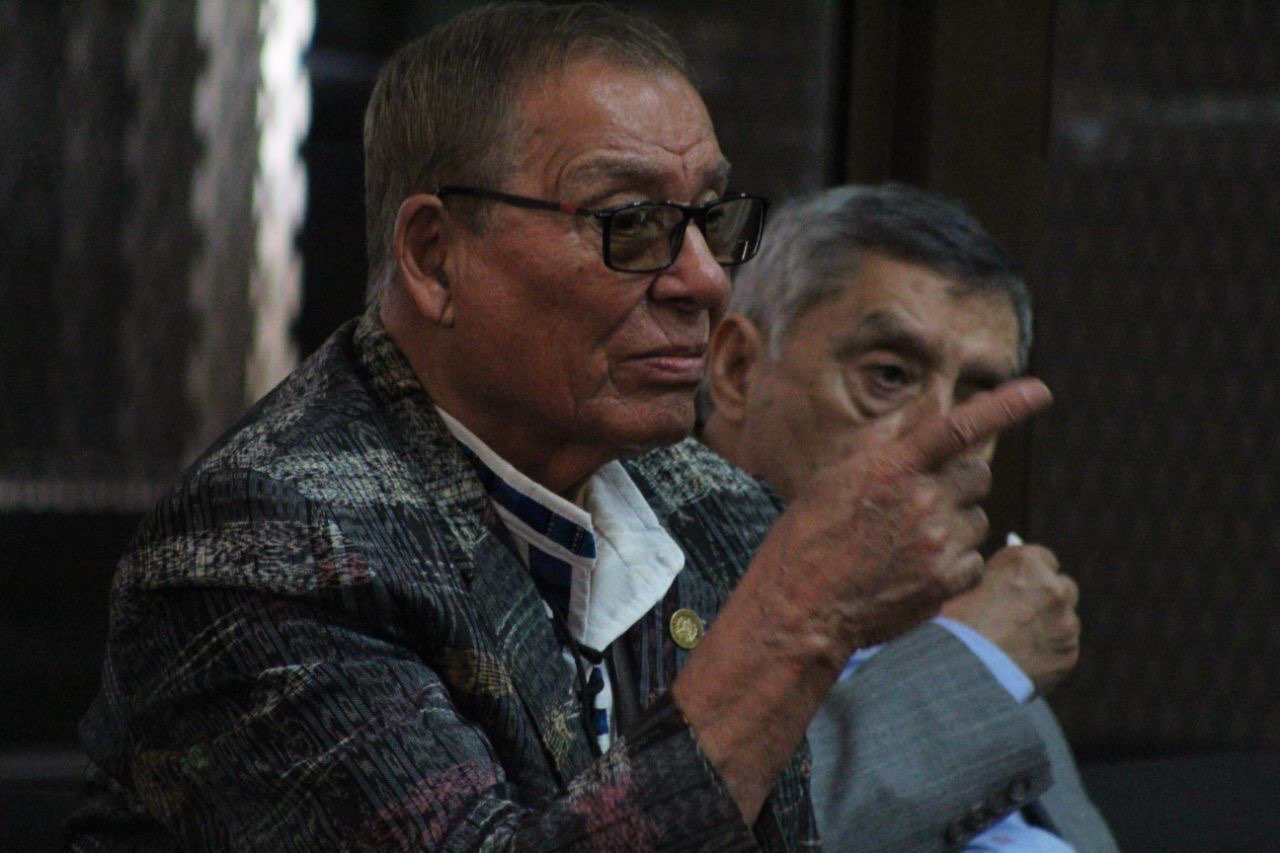
Secret archives aid further war crimes prosecution in Guatemala |
Official archives unearthed years after the end of civil war in Guatemala are aiding the prosecution of war crimes suspects, including senior military officials.
The evidence found within the archives is reported to be sufficient enough to start new cases, bringing yet more perpetrators to trial, even now.
The archives, housed in a maze of dark rooms in a disused building, being used to store munitions, were found accidentally in 2005. Since then, the records have been digitally scanned and backed up on secure servers ourside the country by human rights groups, in order to push through further prosecutions.
In 2009, the records were made public, with 12 million digitalised copies published online by the University of Texas in Austin.
|
|
|
|
Tamil Guardian 08 February 2012
US to Assad - ‘Your days are numbered’ |
US officials once again reiterated their call for Syrian President Bashar al-Assad to step down, as the city of Homs came under a fifth consecutive day of shelling by government forces.
U.S. Ambassador to the United Nations Susan Rice directed comments at President Assad, saying,
"Your days are numbered. It is time and past time for you to transfer power responsibly and peacefully."
Her remarks came as two senior US officials told CNN, that both the Pentagon and US Central Command had begun preliminary reviews of military capabilities, in case President Obama was to call for them. This follows from senior Republican Senator John McCain’s comment that the US,
"should start considering all options, including arming the opposition. The bloodletting has got to stop."
However military options seem far off with Russian Prime Minister Vladimir Putin condemning Western “interference” and commenting,
"A cult of violence has been coming to the fore in international affairs in the past decade."
Meanwhile the Syrian city of Homs has been under siege by government troops, with activists citing figures of over 100 people killed on Wednesday so far. There were unconfirmed reports of mortar and rocket fire, as well as government militia infiltrating the city and killing civilians.
|
|
|
|
Tamil Guardian 08 February 2012
Liberian war crimes accused to be deported from US |
A man accused of committing war crimes, while one of the leaders of a faction during the Liberian civil war, has been ordered to leave the US.
George Boley Sr. was the head of the Liberian Peace Council, which is accused of massacring dozens of villagers between 1994 and 1995 and of recruiting child soldiers.
Mr Boley, 62, lived near New York with his family and worked as a school administrator.
A trial in 2010-11 ruled that Mr Boley committed atrocities in Liberia and resided in the US without valid documents.
An immigration tribunal held on Monday that this conviction made him inadmissible to the United States.
The removal order is the first obtained by the ICE (Immigration and Customs Enforcement) under the Child Soldiers Accountability Act of 2008, which added the recruitment and use of child soldiers as grounds for deportation.
"This historic immigration judge's ruling is the culmination of extensive efforts by Homeland Security Investigations special agents and ICE attorneys to bring George Boley to justice for his crimes," ICE Director John Morton said.
However, according to the former chairman of the Truth and Reconciliation Commission (TRC) of Liberia, Mr Boley could be a free man once deported and not face justice for his crimes.
“I don’t have the full understanding of the legal reasons why he’s being removed, but it is my understanding that he was being held for immigration violations and that his records during the crisis in Liberia also put him in a very unfavorable condition.
"But, he’s going home to Liberia where there are others who have been accused of human rights violations in Liberia, and he's ’going to be a virtual free man in Liberia, just like the others.
“Liberia seems to be a colony that harbors perpetrators. Second to that, there is no political will to take action on the TRC report, apparently because the people in authority, the current regime, do not have the political will to take action on the TRC process.
"So, what we have is a land of impunity. So, if Boley goes home, he joins his peers,” said former chairman of the TRC, Jerome Verdier.
|
|
|
|
Tamil Guardian 08 February 2012
EU members and Gulf States recall Syria envoys |
Members of the European Union and several Gulf countries have recalled their ambassadors to Syria.
Germany, France, Spain and Belgium announced the move today along with the Gulf Cooperation Council, whose members are Bahrain, Kuwait, Oman, Qatar, Saudi Arabia and the UAE.
The Gulf Cooperation Council also expelled Syrian envoys to their member countries from Syrian Embassies.
The EU will keep its head of delegation in Damascus to observe events “on the ground,” bloc spokesman Michael Mann said.
Germany said it was responding to the arrest of two Syrian nationals in Berlin thought to be spying on ro-opposition groups in the country.
“We will signal unambiguously to Syrian officials that any apparent activity against the Syrian opposition in Germany is in no way tolerable and a violation of the law,” German Foreign Minister Guido Westerwelle told reporters in Berlin today.
Spain said it acted because of “the increase in repression of the civilian population” in Syria, the Foreign Ministry said in an e-mailed statement from Madrid today.
The recalls come a day after the US and the UK recalled its ambassadors diplomatic staff from Damascus.
|
|
|
|
Tamil Guardian 07 February 2012
Ahmadinejad summoned by Iranian MPs |
Iranian President Mahmoud Ahmadinejad has been summoned for questioning by members of Parliament, marking the first time since the 1979 Islamic Revolution that that a President has been summoned.
Ahmadinjead’s opponents and MPs have been threatening to take similar steps for some time as Iran faces a sharp economic downturn and rise in inflation and international tension over its nuclear program.
The President now has one month before he has to appear in Parliament, where he will face questioning from MPs. This means that he may appear after the country’s parliamentary elections, which are due to take place on the 2nd of March, the first set of elections since Ahmadinejad’s disputed re-election in 2009.
The questions he is set to face are thought to mainly relate to the economy, which looks set to face a further stumbling block after sanctions hit Iran in June later this year.
See our earlier posts:
Iran warns Arab nations not to comply with sanctions (16 Jan 2012)
EU agrees on embargo on Iranian oil (04 Jan 2012)
|
|
|
|
Tamil Guardian 06 February 2012
UK and US recall diplomats from Syria |
The UK and US have recalled ambassadors from Syria, further increasing pressure on the Assad regime.
Britain's foreign secretary, William Hague, said in a statement Monday,
"While we meet, the gravest of crimes are being committed in Syria. Responsibility for those crimes lies overwhelmingly at the door of the Syrian authorities ... We should unite behind the Arab League plan, and that is what I urge all members of the council to do, this week."
"With each day that passes, finding a way back from the brink will be harder and innocent lives will be needlessly and wrongfully lost, deaths which this council could help to avert by acting in a united manner."
"To fail to do so would be to undermine the credibility of this institution, betray the Syrian people, snub the Arab League, and fail in this council's responsibilities."
Responding to the withdrawal however, Russia announced it will be sending a mission to Damascas.
A statement by the Russian foreign ministry said Russian President Dmitry Medvedev ordered the mission to Damascus because Russia “firmly intends to seek the swiftest stabilization of the situation in Syria on the basis of the swiftest implementation of democratic reforms whose time has come.”
|
|
|
|
Tamil Guardian 06 February 2012
Aung San Suu Kyi candidacy accepted for elections |
The Burmese election commission has given Aung San Suu Kyi official approval allowing her to stand for parliamentary by-elections later this year.
After announcing her intention to run for elections last month, her candidacy has now been accepted, in a move that will be seen as Burma taking another step towards political openness after nearly 50 years of military rule.
The new civilian government which took office in March last year, has implemented steps which included releasing political prisoners, signing a ceasefire with rebels and easing censorship in the country. The moves lead to both US Secretary of State Hillary Clinton and UK Foreign Secretary William Hague visiting the country on official visits.
An election will be held in April this year to fill 48 vacant seats in the lower house of parliament. Aung San Suu Kyi, the leader of the opposition in Burma, will run as a candidate for the cyclone devastated district of Kawhmu.
|
|
|
|
Tamil Guardian 06 February 2012
US may push ahead with new Bahrain arms deal |
After the US delayed its sale of $53 million worth of arms to Bahrain, it was announced last week that a new package of weapons may be sold, without public notification.
The new package would include the sale of patrol boats, communications equipment, and spare parts for helicopters and fighter jets. The US has been accused of making use of a legal loophole, which states sales of under $1 million could be made, without congressional approval. This loophole also allows for multiple sales, all under $1million.
Three Senators and 18 Representatives, all Democrats, signed a letter to Hillary Clinton condemning the sale, shortly after news of the deal broke out.
See the letter in full here. Extracts have been reproduced below.
"We recognize the limited nature of the sales, and we acknowledge that the Bahraini government has taken some positive steps with respect to human rights in recent months."
"However, it has not done enough to justify the sale of any military items or services to Bahrain."
"Tragically, even a brief survey of reports from reliable sources makes clear that the Bahraini government continues to perpetrate significant human rights violations."
"In fact, it is noteworthy that the Bahraini government has pursued prosecutions against protestors far more aggressively than it has pursued prosecutions against senior government officials or security forces who have been responsible for grave abuses over the past year."
"We are deeply concerned that the Government of Bahrain is trying to shield itself from scrutiny. In the last three weeks alone, Bahrain has denied entry to prominent independent human rights monitors, including Brian Dooley of Human Rights First and Richard Sollom of Physicians for Human Rights."
Also see our earlier posts:
US lawmakers push to halt arms sales to Bahrain (09 Oct 2011)
US will wait for inquiry before approving Bahrain arms (19 Oct 2011)
|
|
|
|
Tamil Guardian 06 February 2012
Human Rights groups welcome India change of stance on Syria |
Amnesty International and Human Rights Watch have hailed India’s vote for a UN Security Council resolution calling for Syria’s President Bashar al-Assad to step down.
“By supporting this resolution, South Africa, India and Pakistan rose to the occasion and sided with the Syrian people”
"India has seen through (Bashar) Assad's lies, and shown itself to be an independent world leader," Human Rights Watch said.
India was criticised in 2009 for preventing a resolution condemning abuses committed during the armed conflict in Sri Lanka, which killed over 40,000 Tamils in a few months.
The UN has estimated around 6,000 deaths in Syria since the uprising started in March last year.
|
|
|
|
Tamil Guardian 05 February 2012
France to push for further sanctions against Syria |
France intends to push for further sanctions against the Assad regime, after Russia and China vetoed the UN Security Council resolution on Saturday.
France's foreign minister, Alain Juppe, said,
"The president will take initiatives in the next few days to try to gather everyone who thinks the situation in Syria is completely unacceptable,"
"It's a scandal what is happening today."
"We will get together all countries that want to join us to put maximum pressure on Syria,"
"We will first help the Syrian opposition structure itself, strengthen European sanctions against the Syrian regime, raise international pressure and at one point it will realize it's completely isolated and cannot continue."
|
|
|
|
Tamil Guardian 05 February 2012
Protesters in Moscow brave freezing conditions to demand political reform |
Over 120,000 protesters, calling for political reform in Russia, marched through the streets of Moscow.
Chanting "Russia without Putin" and "Putin leave", protesters braved temperatures as low as -18 degrees.
The protest was the most recent in a string of protests over past few months expressing outrage at allegations of vote-rigging during the parliamentary poll in December.
|
|
|
|
Tamil Guardian 04 February 2012
Russia and China veto resolution on Syria |
A UN Security Council resolution condemning Syria’s government for the violence it is committing against anti-regime protestors has been vetoed by Russia and China.
The resolution called for President Bashar al-Assad to step down and a "Syrian-led political transition to a democratic, plural political system", a call first made by the Arab League.
The resolution had already been watered-down, in anticipation of a Russian veto. There are no calls for sanctions and no military action would have been authorised.
The other 13 members of the Security Council, including India and South Africa, supported the resolution.
Members of the Security Council reacted with outrage to the veto.
"The United States is disgusted that a couple of members of this council continue to prevent us from fulfilling our sole purpose here -- addressing an ever-deepening crisis in Syria and a growing threat to regional peace and security. ... This intransigence is even more shameful when you consider that at least one of these members continues to deliver weapons to (Syrian President Bashar al-Assad)." said US ambassador to the UN, Susan Rice.
William Hague, the foreign secretary, also condemned the veto.
"More than 2,000 people have died since Russia and China vetoed the last draft resolution in October 2011. How many more need to die before Russia and China allow the UN security council to act?
"Those opposing UN security council action will have to account to the Syrian people for their actions, which do nothing to help bring an end to the violence that is ravaging the country. The United Kingdom will continue to support the people of Syria and the Arab League to find an end to the violence and allow a Syrian-led political transition."
"The Syrian regime's actions display President Assad's cold-blooded cynicism in the face of mounting international pressure for the UN security council to do its utmost to end the bloodshed."
"The time is long past for the international community, particularly those that have so far sheltered the Assad regime, to intensify the pressure to end over 10 months of violence."
However, Russia defended its decision to veto the resolution, criticising it for making too few demands of opposition armed groups.
Russia's Ambassador to the UN, Vitaly Churkin said
"Some influential members of the international community unfortunately...have been undermining the opportunity for political settlement, calling for a regime change, pushing the oppositionists to power,"
Last night the Syrian military escalated attacks on the city of Homs, in one of the bloodiest nights since protests started in March last year.
Over 200 people are thought to have been killed in Homs alone, with reports of indiscriminate mortar attacks by the military.
Syrian embassies in various Western cities, including London and Washington, saw protests by Syrian activists.
The embassies in Cairo and Berlin were stormed by dozens of demonstrators chanting slogans against Assad’s regime.
|
|
|
|
Tamil Guardian 04 February 2012
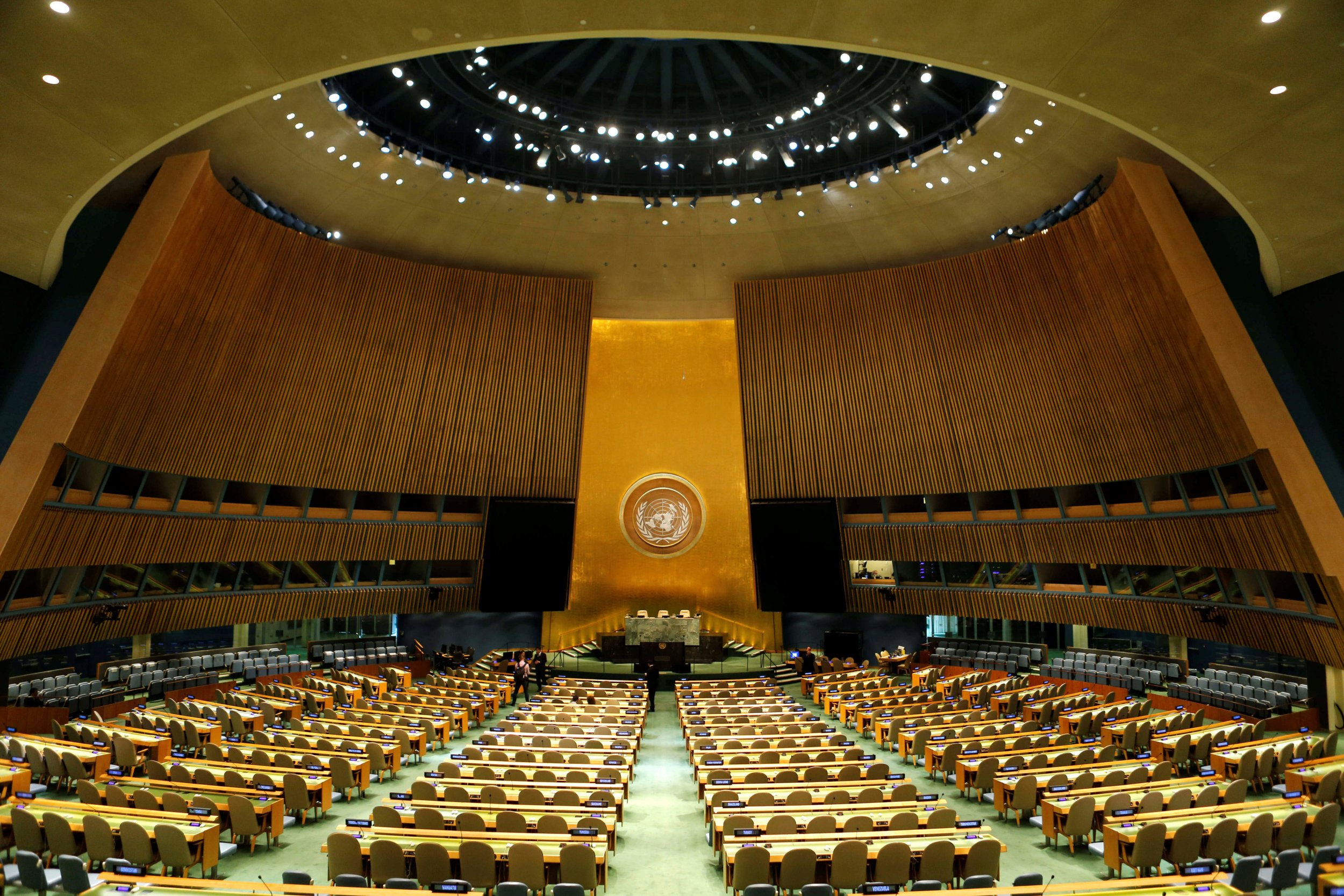
UN Security Council set to vote on Syria |
The United Nations Security Council is to vote on a resolution regarding Syria on Saturday, with all eyes on Russia, Syria’s strongest ally on the council.
Russia initially rejected parts of the latest draft, but it remains unclear which way they will vote on Saturday, as hope remains that the resolution could still be passed.
Pakistan’s U.N. Ambassador Abdullah Hussain Haroon told reporters that the council was “very close… two words away" from an accord.
Whilst the latest text does not explicitly mention sanctions, parts of the resolution are still opposed by Russia, including warnings of “further measures” and that the council “fully supports” the Arab League plan.
A Western official commented that if an agreement was to be reached at the UN,
"It would scare the Assad regime a lot more than a more robust text vetoed by Russians."
"It would mean the Russians are slowly accepting the idea that Assad will depart and would also send a powerful message to people around Assad that it might be time to leave the sinking ship."
The US secretary of state, Hillary Clinton, reportedly spoke on the phone with Russia’s foreign minister, Sergey Lavrov, in an attempt to smooth over any opposition leading upto the vote.
Meanwhile, more than 200 people were reported to be killed in the city of Homs as President Assad’s troops shelled the city. The UN has ceased to estimate the number of deaths since the end of January, citing that it was now too difficult to confirm any casualties.
|
|
|
|
Tamil Guardian 03 February 2012
Khmer Rouge official sentenced to life imprisonment |
The most senior Khmer Rouge official yet to face charges has been jailed for life.
Duch, formerly known as Kaing Guek Eav was found guilty of crimes against humanity and jailed in 2010 for 35 years.
He appealed the decision, claiming he was a junior official following orders and would have been killed if he didn’t obey the commands.
However his appeal was rejected and judges increased his sentence to a life term.
The appeal court judges held that the initial sentence of 35 years did not "reflect the gravity of the crimes".
"The crimes by Kaing Guek Eav were undoubtedly among the worst in recorded human history. They deserve the highest penalty available," Judge Kong Srim said.
Duch was in charge of the notorious Tuol Sleng prison, where over 15,000 men, women and children, who were accused of being enemies of the Khmer Rouge, were tortured and executed.
Over 2 million people are thought to have died during the Khmer Rouge regime’s brutal reign in Cambodia.
|
|
|
|
|
|
|