
The remains of two infants found buried joined together, provisionally recorded as possible conjoined twins, and a skeleton buried in a seated position are among the discoveries made over three days of excavation at the Chemmani mass grave in Jaffna, as the number of skeletal remains identified at one of the most significant mass grave sites in the Tamil homeland rose to 446.
The two infants were identified on Saturday, the 36th day of the court-authorised third phase of excavations. Investigators said it had not yet been determined whether the joined remains belonged to two separate infants or to conjoined twins, a question expected to be resolved through further analysis.
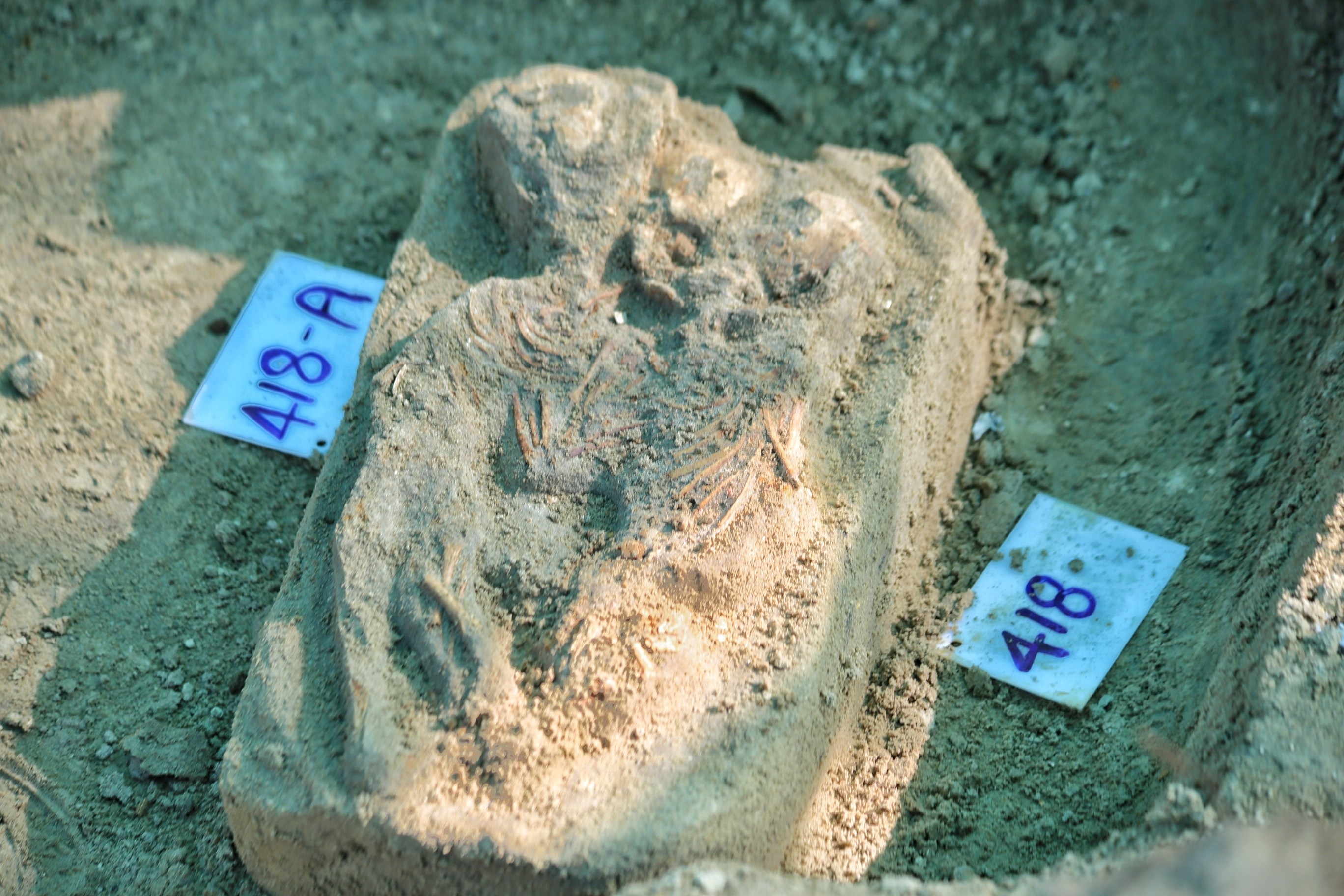
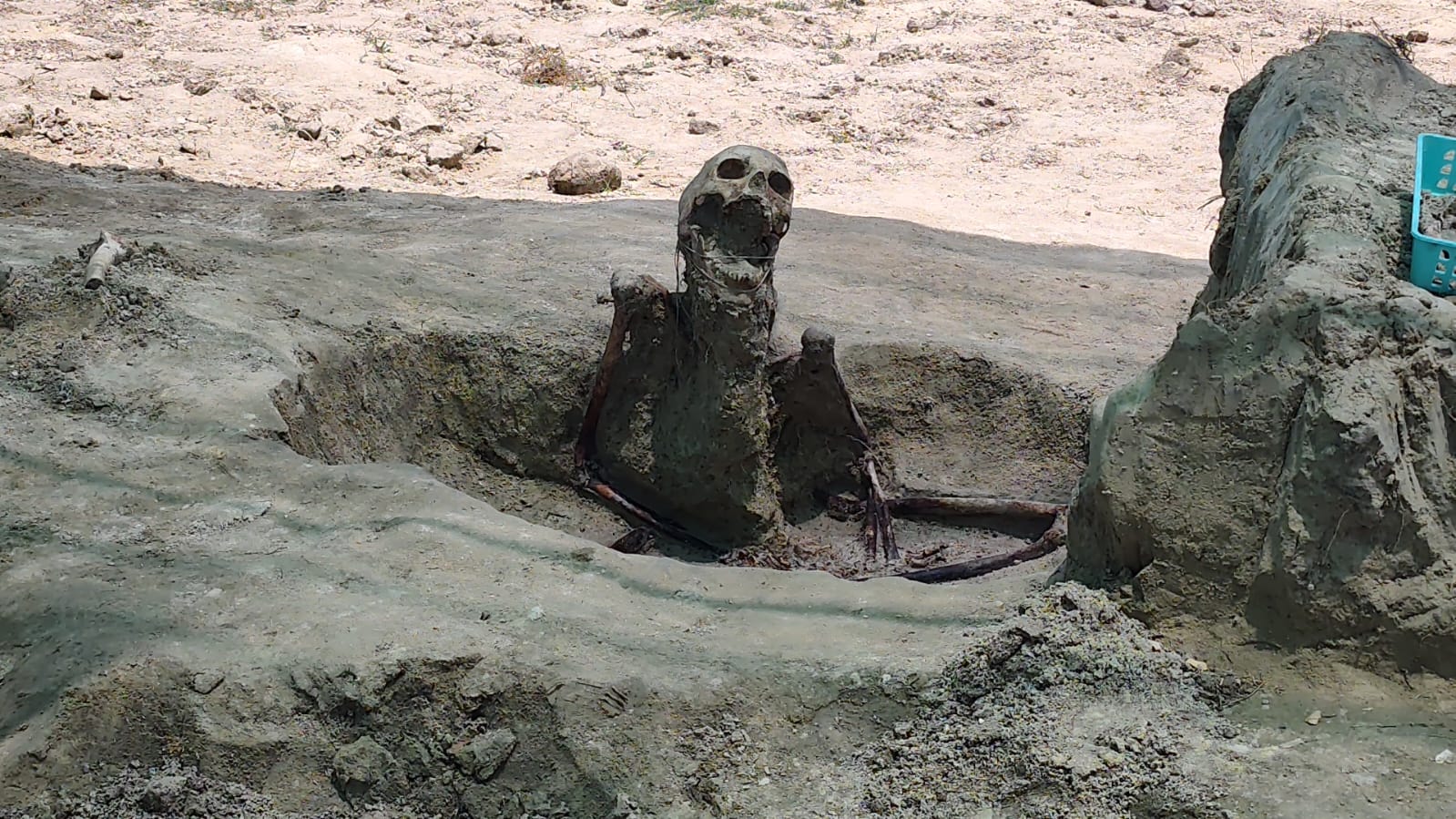
A day later, on Sunday, investigators uncovered a human skeleton buried with its legs folded in a seated posture, first noticed on Saturday when a skull was found in an unusual position. Cleaning work on Sunday revealed the seated burial, with the complete exhumation expected on Monday. It was the second such burial recovered from the site, after a skeleton found in the same position on 4 September last year.
The discoveries came during a run of court-supervised excavation that also yielded the remains of an adult found alongside children, together with several artefacts. Investigators recovered a white bead, a piece of iron and a bangle on Saturday, and on Friday a damaged ring alongside a copper ring still attached to a finger bone. Several further clusters of skeletal remains were identified across the three days, and one skull was recorded in an unusual condition, with cleaning work underway before further examination.
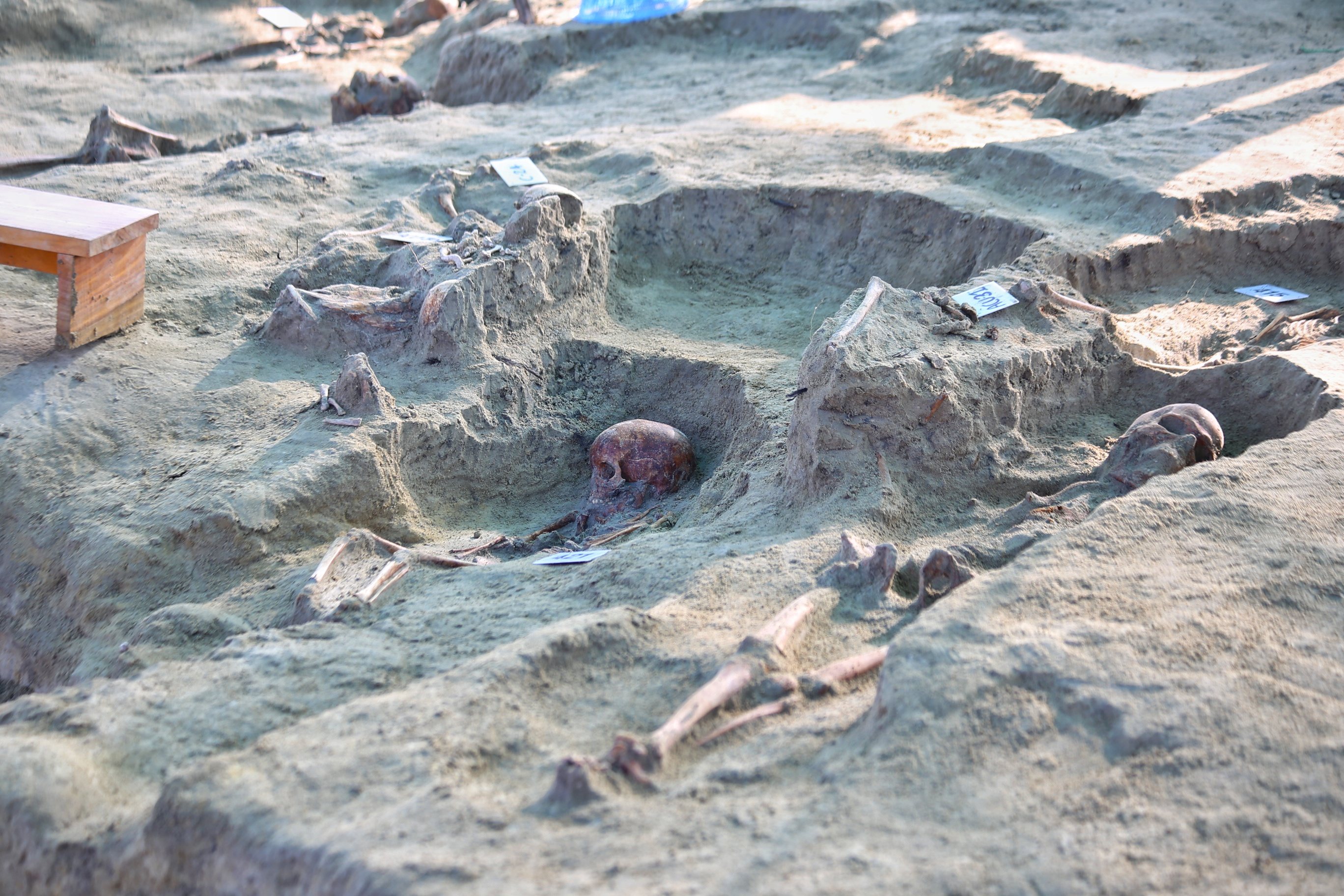
Excavations on Sunday marked the 37th day of the third phase, for which the Jaffna Court authorised 56 days of work. Across the first, second and ongoing third phases, investigations have now spanned 91 days. A total of 446 sets of skeletal remains have been identified, of which 434 have been fully exhumed.