
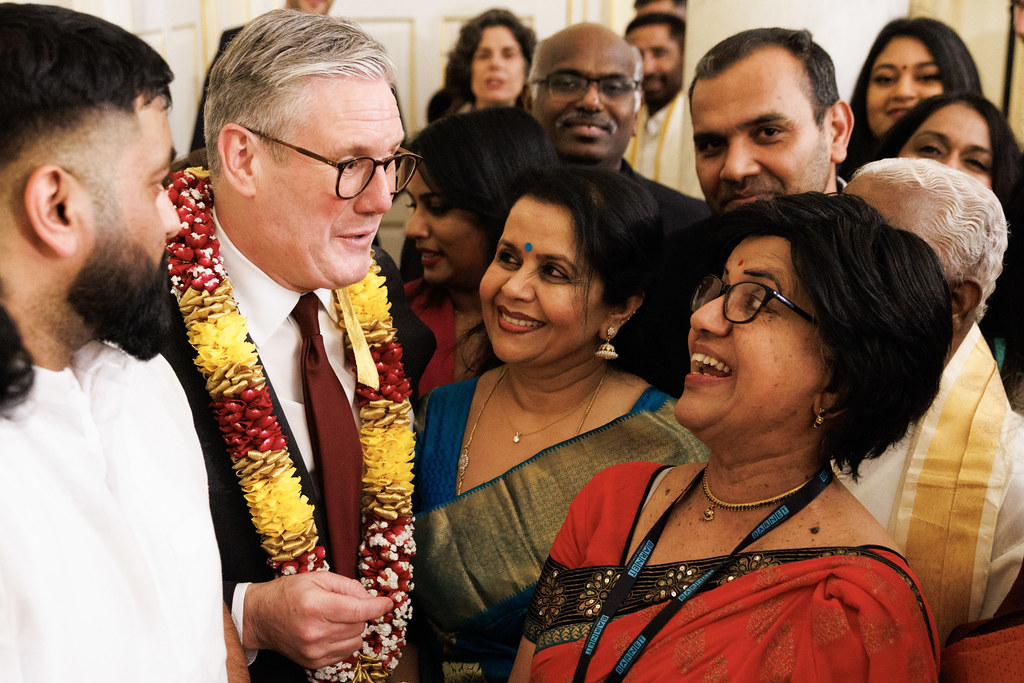
Keir Starmer's announcement that he will resign as Labour leader, and remain in Downing Street only until his successor is chosen, brings to an end a premiership that began on the back of some of the strongest pledges a British party leader had ever made to Tamils.
Speaking outside Number 10 on Monday morning, Starmer said he would ask Labour's National Executive Committee to set out a leadership timetable, with a successor expected to be in place before Parliament returns in September, and that he would stay on as prime minister until the contest was complete. His departure, which follows Andy Burnham's by-election victory and months of pressure over Labour's standing, was confirmed in a statement delivered shortly after he informed the King.
For British Tamils, his exit will close a chapter that opened with repeated opposition pledges on justice, sanctions and an International Criminal Court (ICC) referral for Sri Lanka, and that culminated in a Labour government which imposed targeted sanctions on several Sri Lankan figures accused of grave human rights abuses. Yet it leaves unresolved the central demands Tamils have pressed for more than seventeen years since the Mullivaikkal genocide: international justice, recognition of the Tamil genocide, demilitarisation of the homeland, and a political settlement rooted in the Tamil nation's right to self-determination.
Starmer's record on Tamil issues was extensive. From his earliest months as Labour leader in 2020, he used Mullivaikkal remembrance statements and Thai Pongal messages to speak of accountability, the suffering of Tamils and the failure to bring perpetrators to justice, and as prime minister he welcomed British Tamils into Downing Street. His premiership nonetheless ends with Britain still short of recognising the Tamil genocide or moving to refer Sri Lanka to the ICC, even after years of statements from Starmer and senior Labour figures raising precisely those demands.
Mullivaikkal and the language of justice
Starmer's first significant remarks on Mullivaikkal as Labour leader came in May 2020, as Tamils worldwide marked eleven years since the final weeks of Sri Lanka's military offensive, in which tens of thousands of Tamils were killed in the Vanni. Newly installed as leader, he said his thoughts were "with the British Tamil Community" as they honoured those "killed and disappeared in the final weeks of the civil war in Sri Lanka".
"Mullivaikkal must also be a reminder that as well as commemorating those who are lost, we must bring the perpetrators of atrocities to justice."
It was a formulation he would return to repeatedly. Though his early language still carried the cautious vocabulary of "truth, accountability and reconciliation", the central thread, that commemoration could not be separated from justice, was already clearly drawn.
By 2021, as Tamils marked the twelfth anniversary, Starmer said Labour stood with them and remembered "the tens of thousands of Tamils who were killed during the final stages of the Sri Lankan conflict", and sharpened Labour's position with a call for human rights sanctions.
"We call on the British government to deploy human rights sanctions against senior Sri Lankan government officials and military personnel."
Those remarks came years before Britain would finally move on sanctions, and placed Starmer ahead of the then Conservative government, which had faced sustained pressure from British Tamil organisations, survivors and parliamentarians over its failure to match measures already taken by the United States and Canada.
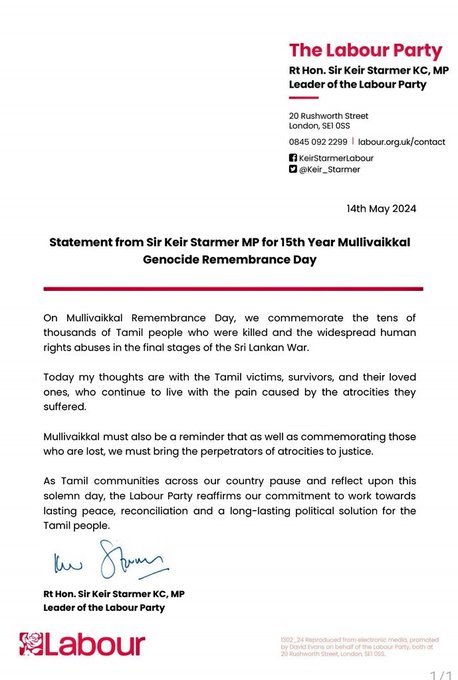
In 2024, Starmer released a message to commemorate the “15th year Mullivaikkal Genocide Remembrance Day,” paying tribute to the tens of thousands of Tamils killed in 2009.
“Mullivaikkal must also be a reminder that as well as commemorating those who are lost, we must bring the perpetrators of atrocities to justice,” he said.
“As Tamil communities across our country pause and reflect upon this solemn day, the Labour Party reaffirms our commitment to work towards lasting peace, reconciliation and a long-lasting political solution for the Tamil people.”
The ICC pledge
Already by 2022, Starmer's position had moved from international accountability in general to an explicit call for Sri Lanka to be sent to The Hague. Marking thirteen years since Mullivaikkal, he said "the perpetrators of these atrocities still have not been brought to justice" and urged the government to heed the recommendations of the UN High Commissioner for Human Rights.
"The Labour Party stands with the Tamil community as we pause and reflect on this day," Starmer said as he went on to urge Britain to "refer the perpetrators of atrocities to the International Criminal Court".
The statement became one of the clearest markers of Labour's promise to British Tamils: it did not merely call for accountability in the abstract, but explicitly named the ICC and urged Britain to lead.
He repeated the broader message in 2023, marking Mullivaikkal by saying Labour remained committed to securing justice for Tamil victims, survivors and families, and urging the government to consider the High Commissioner's recommendation for "an international justice mechanism". The then shadow foreign secretary, David Lammy, separately echoed those remarks and called on the government to act on the High Commissioner's recommendations and refer Sri Lankan war criminals to the ICC.
Ahead of the 2024 general election, the pledges were reiterated at a Tamil Genocide Remembrance Day event in Parliament, where senior Labour figures placed Starmer's leadership behind calls for sanctions and an ICC referral. Catherine West, then shadow minister for Asia and the Pacific, told the first British Tamil hustings that Starmer had "previously called on the British government to take a leading role in referring Sri Lanka to the International Criminal Court". The phrase "take a leading role" was one British Tamils would continue to measure Labour against once Starmer entered Downing Street.
Pongal, self-determination and British Tamils
Starmer's engagement was not confined to commemorating the Mullivaikkal genocide. His annual Thai Pongal messages became a platform for Labour's outreach to British Tamils and, increasingly, for statements on justice and self-determination. In 2021, his message came after Sri Lanka had withdrawn from the 2015 UN Human Rights Council resolution on accountability, and he said Britain "must continue to lead and be a strong voice on international accountability", pledging that Labour would work with Tamils to call for justice.
In 2022 he marked Pongal by saying, "Labour will always stand by the Tamil people in their pursuit of true peace and justice." By 2023 his message had become more direct on conditions inside Sri Lanka, raising concern over the "persecution of the Tamil people" as the island's human rights record came under scrutiny at the UN.
In January 2023, Starmer raised concern over the continued persecution of Tamils in Sri Lanka in his Thai Pongal message and stressed the need for accountability and justice.
Whilst celebrating the harvest festival, Starmer also stressed that now is a time “to remember the sacrifices made by the Tamil people for self-determination, peace, and justice in Sri Lanka”.
He goes on to state his deep concern over “the ongoing economic crisis, persecution of the Tamil people, and the political instability in Sri Lanka”.
In January 2024, months before the election, he issued one of his strongest Pongal statements, describing the festival as a time "to remember the sacrifices made by the Tamil people for self determination, peace and justice in Sri Lanka".
He praised the contribution of British Tamils across academia, medicine, business, the arts, literature and science, before saying a Labour government would work with international partners and stand "shoulder to shoulder with Tamil communities" to help build peace and political stability in Sri Lanka.
For survivors and families of the disappeared, the repeated references to self-determination, accountability and the ICC suggested a possible shift from the well-worn vocabulary of reconciliation.
From opposition to Downing Street
After Labour's landslide victory in July 2024, Tamil Guardian looked back on Starmer's record of calls for an ICC referral, support for sanctions and references to Tamil self-determination. The question was whether those pledges would survive the move from opposition to government.
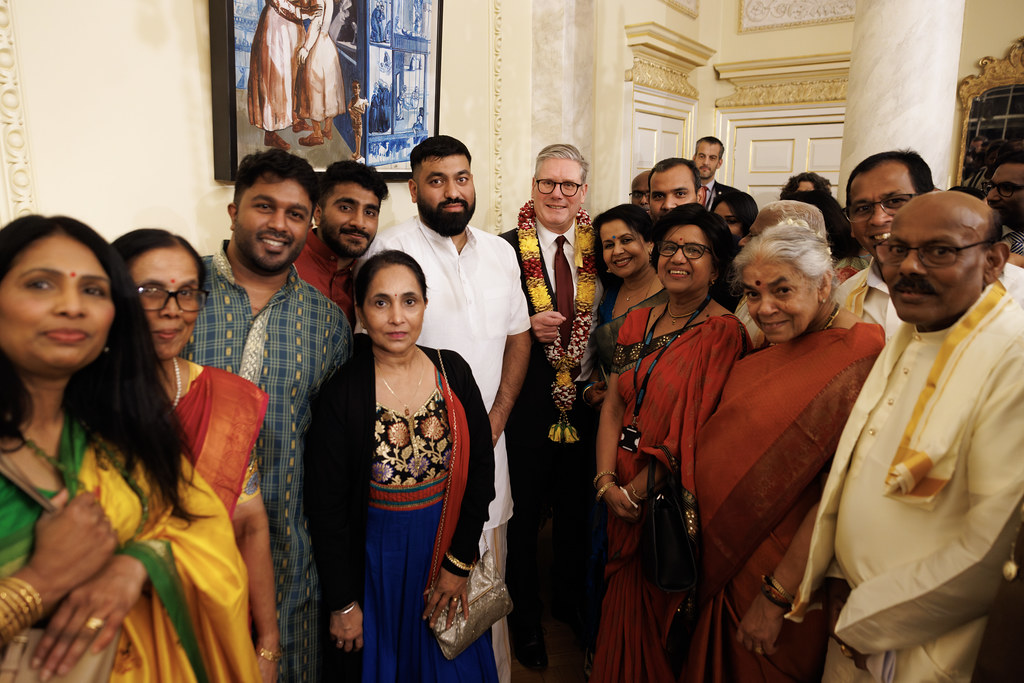
In January 2025, Starmer hosted British Tamils at Number 10 for a Thai Pongal reception, praising the community's contribution to the United Kingdom and celebrating the election of Uma Kumaran, Britain's first MP of Eelam Tamil heritage.
"There's a huge contribution of the Tamil community to our nation."
It was the continuation of a tradition that started before Starmer took office, seeing British Tamils being welcomed inside the Prime Minister's office to celebrate the harvest festival. Yet the substance of his remarks remained framed around the same three words.
"Especially back in Sri Lanka, where this government is absolutely committed to supporting efforts towards equality, truth, and justice."
The speech was warmly received in parts of the British Tamil political sphere, but it left the familiar questions hanging. Would "truth and justice" mean an international criminal process? Would Britain go beyond UNHRC resolutions and diplomatic pressure?
Sanctions, finally
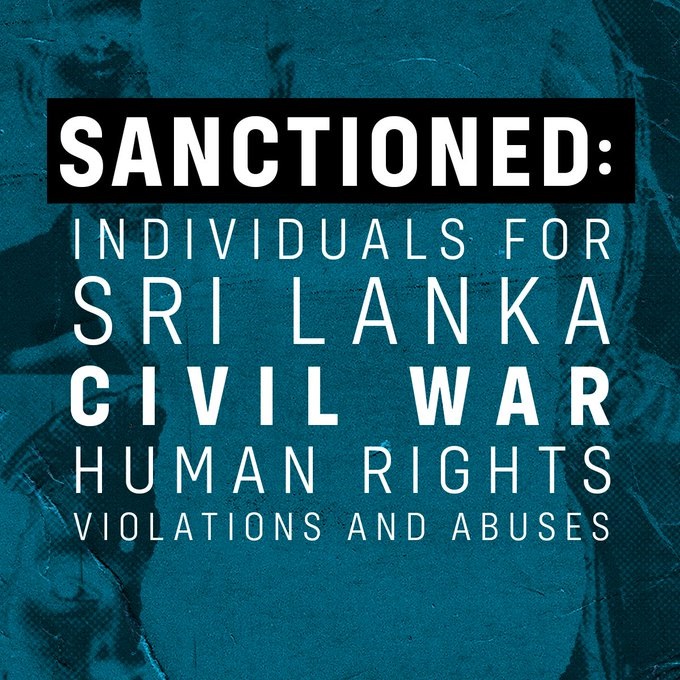
The most concrete step of Starmer's government came in March 2025, when Britain imposed targeted sanctions on four individuals over serious human rights violations during the armed conflict, making it the third country, after the United States and Canada, to do so.
The designations, which carried asset freezes and travel bans, named the wartime army commander Shavendra Silva, the former navy commander Wasantha Karannagoda, the former Vanni Security Forces commander Jagath Jayasuriya, and Vinayagamoorthy Muralitharan, the former LTTE commander turned paramilitary leader and government minister known as Karuna Amman. Tamil organisations had called for such action for years, and Starmer had himself demanded sanctions as opposition leader in 2021.
In his 2025 Tamil Genocide Remembrance Day statement, Starmer pointed to the measures as evidence of movement, saying "acknowledgement and accountability" were required for past atrocities and that he was "pleased" his government had acted.
"This solemn day is a reminder of the need to continue to pursue justice and peace."
For British Tamils, the sanctions were a long-awaited first step, but a limited one. They did not amount to a criminal process, did not recognise the Tamil genocide, and did not refer Sri Lanka to the ICC, nor did they touch the continued militarisation, land occupation, Sinhalisation and surveillance that Tamils in the North-East still face.
Petitions to Downing Street
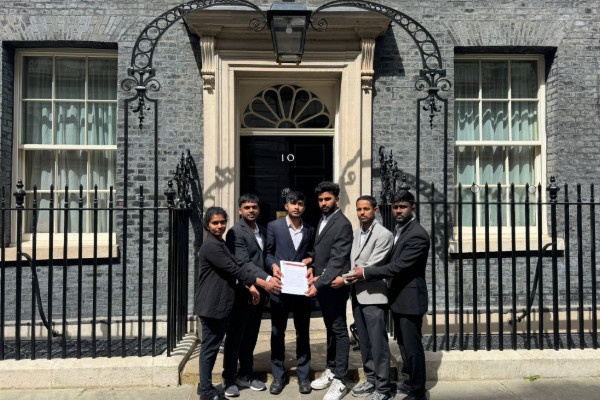
Families of the disappeared, genocide survivors and advocacy groups welcomed the sanctions but pressed for more. In May 2025, British Tamil activists submitted a petition to Starmer calling for official recognition of the Tamil genocide and urgent action on accountability, organised by the International Centre for the Prevention and Prosecution of Genocide as Tamils marked the sixteenth anniversary of the Mullivaikkal genocide.
Later that year, the Movement for Self-Determination of Tamil Eelam delivered a further petition to Downing Street linking the ongoing exhumations at Chemmani to the wider history of mass atrocities and state impunity, urging Britain to recognise the crimes at Chemmani and refer Sri Lanka to the ICC. Sanctions, activists insisted, were not enough.
Starmer's second Downing Street Pongal
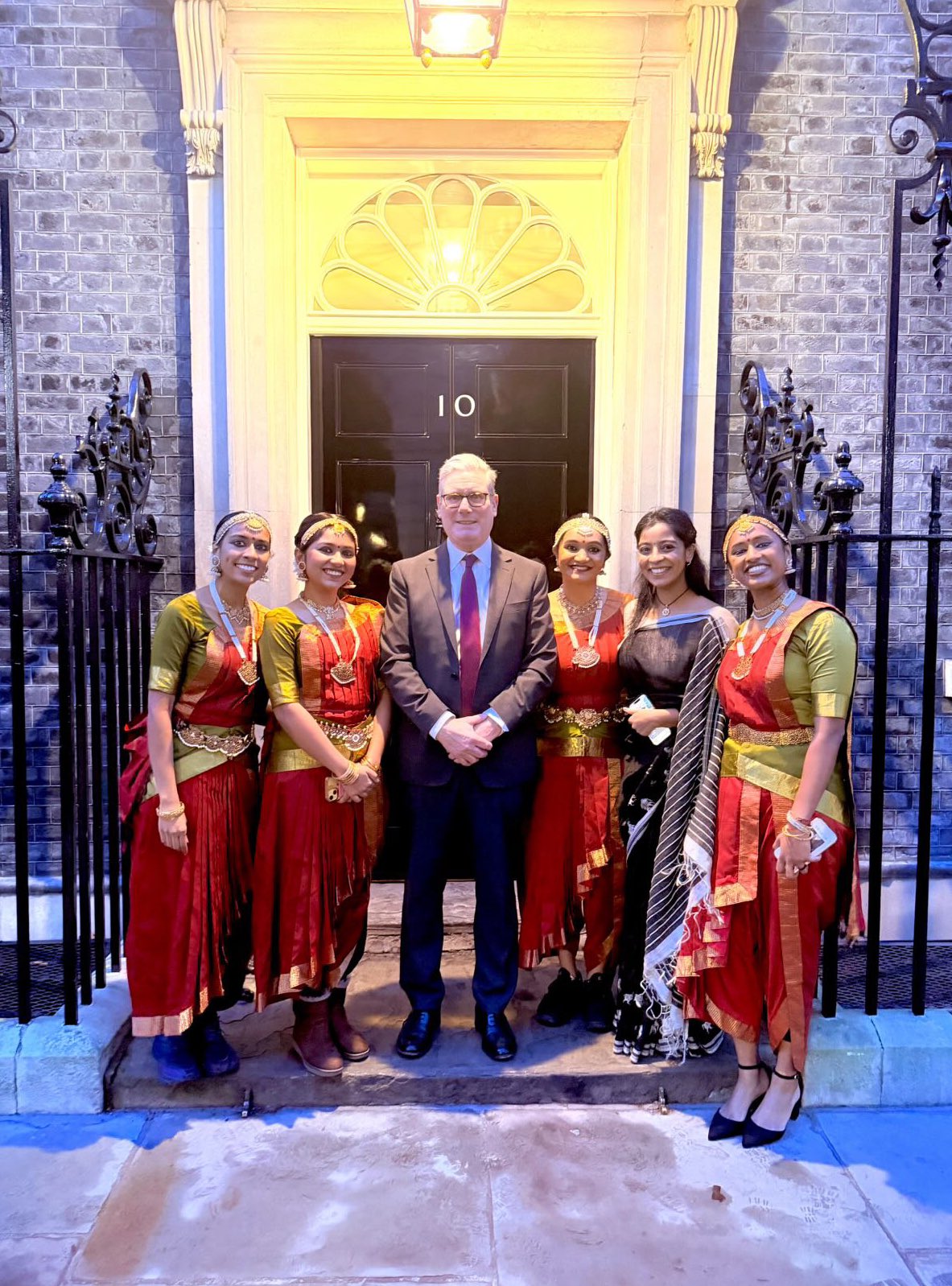
In January 2026, British Tamils were again honoured at a Thai Pongal reception at Number 10, hosted by the Communities Secretary, Steve Reed, alongside Uma Kumaran, marking the second consecutive year the festival had been celebrated at the prime minister's residence since Labour entered government.
Reed paid tribute to Tamil families who had settled in Britain after fleeing violence, while Kumaran said she was proud that Starmer had opened Downing Street to a new generation of Tamil changemakers during Tamil Heritage Month.
The reception reflected the rising visibility of British Tamils in public life, but it also underscored the gap between celebration and justice, for the same government that welcomed them into Number 10 had still not taken the steps Starmer once urged in opposition.
The unfinished file
Starmer's resignation leaves a sharply contested legacy. He brought Tamil issues into the language of Labour's senior leadership after reaching office as Prime Minister. He spoke of self-determination, called for sanctions, called for Sri Lanka to be referred to the ICC, marked Mullivaikkal year after year, used the term genocide, hosted British Tamils in Downing Street, and his government delivered targeted sanctions.
The larger agenda, however, remains unresolved.
Britain has not officially recognised the Tamil genocide. Sri Lanka has not been referred to the ICC. No international tribunal has been established. The state continues to reject international accountability and to promote domestic mechanisms that Tamil victims have repeatedly dismissed as incapable of delivering justice.
In the homeland, families of the disappeared continue to protest, mass graves continue to expose the depth of state violence, the military remains entrenched across the North-East, land grabs and Sinhala-Buddhist majoritarian projects continue, and Tamil memorialisation remains surveilled, disrupted and criminalised.
Tamil Guardian warned last year that Labour's first year in office had left many British Tamils frustrated, with the ICC referral still absent and sanctions confined to a handful of individuals. That frustration now follows Starmer out of office. His successor will inherit not only the premiership, but a set of promises made to British Tamils in Parliament, in campaign messages, in statements and inside Downing Street itself.
For years, Starmer told Tamils that justice could not be deferred indefinitely. As he prepares to leave office, the demand facing Britain remains unchanged: recognition, accountability and international justice for genocide.