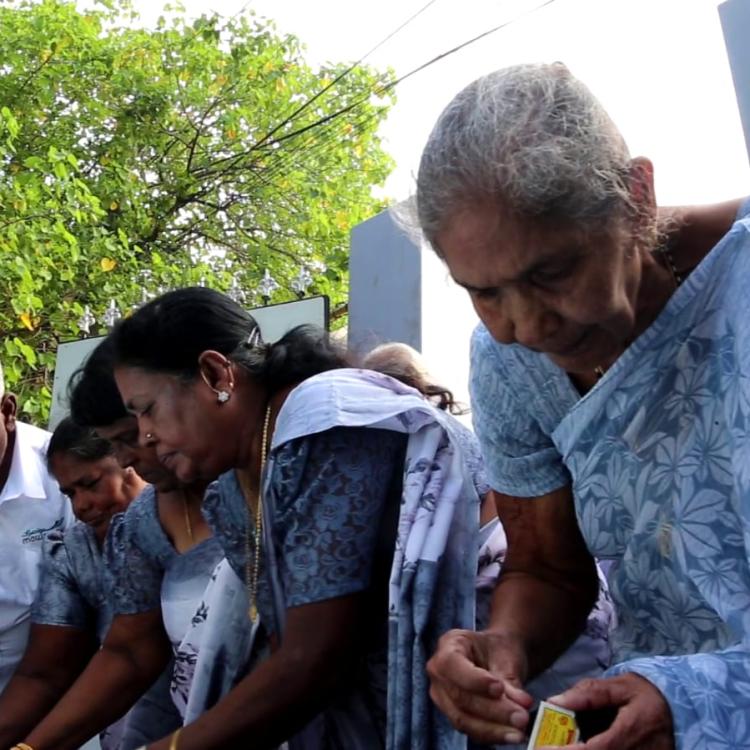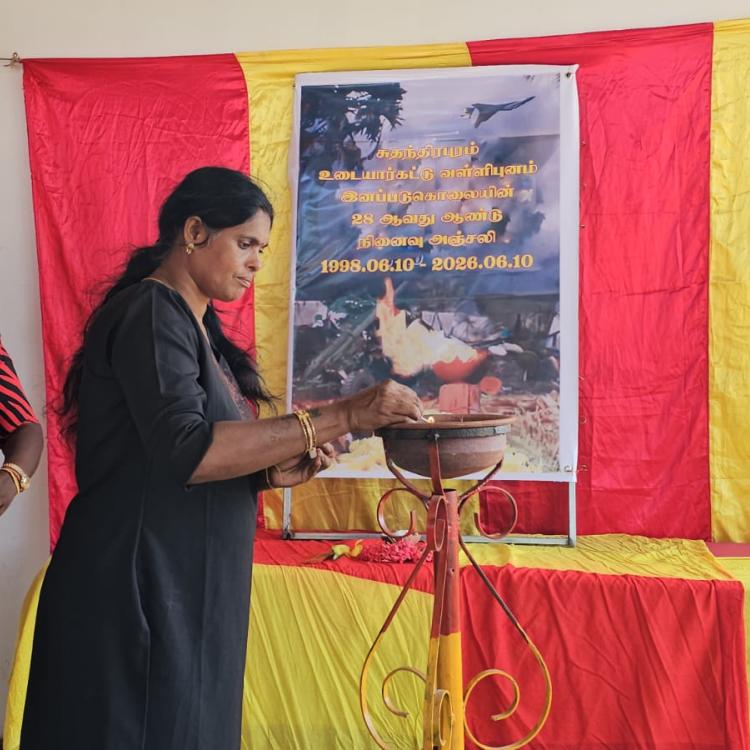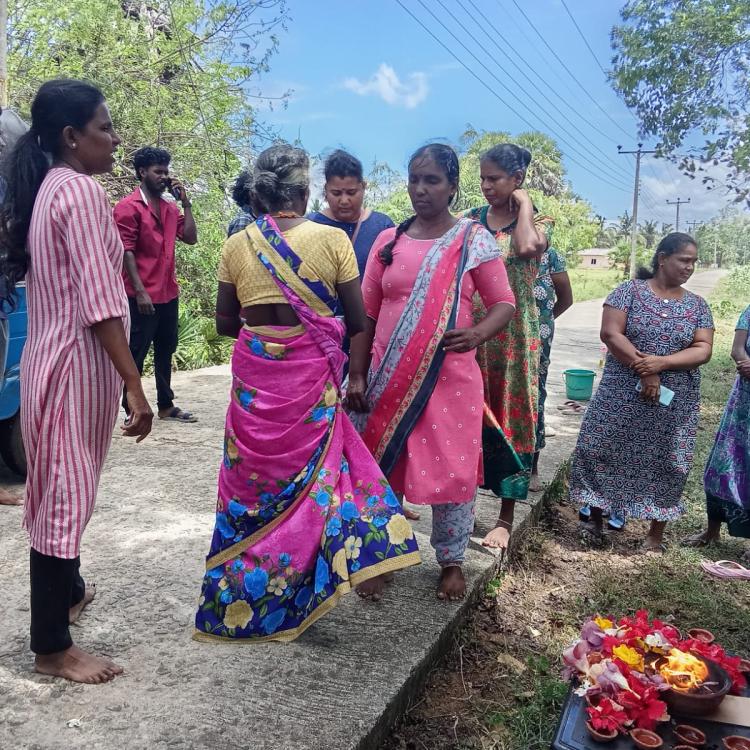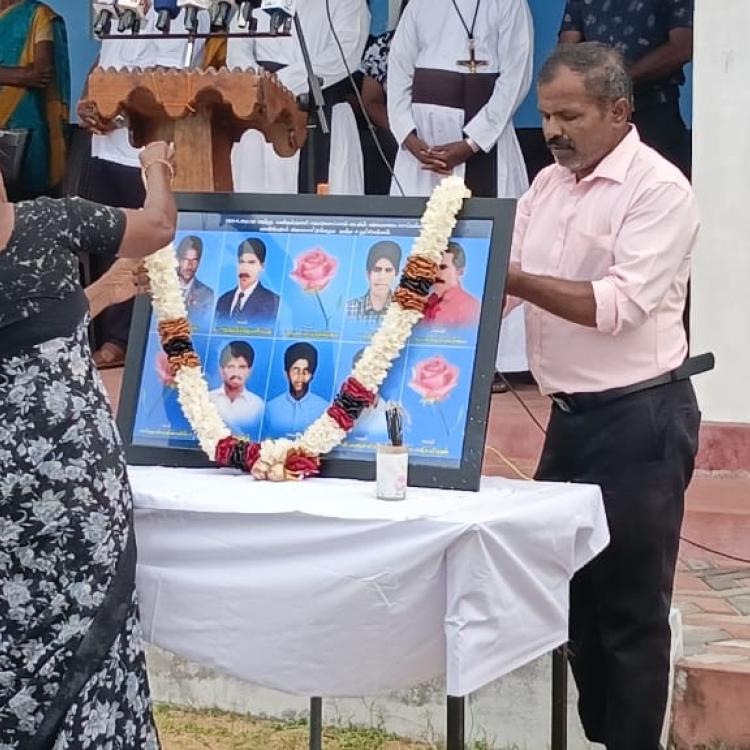
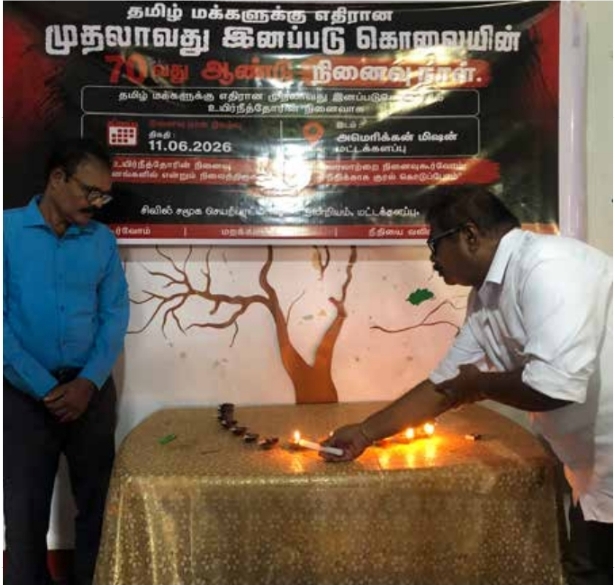
A commemoration marking the 70th anniversary of the first massacre of Tamils in Amparai was held on Thursday at the American Mission Hall in Batticaloa, with participants paying tribute to the victims through candle lighting, floral tributes and a two-minute silence.
The event was organised by Sivayogan, an activist of the civil society collective, and brought together former Member of Parliament P. Ariyanendran, former Batticaloa Municipal Council Mayor T. Saravanabavan, a pastor from the American Mission Church and members of the public. Attendees reaffirmed the importance of remembrance for historical justice and accountability.
The massacre being commemorated took place in June 1956 in the Gal Oya valley of the Amparai district, and is widely regarded as the first organised anti-Tamil pogrom in the history of independent Ceylon. It unfolded against the backdrop of one of the most consequential pieces of legislation in the island's post-independence history.
In 1956, the government of S. W. R. D. Bandaranaike came to power on a wave of Sinhala nationalism and moved to pass the Official Language Act, better known as the Sinhala Only Act, which made Sinhala the sole official language of the country and stripped Tamil of official status. The bill, which would over time exclude Tamil speakers from public employment, education and access to the state, was introduced in parliament on 5 June 1956. That day, the Tamil Federal Party staged a peaceful satyagraha on the steps of parliament in Colombo under the leadership of S. J. V. Chelvanayakam. The protesters were set upon by a Sinhala mob, in some accounts led by a junior government minister, which then went on a looting spree through Tamil businesses in the capital.
As the bill continued to be debated, violence spread to the North-East. A demonstration of some 10,000 Tamils in Batticaloa was fired upon by police, killing at least two people, and unrest flared in Trincomalee. The worst of the violence, however, struck the Gal Oya valley, an area of the Tamil-speaking Eastern Province that the state had been settling with Sinhalese colonists since the late 1940s under the Gal Oya irrigation and colonisation scheme.
On the night of 11 June 1956, Sinhala mobs, inflamed by false rumours, roamed the valley hunting for Tamils. The attackers seized government vehicles, bulldozers and high explosives from the colonisation project and used them to terrorise the Tamil population. Historians have recorded that well over a hundred Tamils were killed, with hundreds more driven into hiding, though both the government and the press of the day severely understated the death toll and the scale of the terror.
The Gal Oya scheme that placed those weapons and vehicles in the hands of the mob was itself central to the grievance. The state-sponsored settlement of Sinhalese in the Eastern Province had been identified years earlier as a deliberate attempt to alter the demography of the Tamil homeland. As early as the inauguration of the Federal Party in 1949, Chelvanayakam had warned that the government's colonisation policy, of which the Gal Oya scheme was the first major instance, was even more dangerous to the Tamil people than its language policy, alleging that the state intended to plant a Sinhalese population in a purely Tamil-speaking area.
The significance of 1956 lies in what followed it. The Gal Oya massacre was the first in a sequence of anti-Tamil pogroms that would recur across the decades, in 1958, 1977, 1981 and most catastrophically in the Black July pogrom of 1983, before culminating in the mass killing of tens of thousands of Tamils at Mullivaikkal in 2009.