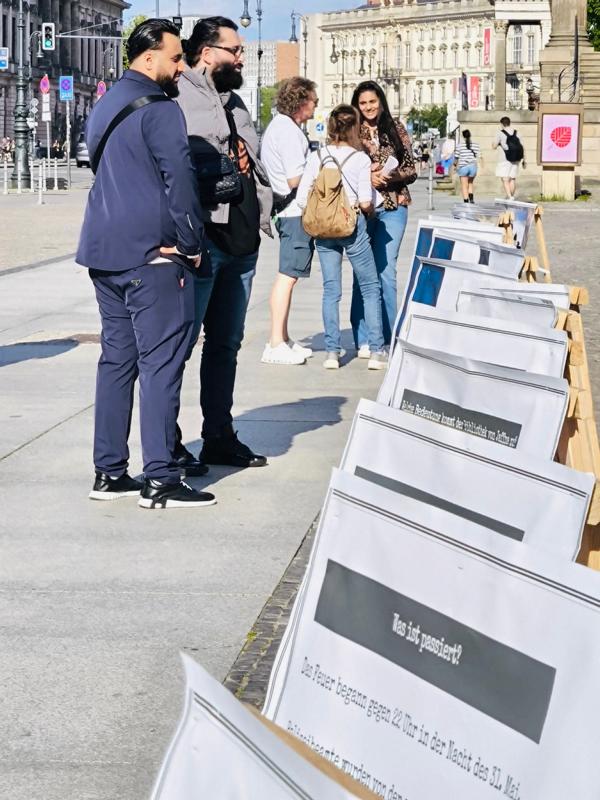
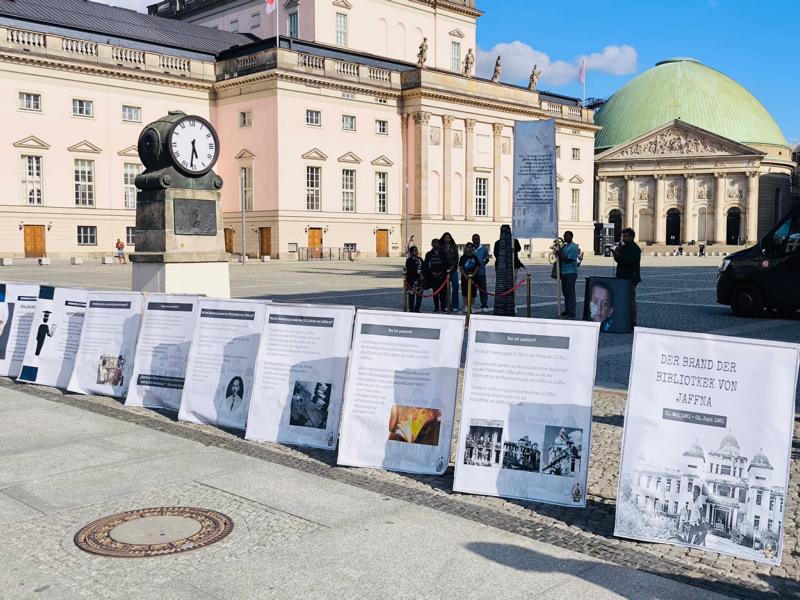
An exhibition marking 45 years since the burning of the Jaffna Public Library was held in Berlin earlier this month, with members of the German Tamils choosing one of the most resonant locations in Europe to commemorate one of the gravest acts of cultural destruction in the history of the island.
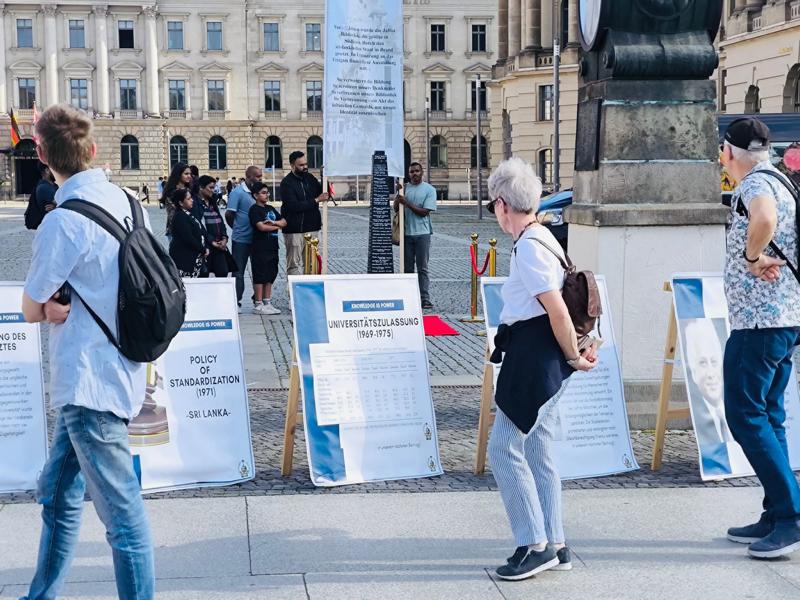
The event was held at Bebelplatz, the central Berlin square where, on the night of 10 May 1933, members of the Nazi German Student Union burned more than 20,000 books in one of the most notorious acts of cultural destruction of the twentieth century. The square is now home to the Empty Library, a memorial set beneath a sheet of glass in the paving, designed by the Israeli artist Micha Ullman, in which empty shelves are visible underground with room for precisely the number of volumes consigned to the flames that night.
A plaque set into the square beside the memorial bears the words of the nineteenth-century German poet Heinrich Heine: "Where they burn books, they will also ultimately burn people."
Heine wrote the line a century before the Nazi burnings he could not have foreseen, in a play about the burning of the Quran by Christian conquerors in Spain. Participants at the Tamil commemoration recalled the warning and the bitter accuracy with which it has been borne out twice over: in Germany, where the book burning of 1933 prefigured the Holocaust, and in the Tamil homeland, where the burning of the Jaffna Public Library in 1981 prefigured the genocide that would follow.
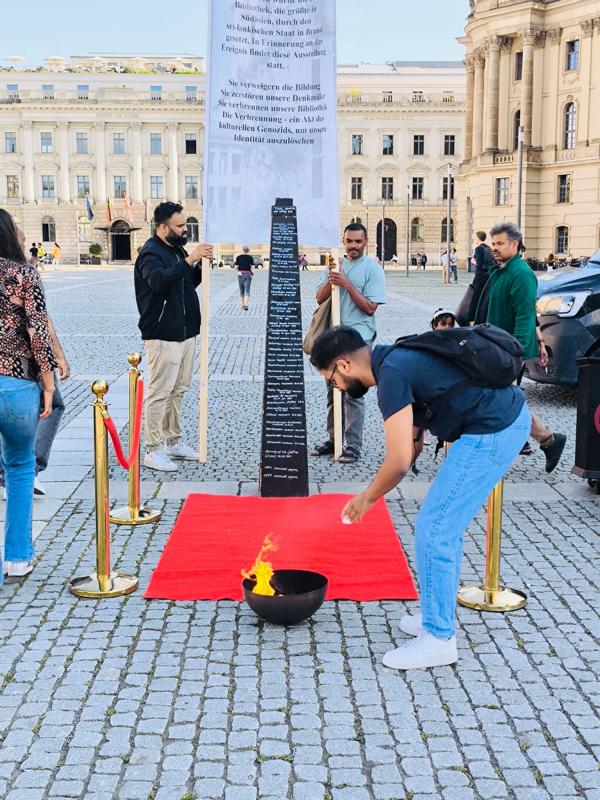
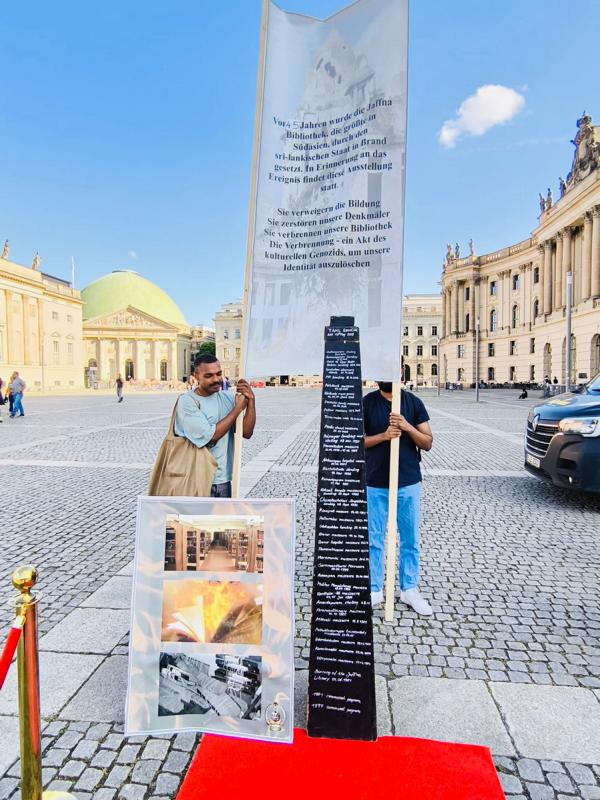
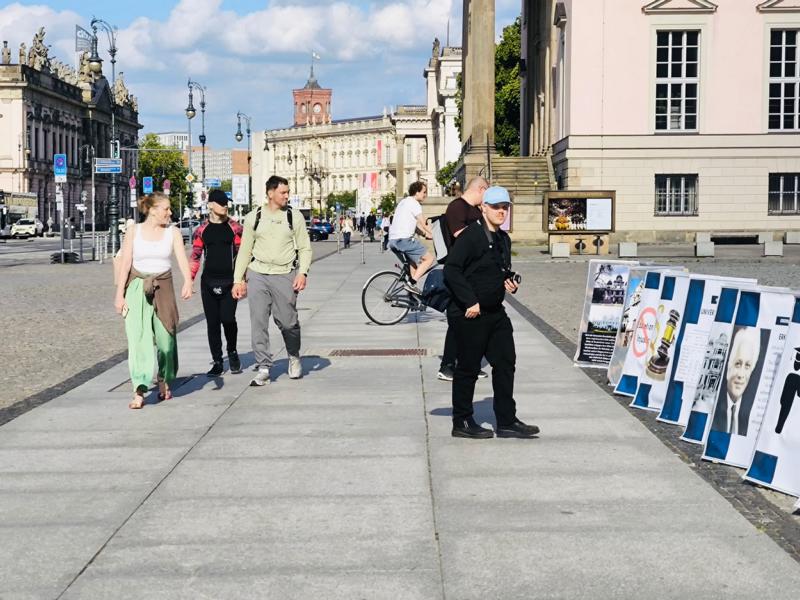
A memorial lamp was lit during the event, and an exhibition was mounted setting out the history of the Jaffna Public Library and the scale of what was lost in its destruction. Attendees stressed that the burning of books is an act that destroys not only knowledge but the identity of a people.
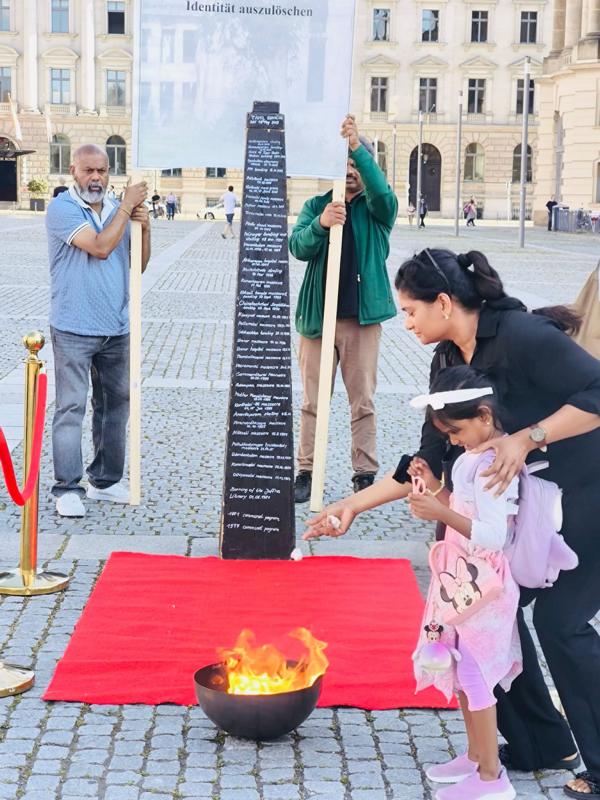
On the night of 31 May 1981, the Jaffna Public Library, then one of the largest in Asia and a repository of Tamil literature unmatched anywhere on the island, was set ablaze by an organised mob of Sinhalese policemen and state-backed paramilitaries operating with the knowledge of senior figures in the Sri Lankan government.
The destruction took place under the rule of the United National Party and at a time when two Sinhala chauvinist cabinet ministers, Cyril Mathew and Gamini Dissanayake, were in Jaffna. The burning continued unchecked for two nights, while the offices of the Tamil daily Eelanadu, the headquarters of the Tamil United Liberation Front and the famous Poobalasingam book depot were also set alight. No mention of the destruction appeared in the island's southern newspapers, and the government delayed bringing in emergency regulations until 2 June, by which time the targets had been destroyed.

Among the more than 95,000 unique and irreplaceable items destroyed were Tamil palm leaf manuscripts known as ola, parchments, rare books, magazines and newspapers, alongside texts of singular cultural importance including the Yalpana Vaipava Malai, a history of the Jaffna kingdom which existed nowhere else. Reverend Father Hyacinth David, the scholar and linguist who watched the library burn from his room at St Patrick's College, was found dead the following morning, his death widely attributed to the shock of what he had seen.
Tamils have long marked the burning as an act of cultural genocide, and as the prelude to the wider state violence that culminated in the killing of tens of thousands of Tamil civilians at Mullivaikkal in 2009. The choice of Bebelplatz for the 45th-anniversary commemoration places the Jaffna Library within the longer history of states that have sought to extinguish a people by first extinguishing their books, and within the European recognition that such acts demand to be remembered rather than forgotten.