
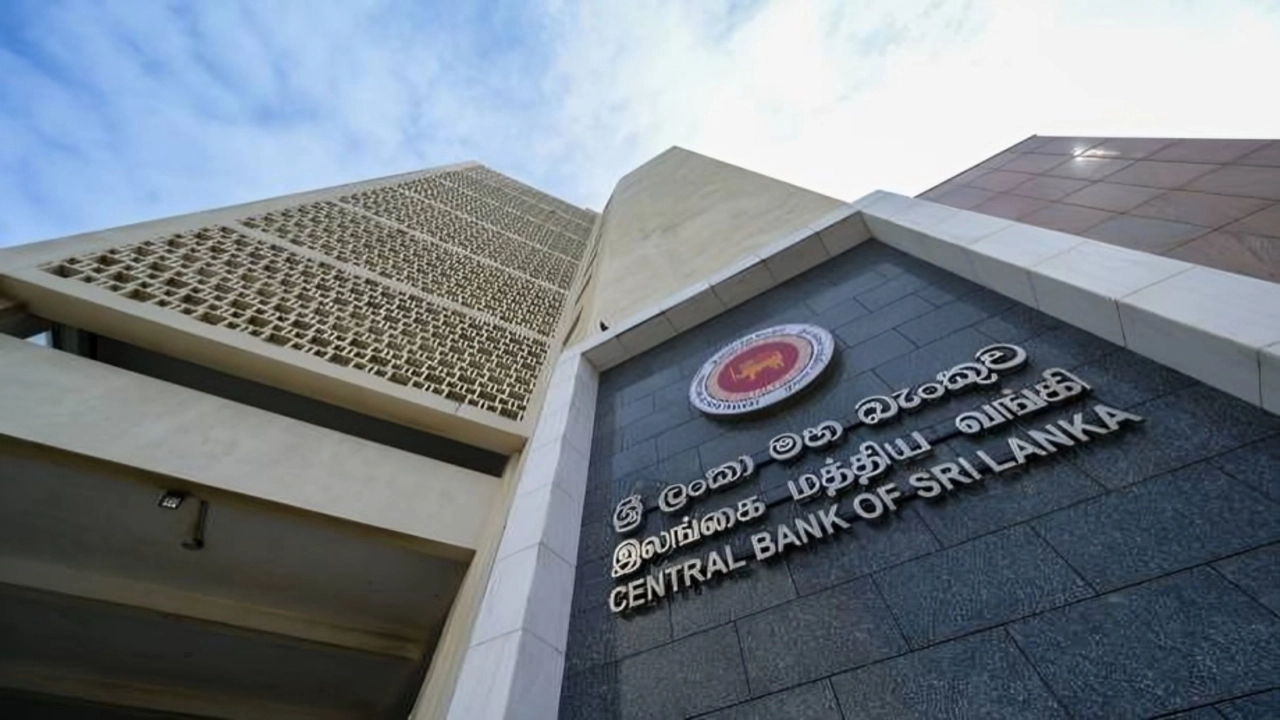
Sri Lanka’s rupee has continued to weaken against the US dollar, even as the Central Bank of Sri Lanka (CBSL) reported a marginal increase in foreign exchange reserves, raising fresh questions over the true state of the island’s external account.
According to CBSL rates reported this week, the US dollar selling rate rose to Rs. 342.08, while the buying rate increased to Rs. 332.38. The rupee also depreciated against a basket of other foreign currencies, including the euro, sterling, Australian dollar and Canadian dollar.
The weakening currency comes as the CBSL expands its use of administrative measures to control the foreign exchange market. Exporters are now required to convert any remaining export proceeds into rupees after using those funds solely for permitted payments.
Under the new requirement, exporters who receive foreign currency earnings in a calendar month must convert the residual balance into Sri Lankan rupees on or before the 10th day of the following month.
The move is the latest sign that Sri Lanka’s foreign exchange position remains under pressure despite the government’s claims of stabilisation under the International Monetary Fund programme.
The CBSL recently announced that official foreign exchange reserves had increased from US$6.76 billion to US$6.87 billion. However, the Bank did not provide a breakdown of the underlying flows that contributed to the increase.
That omission has prompted scrutiny over whether the rise reflects organic inflows, such as exports, remittances or market purchases, or whether it is largely the result of external financing, including the IMF disbursement approved at the end of May.
The IMF Executive Board completed the combined fifth and sixth reviews of Sri Lanka’s Extended Fund Facility on 27 May, making available SDR 508 million, approximately US$695 million at the exchange rate used on the day of Board approval.
The IMF notes that SDR figures are converted at the market rate of the US dollar per SDR on the day of Board approval. While the Fund does not disclose the operational settlement date in its public statement, IMF disbursements are typically credited shortly after approval.
The timing has led analysts to question whether the IMF disbursement is already reflected in the May reserve figure.
The concern is sharpened by the fact that the CBSL was not a major net buyer of foreign currency in May. Instead, it reportedly sold US$223.3 million in the domestic foreign exchange market during the month, while purchasing only US$12 million. That amounted to net dollar sales of US$211.3 million.
The scale of the intervention was striking. May’s sales exceeded the total dollar sales recorded by the CBSL during the whole of 2025 and came as the rupee faced renewed depreciation pressure.
This pattern does not point to a straightforward build-up of reserves through market accumulation.
Sri Lanka had previously pledged under the IMF programme to rebuild foreign reserves, including through foreign exchange purchases. But with the central bank selling dollars heavily in May, the path towards meeting those reserve accumulation objectives now appears more uncertain.
Capital flows have also turned less favourable. Foreign investors sold around US$14.7 million worth of Sri Lankan government securities in the week ending 4 June, despite the CBSL’s recent 100 basis point policy rate hike.
EconomyNext reported that this brought total net foreign outflows from government securities to around US$65 million over four consecutive weeks, amid sharp rupee depreciation.
At the same time, Sri Lanka’s import bill remains under strain from fuel and vehicle imports. The government imposed a 50 per cent surcharge on customs duty on all vehicle imports with effect from 16 May, a move that underscored pressure from the return of vehicle demand after years of restrictions.
Fuel-related dollar outflows have also surged. Ceylon Petroleum Corporation Chairman D.J. Rajakaruna said that the CPC’s average monthly fuel import expenditure had previously been around US$100 million, but rose to US$522 million in April, which was paid in May.
He attributed the spike to higher international prices and additional imports needed for electricity generation.
The CBSL’s reserve announcement therefore sits against a difficult backdrop: a weakening rupee, large fuel outflows, renewed vehicle-import pressure, foreign selling of rupee bonds and heavy central bank intervention in the FX market.
Remittances did increase in May, but the broader flows remain unclear. Without a detailed reserve composition breakdown, markets are left without a clear picture of how much of the reserve increase reflects sustainable inflows and how much reflects IMF or other multilateral financing.
Further external support may also be on the way, but transparency remains limited. Neither the CBSL nor the government has disclosed how much of the debt servicing due in the second quarter has already been settled, nor the precise timing of expected inflows from other multilateral institutions.
The uncertainty comes as international agencies warn of deeper risks to Sri Lanka’s economy from the conflict involving Iran and its effect on global energy markets.
The International Air Transport Association has classified Sri Lanka, Bangladesh and Pakistan as countries facing severe structural risk. Its June 2026 global outlook warned that for energy-importing economies, rising import bills can drain reserves, place pressure on local currencies and heighten balance of payments risks.
Sri Lanka’s economy remains particularly exposed to those pressures because of its dependence on imported fuel, its fragile post-default recovery and the conditions attached to the IMF programme.
The government is also racing to preserve preferential access to the European Union market. Sri Lanka is preparing to reapply for the EU’s GSP+ facility before March 2027, with reforms aimed at compliance with international conventions on human rights, labour and the environment.
More than 80 per cent of Sri Lankan exports to the EU currently receive tariff concessions under GSP+, while the EU market accounts for a significant share of the island’s exports. Losing or weakening that access would further strain foreign exchange earnings.
The CBSL has also faced scrutiny over domestic liquidity creation. Critics have pointed to continued money creation this year, warning that such trends could complicate efforts to stabilise inflation and the exchange rate.
The government has repeatedly sought to project confidence in Sri Lanka’s economic recovery. But the latest developments suggest a more fragile reality. A marginal rise in reserves, without transparency on the underlying flows, does little to reassure markets when the rupee is weakening, exporters are being compelled to convert residual dollars, the CBSL is selling foreign currency heavily and external financing appears to be doing much of the work.
Sri Lanka’s external account remains under pressure. The CBSL may be able to manage the headline numbers in the short term, but without full disclosure on reserve composition, debt payments, multilateral inflows and foreign exchange interventions, markets are left to draw their own conclusions.
For an island still emerging from sovereign default, that opacity carries its own risks.