
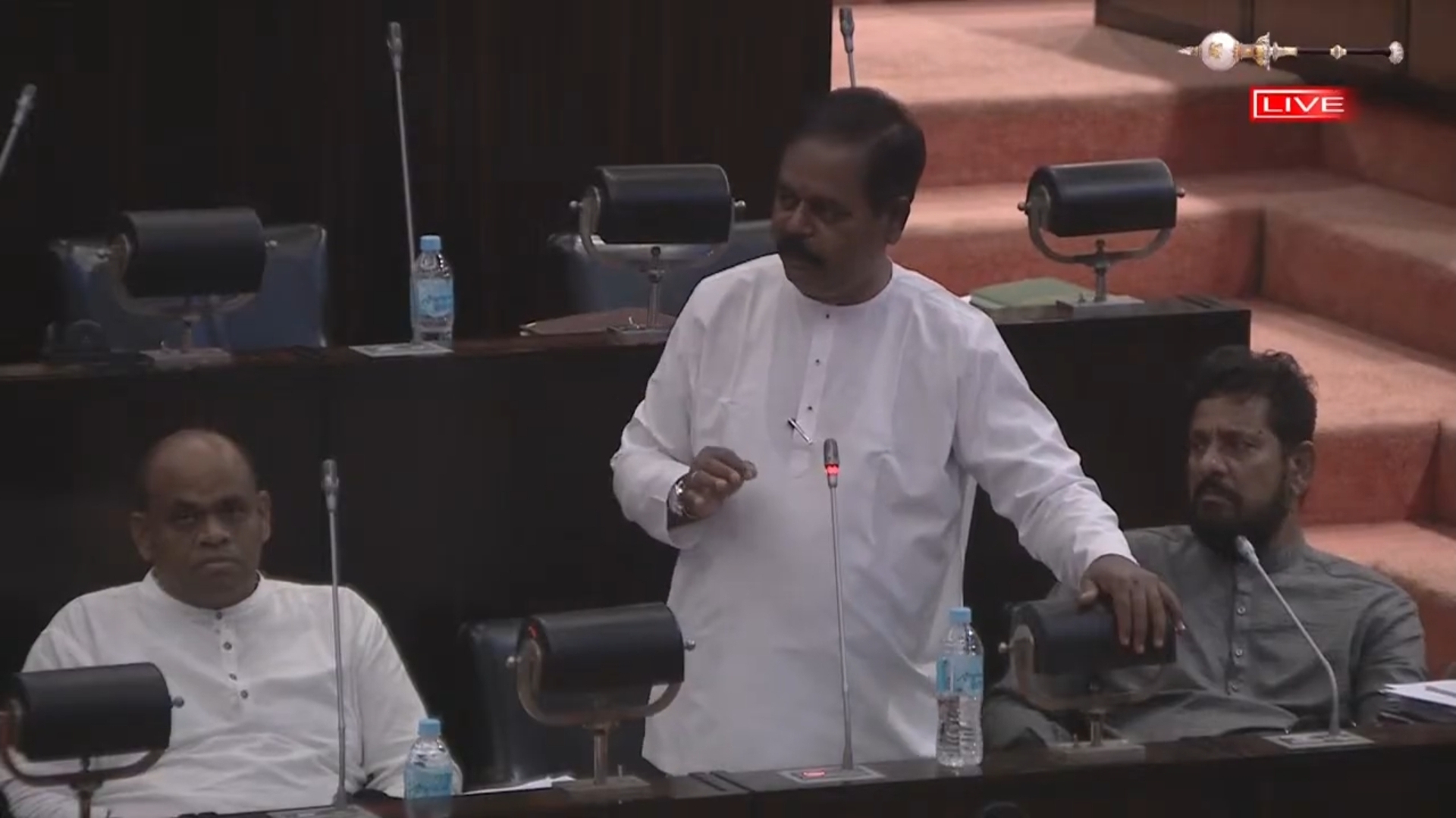
Ilankai Tamil Arasu Kachchi (ITAK) parliamentarian Sivagnanam Shritharan has strongly condemned the detention of Kilinochchi-based rapper Sangeethsan Ganeskumar under Sri Lanka's Prevention of Terrorism Act (PTA), describing the arrest as a grave attack on freedom of expression and warning that opposition across the North-East was rising.
Speaking in parliament on 9 June, Shritharan questioned how an artist could be arrested under the PTA for performing a song, calling it "a tragic incident in the country's history".
"The right to sing is restricted, the right to speak is restricted, the right to write is restricted and the right to gather is restricted," he said, arguing that the PTA continued to be used to suppress dissent despite longstanding promises to repeal the legislation.
Sangeethsan, better known as Hip Hop Sangee, was arrested on 2 June after the Sri Lankan police launched an investigation into videos shared on social media following a musical performance at a temple festival in Navatkuli, Chavakachcheri, on 31 May.
Shritharan recalled that leaders of the ruling National People's Power (NPP), including Sri Lankan president Anura Kumara Dissanayake, had pledged while in opposition to abolish the PTA upon taking office. Nearly two years later, he said, the law remained in force and authorities were instead discussing the introduction of a new replacement law.
He questioned why Dissanayake had not used his powers to secure Sangeethsan's release and pointed to demonstrations demanding the rapper's freedom in Vavuniya, Kilinochchi, Valvettithurai and other locations across the North-East. Shritharan warned that preparations were under way for further protests if the artist was not released immediately.
The ITAK MP noted that the PTA had historically affected both Tamils and Sinhalese, recalling its use during the suppression of the JVP insurrection and against Tamil youth during the armed conflict. He further alleged that the legislation had facilitated state repression during major wartime atrocities, including the genocide of Tamils in Vaharai in 2006 and Mullivaikkal in 2009.
Shritharan placed Sangeethsan's arrest within a broader pattern of restrictions on Tamil cultural expression. He referred to the detention by customs authorities of books by Kilinochchi writer Theepachelvan Piratheepan, whose publications were seized in March on the grounds that they could threaten national harmony. He also noted that musicians had been summoned and questioned by police following performances at cultural events across the North-East. "This is a message to the youth that they cannot speak freely," he said.
He also raised concerns over judicial independence, citing the rapid transfer of Jaffna High Court Judge A. G. Alexraja to Badulla less than six weeks after he had taken up his post in Jaffna, and drawing comparisons with the departure of former Mullaitivu District Judge T. Saravanaraja. He alleged that judges who had challenged state-backed encroachments, including at Kurunthurmalai, had faced repercussions.
Shritharan additionally claimed that school principals, teachers and students at Jaffna's Union College and Konavil Maha Vidyalayam in Kilinochchi had been subjected to interrogations over decorations displayed during school sporting events.
"If we organise a sports meet, there is the PTA. If we sing, there is the PTA. If we speak, there is the PTA. If we gather, there is the PTA," he said, asking how meaningful reconciliation could be achieved under such conditions.
Shritharan said that Tamils and Sinhalese were both nations on the island, but argued that Tamils still did not feel represented under Sri Lanka's flag. He accused the government of engaging in what he described as "state terrorism" and said that Gotabaya Rajapaksa had falsely claimed only 75,000 people were present at Mullivaikkal, when the true figure was 400,000. He said the same situation that resulted in the use of cluster bombs and white phosphorous bombs against Tamils without food or medicine was still continuing.
He also referenced political writer A. J. Wilson's book The Break-Up of Sri Lanka, which he said documented decades of injustices committed against the Tamil people by successive Sinhala political leaders, and quoted from the Tamil epic Silappathikaram: "righteousness is the nemesis of those who live by political expediency."
Concluding his speech, Shritharan called for the immediate release of Sangeethsan and warned that the continued use of the PTA against artists, writers and youth would further undermine prospects for reconciliation and democratic freedoms.