
Since childhood, I was constantly reminded of the cliché story from my parents of them walking barefoot to school, studying for their exams under a dimly lit lamp, or describing to me how their lives were in university. At first, I began to tune them out as it would be the same story every time. But these tales were just a mask for much deeper, horrifying stories. It wasn’t until my early 20s that I would be told of my grandpa narrowly escaping the reaper of death during Black July, or my dad being assaulted by the Sri Lankan army.
As the child of Eelam Tamil refugees, I am privileged to be born in Canada, miles away from the brutal, decades-long genocide. But as someone who did not grow up in a densely Tamil neighbourhood, and with parents who did not want to share their traumatic experiences, my sole knowledge was from news media, where protestors were villainized for inconveniencing the public by blocking roads and highways.
My eyes were later opened to how those around my age and born in Tamil Eelam experienced similar horrors as my parents. I then began reading more about the history of Tamil Eelam and came across a plethora of information on websites such as Sangam.org and TamilNation.org. I learned more about British colonialism, the countless pogroms since independence from the colonial empire, the formation of the Liberation Tigers of Tamil Eelam (LTTE), and the ensuing genocide. Without these accessible sources of information, I never would have learned more about Tamil history.
The act of archival and preservation comes as an act of resistance to the continued denial of the Tamil genocide by the Sri Lankan state, and how it contributes to the ongoing erasure of Tamil perspectives. This is why, at the Tamil Academic Journal, we work not just to publish research by and for the Tamil community, but to ensure that stories such as the ones of my parents are preserved for future generations. It is also why, at 27 years old, I continue to fight for the continuance of storytelling, including the burning of the Jaffna Library and the victims of the Tamil genocide, and how the Tamil diaspora can be a leader in this effort. Through the uplifting of the Tamil Community Centre, we can make strides towards preserving our history in the face of erasure.
The Burning of the Soul
On May 31, 1981, one of the largest libraries on the continent, the Jaffna Public Library, was burned. This was a devastating hit to Tamil people around the world, as the library was a collection of over 95,000 pieces of ancient literature and historical documents, including palm leaves and news articles. To the Tamil youth, it shattered their educational dreams, where the belief that they would never be allowed to learn was imprinted in their minds forever. It was a defining moment for Tamil youth to join the liberation movement, who were already disenfranchised by the policy of standardization of 1971. For many Eelam Tamils and Tamils across the globe, this was a clear moment of valuing the preservation of knowledge.
The library was a collection of over 95,000 pieces of ancient literature and historical documents.
The burning of the Jaffna Public Library was not a singular act of devastation as part of a long history of state-sponsored erasure. Targeting Tamil history and remembrance has persisted over time. Since May 2009, the Northern and Eastern Tamil-dominant areas have been heavily surveilled and militarized, with monuments to Sri Lankan soldiers erected and businesses built by the military. Countless cemeteries of fallen Maaveerarkkal (great heroes) have been demolished, and memorial services for the Mullivaikkal genocide and other massacres have been prohibited or interrupted. Even digital and artistic forms of remembrance are frequently censored, monitored, or diluted. The extent to which the fight for existence is intertwined with the fight for truth is demonstrated by these efforts to suppress Tamil memories. As such, archiving turns into an act of rebellion in this situation. No matter how strongly it is suppressed, every story documented, every image saved, and every testimony offered serves as proof that the Tamil identity cannot be eradicated.
Stories from a Tamil Perspective
Among Tamil people, we are commonly told of short folktales, such as Paati Sutta Vadai, to much larger epics such as Cilapathikaram and Manimekalai. But as we grow older and immerse ourselves within the community, new stories emerge and are shaped by personal experiences of displacement due to colonialism and genocide. After fleeing genocide, many Tamil fathers became ‘master chefs’ from working in the back kitchen while struggling to make ends meet. These aren’t just stories that we have a cup of tea over, but are a testament to our identity and perseverance. It is a symbol of our families’ decision to uproot themselves and leave for a foreign land where they had to start from scratch. Whether this meant learning English or living among 10 others in a bachelor-sized apartment, everyone did something to simply survive. As the keepers of these stories grow older, it becomes our collective imperative to ensure their voices are recorded and archived, where not just their histories are preserved, but also the multiple facets of their everyday lives.
These aren’t just stories that we have a cup of tea over, but are a testament to our identity and perseverance.
But it is also important to consider the voices of those who did not have the opportunity to leave or chose to stay in their homeland. Whether this includes those who were part of the armed liberation movement in Tamil Eelam or fighting to survive every day in Tamil Nadu, their stories vary based on where they lived, their religion, their occupation, their caste, and whether they were internally displaced. A person’s story from Jaffna will be largely different than one from Chennai. The stories of physicians who treated the wounded in Mullativu will be much different from those of fishermen from Rameshwaram. The collection and preservation of Tamil stories must be a global effort, where the experiences of Tamils of Tamil Eelam, Tamil Nadu, Malaysia, Singapore, the diaspora, and many other countries are equitably accounted for.
By gathering these varied stories, we create a more complete picture of our identity as a people. By acknowledging that the Tamil identity is plural and not monolithic, such inclusivity promotes group solidarity. As such, we can assemble a unified front that values diversity and ensures that no Tamil community in the world feels excluded or invisible. Hence, archiving turns into a communal healing act that unites people from different generations and oceans to affirm that every Tamil story, no matter where it comes from or what happened, has a legitimate place in our common past.
Tamil identity is plural and not monolithic.
Guardians of Memory
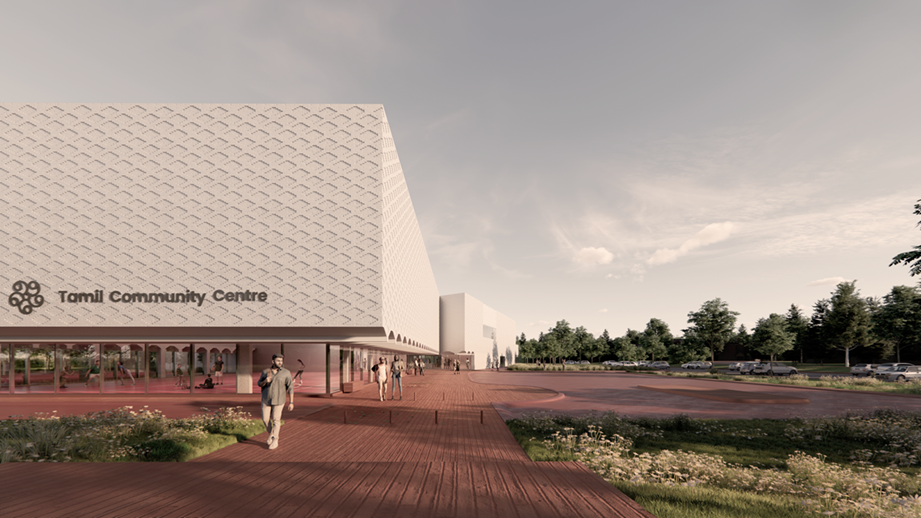
The genocide following the events of Black July led to the exodus of many Eelam Tamils throughout the world, with Canada and the Greater Toronto Area being home to many. Many Tamils engaged in countless community endeavours, including Carnatic music classes and hosting village ondrukoodals (gatherings). But more recently, a new venture has risen: the Tamil Community Centre (TCC), to be built in Scarborough, Canada. The TCC won’t just be a home, but a symbol of identity and collective strength and bridge to the Tamil homeland. It will be embedded in Eelam Tamil and Canadian history, showcasing our ability to organize. The TCC will have numerous facilities, including a gymnasium, an auditorium, meeting rooms, and a library, where the latter will be home to Tamil archives.
The establishment of the TCC will allow future generations to learn their history in a standardized location, but allow current generations to record and preserve their stories. Its open community-owned setting can act as a testing ground for cultural innovations, allowing Tamils to express their history and identity in more ways. The centre can hold academic forums on social justice and health, intergenerational storytelling circles, documentary screenings, dramatic arts performances, and workshops for expanding Tamil literacy, in addition to traditional events such as Carnatic music Arangetrams (graduation ceremonies).
The TCC can support Tamil culture’s dynamic evolution by allowing experimentation through embracing modernity and innovation, while maintaining its heritage-based foundation. It can foster fresh artistic expressions, scholarly research, and civic involvement that capture the variety of the Tamil experience around the world. In addition to enabling present generations to document, reinterpret, and celebrate their histories in innovative and progressive ways, the establishment of the TCC will encourage future generations to learn about their past in a welcoming and adaptable setting. The TCC will not just be a home for Tamils in the Greater Toronto Area, but a symbol of our identity around the world. It is thus our collective duty to ensure that there is a space and opportunity for the collection of Tamil archives and stories.
The TCC will not just be a home for Tamils in the Greater Toronto Area, but a symbol of our identity around the world.
The recording, collection, sharing, and preservation of stories within the Tamil community are not just important to prevent the erasure of our identity, but to showcase our strengths and values as well. It is our community that comes together to uplift each other in times of need, and that is why we must come together to mobilize and build the Tamil Community Centre.
_____
Krishihan Sivapragasam (he/அவன்/il) is an External Relations Associate with the Tamil Academic Journal. He holds a Master of Science in Global Health degree from McMaster University and is passionate about Tamil history, community advocacy, and policy reform in the public sector.