
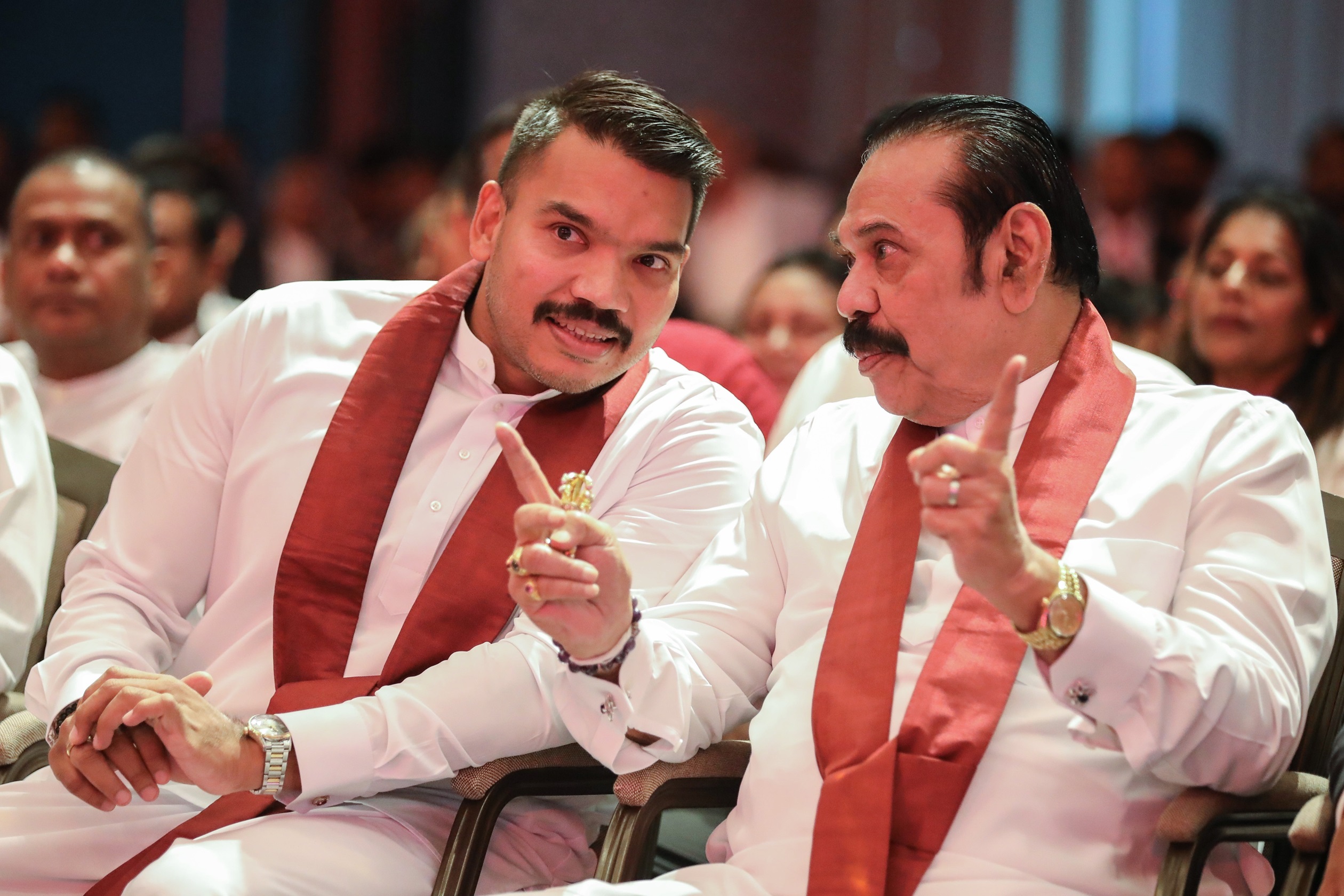
British Tamil students and youth organisations have expressed widespread outrage after Namal Rajapaksa was invited to address the Oxford Union and the Cambridge Union next week, with plans for protests already underway across the United Kingdom.
Namal Rajapaksa, a senior figure in the Sri Lanka Podujana Peramuna (SLPP) and son of former Sri Lankan president Mahinda Rajapaksa, is scheduled to speak at the Oxford Union on 25 February 2026 and at the Cambridge Union on 27 February 2026. The invitations have drawn sharp condemnation from Tamil student bodies and other organisations, who have called for both events to be cancelled.
In a joint statement issued by Tamil youth and student organisations across the UK, signatories said the decision to host Rajapaksa amounted to “an act of profound insensitivity and a grievous insult to the Tamil people, both in our homeland and across the diaspora.” The statement argues that hosting a member of the Rajapaksa political dynasty represents “the platforming of an individual from a political dynasty directly implicated in the genocide of the Eelam Tamil people.”
The organisations further stated that “to host a Rajapaksa is to whitewash a legacy of bloodshed,” citing “the deliberate bombing of civilian ‘No-Fire Zones’ and hospitals,” “the systematic sexual violence used as a weapon of war,” and “the enforced disappearances of tens of thousands,” as well as “the ongoing militarised occupation of Tamil lands and the erasure of our cultural memory.”
A total of 20 different British university Tamil societies signed the statement, including that of both Oxford and Cambridge universities, alongside the Tamil Youth Organisation and Phoenix TNG.
.jpeg)
.jpeg)
Student groups have demanded the immediate cancellation of both events, a public apology to British Tamils and survivors of Sri Lankan state violence, and a commitment from both Unions to adopt a policy of non-platforming for individuals credibly accused of war crimes and grave human rights abuses.
They have also warned that if the events proceed, protests will take place. “We stand in solidarity with all survivors and will mobilise peacefully to ensure our voices are heard,” the statement reads.
Tamil Solidarity also condemned the invitations, stating, “It is with deep outrage that we learn Namal Rajapaksa is scheduled to speak at the Oxford Union on 25th February 2026 and the Cambridge Union on 27th February 2026.” The organisation added that “to grant such a figure a platform within the Oxford Union and the Cambridge Union is not academic engagement, it is political rehabilitation.”
The statement further warned that proceeding with the events would send “a devastating message to Tamil survivors and victims’ families: that the pain of our community is less important than a controversial speaking event.”
The backlash has also drawn comparisons to 2010, when Mahinda Rajapaksa was invited to address the Oxford Union. That event was ultimately cancelled following the threat of large-scale protests by Tamil activists.
Supporters of Rajapaksa, however, have defended the invitation. Geethanath Cassilingham, Politburo Member of the SLPP and Chief Organiser for Jaffna district, said, “I do not understand how hosting an MP from Sri Lanka for a debate can be described as ‘normalizing atrocities.’ A university invitation is not an opportunity for open engagement. Namal Rajapaksa is an individual political leader who should be judged on his own record.”
He added, “Institutions like the Oxford Union and Cambridge Union exist to allow rigorous debate, You may not agree with what Namal Rajapaksa says, and that is your right. But freedom of expression does not mean silencing views we dislike. It means allowing them to be heard.”
Cassilingham also said that Rajapaksa “is coming to engage directly and answer questions honestly” and that “we believe the next generation can move beyond division, address differences through dialogue, and build a stronger Sri Lanka, back home, moving forward from scars and bitter memories.”
"We respect the right of students to protest, that is their democratic freedom — but we are also open to discussion," he added.
Despite these claims, Tamil organisations have maintained that the issue is not one of debate but of accountability and justice. They argue that providing prestigious platforms to figures linked to a political dynasty associated with mass atrocities against the Tamil nation risks legitimising impunity.
With protests now being organised across multiple universities and cities, pressure is mounting on both the Oxford Union and Cambridge Union to reconsider their decision.