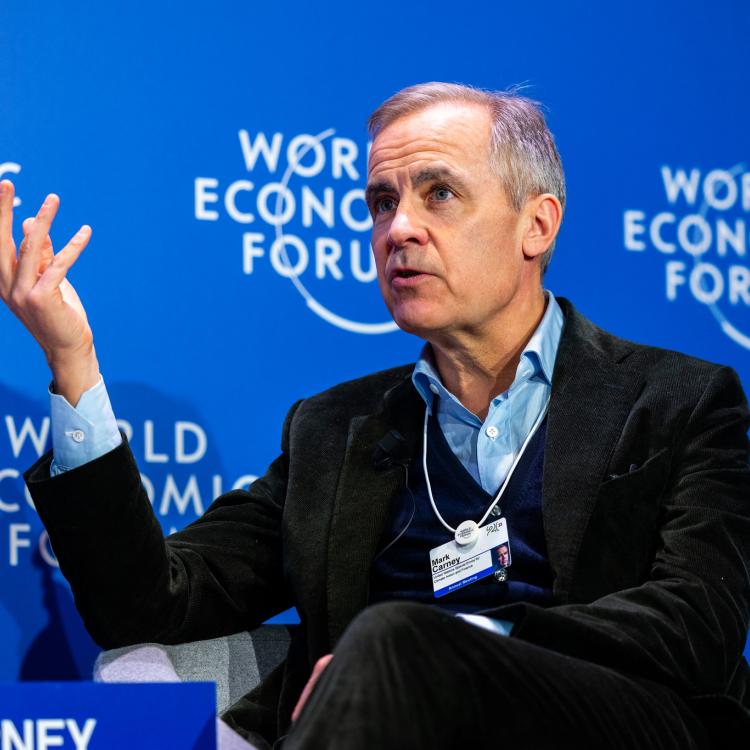
When Canadian Prime Minister Mark Carney acknowledged that the global order is in a state of “rupture” last month, he gave voice to what many across the world have already felt for some time. The old certainties of the West are collapsing and longstanding alliances are being recalibrated. The world is changing. Where does that leave Eelam Tamils and the ongoing struggle for liberation?
Firstly, it is important to acknowledge how the “old world order” did not work for Eelam Tamils and many others across the globe. For decades, it demonised the Tamil liberation struggle while providing unwavering political, diplomatic, and military support to the Sri Lankan state. Massacres and abuses were excused or even ignored altogether, with the language of liberalism and human rights deployed selectively, used only to reprimand Colombo when it suited broader geopolitical interests. Carney bluntly says himself that international law was “applied with varying rigour depending on the identity of the accused or the victim”. It was precisely this uneven world order that led to one of the worst atrocities of the 21st century – the murder of tens of thousands of Tamils in the Mullivaikkal genocide.
International institutions that were purportedly built to prevent such atrocities from taking place have also proven toothless and hollow. In the years after 2009, when Tamils engaged in good faith, appealing to mechanisms such as the United Nations, the outcome has been failure after failure. Years of resolutions in Geneva have produced reports, rhetoric, and procedural rituals. But still there has been no justice. Nearly seventeen years after the killings at Mullivaikkal, not a single perpetrator has been held accountable.
The international “rules-based order” as we knew it was “fiction” – a fact that Carney admitted on the global stage. It is a truth that oppressed nations have long known. Where does the world go from here?
With the decline of US hegemony, and Washington seemingly no longer the stable global leader that it once was, Western states are looking elsewhere for economic growth and stability. The recent visits of both Canadian British prime ministers to China, as well as the European Union’s landmark deal with India – dubbed “the mother of all deals” – illustrate the West’s shift in focus Eastwards for more dependable partners.
When it comes to engagement, the Canadian prime minister outlined an approach he calls “values-based realism” and “variable geometry”, signalling a pivot towards interest-driven ties across the globe. It was coupled with his frank statement of how “if you are not at the table, you are on the menu”. This approach has it pitfalls.
When policymakers in the West speak of pragmatism, particularly when it comes to states such as Sri Lanka, too often it translates into silence on repression and acceptance of majoritarianism as an unfortunate but manageable reality. Under this logic, when faced with the prospect of increasing trade access, the rights of the oppressed remain expendable. Even peoples who once enjoyed strong Western backing can be swiftly abandoned when they no longer fit strategic calculations. The Kurdish people know this reality all too well, as recent events in Syria demonstrate.
In Sri Lanka, however, coddling up to Colombo will fail, both in the short and long term. Sri Lanka is not a bastion of stability. Even years after the Tamil armed struggle ended, the island continues to struggle with multiple crisis – economic, political and humanitarian. There have been several regimes spanning the entire breadth of the Sinhala political spectrum, and not a single one has meaningfully managed to bring about peace, prosperity and a lasting stability. Even the current administration is rapidly demonstrating its willingness to succumb to the authoritarian ways of those before it.
Instead, when it comes to building a reliable partnership, the Tamil nation is one that has shown a remarkable resilience and determination to survive and to thrive, even in the midst of oppression.
Indeed, given this significant shift in global order, the Tamil people must also recalibrate their own approach. For too long, Tamil politics has centred on appealing to the liberal benevolence of Western states. That era must end. The Tamil people possess real power, and it is time to recognise and deploy it strategically.
Across the world, the Tamil diaspora has grown in strength and influence. Tamils sit in the parliaments of Britain, Canada, and Australia. Tamil voices are lobbying in Washington, Paris, Berlin, and Geneva. For consecutive years, Tamils have been recognised at receptions inside Downing Street. Political access and visibility are higher than at any point in our history. This influence is matched by economic strength and cultural reach. From business to technology, from music and art to sport and academia, Tamils are shaping societies far beyond the island. There is material power in this. And we must be strategic with who we engage with, and how. From the embers of the genocide, the Tamil people have risen into a position of strength.
And in the Tamil homeland, the struggle has not been extinguished. From determined petition campaigns opposing new anti-terror legislation, to protests against land grabs and Sinhalisation, to the unyielding courage of the mothers of the disappeared, Tamil resistance is alive and determined. The resilience of the Tamil people is on full display every single day. The struggle has not been broken.
In an era of geopolitical flux, the Tamil nation must also act with clarity and purpose.
______
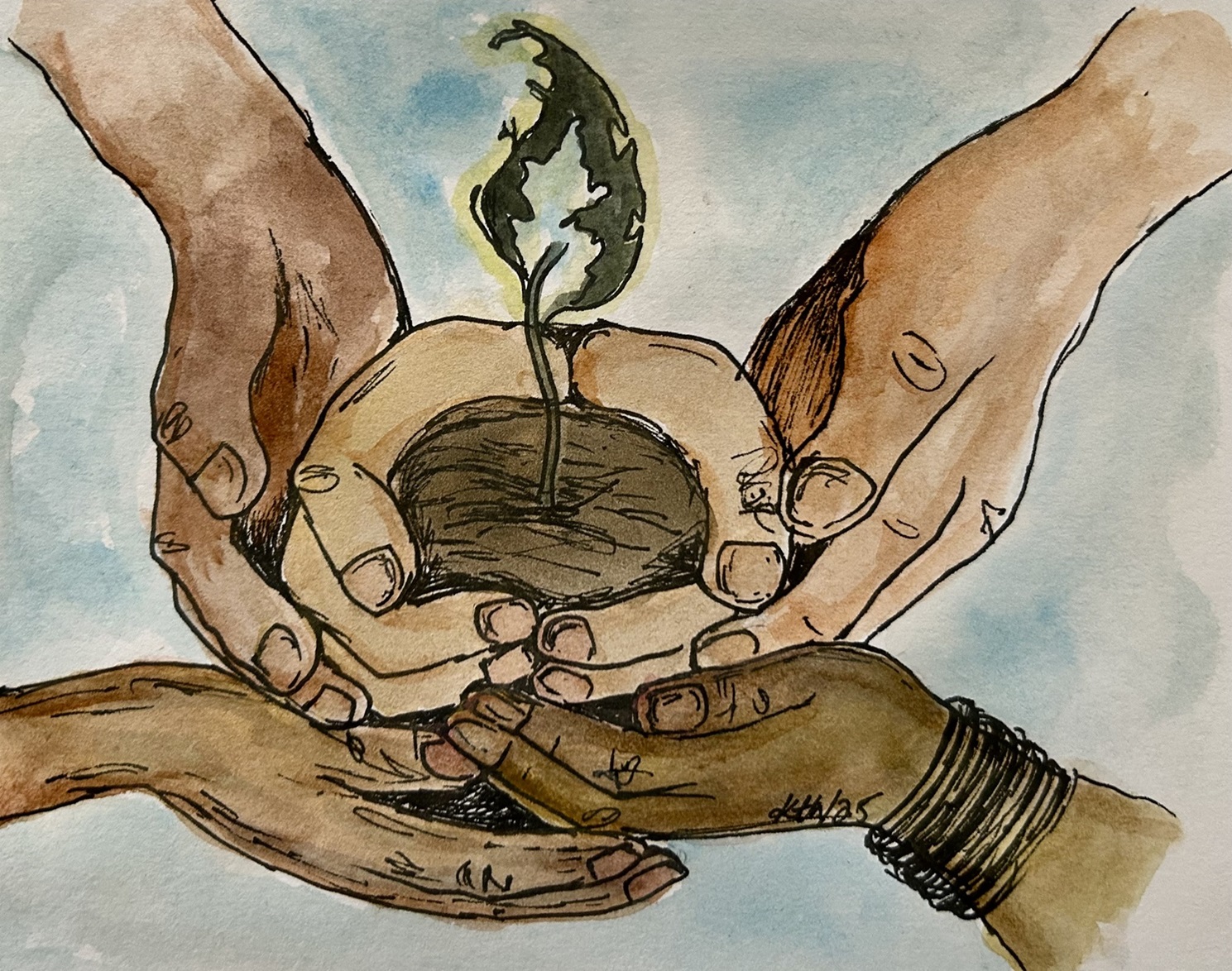
Illustration by Keera Ratnam.