
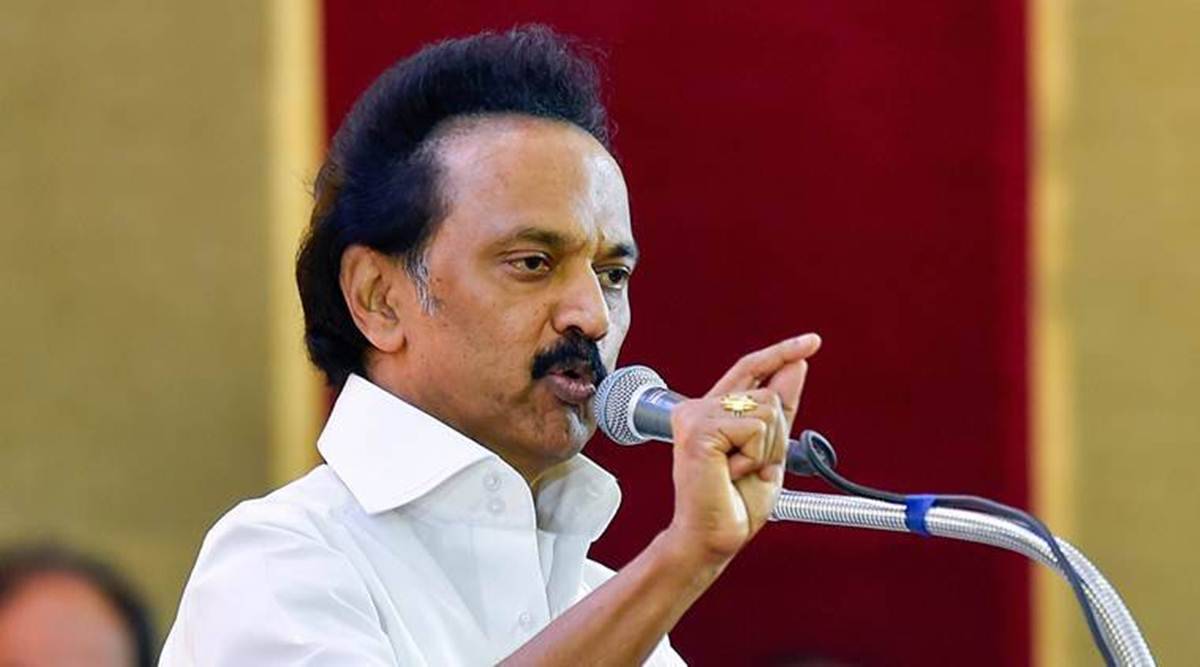
Tamil Nadu Chief Minister M.K. Stalin has warned that Sri Lanka’s ongoing constitutional reform process poses “grave risks” to the Tamil nation, cautioning that proposed changes threaten to further entrench marginalisation by reinforcing a unitary state structure.
In a letter addressed to Indian Prime Minister Narendra Modi, Stalin urged the Government of India to engage diplomatically with Sri Lanka and press for a constitutional settlement that “genuinely” addresses the longstanding grievances of the Tamil people.
His intervention comes amid growing concern that the Sri Lankan state is advancing constitutional reforms that once again sideline Tamil political aspirations under the pretext of reconciliation.
According to Stalin, the Sri Lankan government, led by Anura Kumara Dissanayake, is accelerating efforts to introduce a new Constitution while claiming to resolve ethnic issues. However, he warned that the proposed framework appears to reinforce a unitary ‘Ekkiyarajya’ model, which he said would further marginalise the Tamils by ignoring their legitimate demand for political autonomy.
“India should press for the inclusion of federal arrangements that devolve power to the provinces, protect the ethnic minority rights, and uphold the principles of pluralism and equality. Such an approach would not only honour India’s role as a guarantor of regional peace but also align with our constitutional values of federalism and protection of linguistic and ethnic minorities,” Stalin wrote, calling for proactive steps to safeguard Tamil rights and contribute to a “just and lasting resolution”.
Stalin emphasised the continued relevance of the Thimphu Principles, articulated by Tamil representatives from various militant organisations during the 1985 peace talks facilitated by the Indian government in Bhutan. He recalled that these principles call for recognition of the Tamils of Sri Lanka as a distinct nation, acknowledgement of the Northern and Eastern Provinces as the traditional Tamil homeland, affirmation of the Tamil nation’s right to self-determination, and the establishment of a federal system of governance that guarantees equality and non-discrimination. He also underscored the need for full citizenship rights for hill-country Tamils.
“Without incorporating these elements, any new Constitution risks perpetuating the cycle of injustice and instability, potentially leading to a renewed conflict and humanitarian crises,” Stalin warned. He further stressed that India has both a moral and strategic responsibility to act, citing its historical involvement in Sri Lanka, including the Indo-Sri Lanka Accord of 1987.
The Tamil Nadu Chief Minister noted that the plight of the Tamil people resonates deeply in Tamil Nadu, where millions view them as kin, and cautioned that any deterioration in their situation could have serious implications for bilateral relations and regional stability.
Flagging “profound concern” over the welfare and political rights of Tamils in Sri Lanka, Stalin reiterated that Tamil Nadu has long been at the forefront of championing the rights of the Tamil nation, rooted in deep historical, cultural, and emotional ties. “As the Chief Minister of Tamil Nadu, it is my bounden duty to bring the issue regarding the proposed new Constitution of Sri Lanka to your kind attention, drawing from representations from respected Tamil leaders from India and Sri Lanka,” he said.
Stalin also pointed to the broader historical context, arguing that for more than 77 years Tamils have endured systematic discrimination, violence, and the denial of fundamental rights. He noted that this trajectory culminated in what many describe as a genocide against the Tamil people, underscoring the urgency of meaningful constitutional reform that addresses the root causes of the conflict rather than perpetuating them.
Read more from The Hindu here.