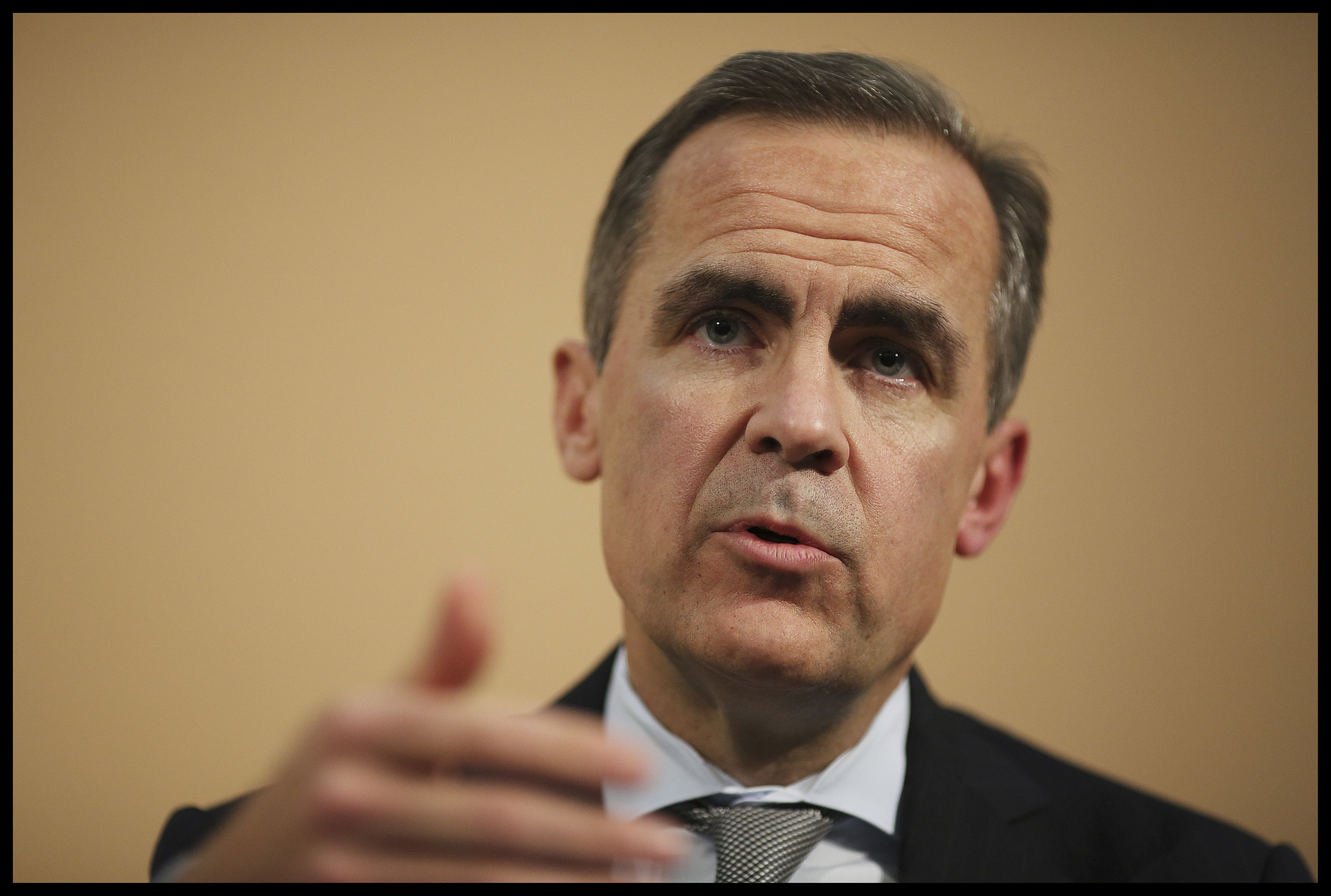
Canadian Prime Minister Mark Carney has warned that the global order that shaped international politics for decades “is not coming back”, urging “middle powers” to act collectively as great power rivalry intensifies.
Speaking on Tuesday at the World Economic Forum in Davos, Carney said the world was facing a “rupture, not a transition”.
“For decades, countries like Canada prospered under what we called the rules-based international order,” he said. “We joined its institutions, we praised its principles, we benefited from its predictability. And because of that we could pursue values-based foreign policies under its protection.”
“We knew the story of the international rules-based order was partially false. That the strongest would exempt themselves when convenient. That trade rules were enforced asymmetrically. And we knew that international law applied with varying rigour depending on the identity of the accused or the victim.”
“This fiction was useful,” he continued. “And American hegemony, in particular, helped provide public goods: open sea lanes, a stable financial system, collective security and support for frameworks for resolving disputes.”
“So, we placed the sign in the window. We participated in the rituals. And we largely avoided calling out the gaps between rhetoric and reality.”
“This bargain no longer works.”
He cautioned that countries like Canada could no longer rely on geography, historic alliances, or multilateral institutions to guarantee security and prosperity. “Great powers have begun using economic integration as weapons, tariffs as leverage, financial infrastructure as coercion, supply chains as vulnerabilities to be exploited.”
“Middle powers must act together because if we’re not at the table, we’re on the menu,” Carney said, arguing that powerful states were increasingly using economic tools as instruments of coercion.
Without naming the United States or its president directly, Carney’s remarks appeared to respond to recent developments in Washington, including tariff threats against allies and comments questioning the sovereignty of Greenland. Carney reaffirmed Canada’s support for Greenland and Denmark, drawing applause from the audience.
“As a member of NATO, Canada stands firmly with Greenland and Denmark and supports their unique right to determine Greenland’s future,” he said. “Our commitment to Article Five is unwavering.”
Carney warned that middle powers which simply accommodate stronger states in the hope of avoiding conflict would ultimately fail to protect their sovereignty. Referencing Czech dissident and former president Václav Havel, he urged countries and companies alike to stop “living within a lie” by pretending that old rules still functioned as advertised.
He argued that while many states were understandably seeking greater strategic autonomy in areas such as energy, food, defence, and supply chains, a world of isolated fortresses would be “poorer, more fragile and less sustainable”. Instead, Carney called for collective resilience through cooperation among like-minded countries.
Canada, he said, was pursuing what he described as “values-based realism”, which would be “principled in our commitment to fundamental values: sovereignty and territorial integrity, the prohibition of the use of force except when consistent with the UN Charter and respect for human rights”.
Carney concluded by rejecting nostalgia for a world that no longer exists. “We know the old order is not coming back,” he said. “We shouldn’t mourn it. Nostalgia is not a strategy.”
Instead, he argued, middle powers had both the most to lose from unrestrained great power rivalry and the most to gain from genuine cooperation. “The powerful have their power,” he said. “But we have something too — the capacity to stop pretending, to name reality, to build our strength at home and to act together.”
Carney is among several world leaders addressing the forum this week, with US President Donald Trump scheduled to deliver his own speech on Wednesday.
Read the full text of his speech here.