
Sri Lanka’s minister of fisheries, Ramalingam Chandrasekar, made a bold public pledge at a press conference last month. He claimed that direct orders had been issued by Sri Lankan president Anura Kumara Dissanayake for the military occupation of Tamil cemeteries, where thousands of fallen freedom fighters are buried, to be withdrawn. It would happen “soon”, he said, explicitly acknowledging that Tamils have the right to commemorate their war dead.
Chandrasekar was clear that this was not a personal view or an aspirational remark. It was, he stressed, an assurance from the president himself - the commander-in-chief of the armed forces and the highest authority in the Sri Lankan state.
More than a month later, that pledge stands exposed as false. No withdrawal has taken place. Instead, as they have been forced to do for years, Tamils commemorated Maaveerar Naal, or Great Heroes’ Day, on November 27 outside the cemeteries where their loved ones are buried, denied access to the very spaces that embody their collective memory and sacrifice.
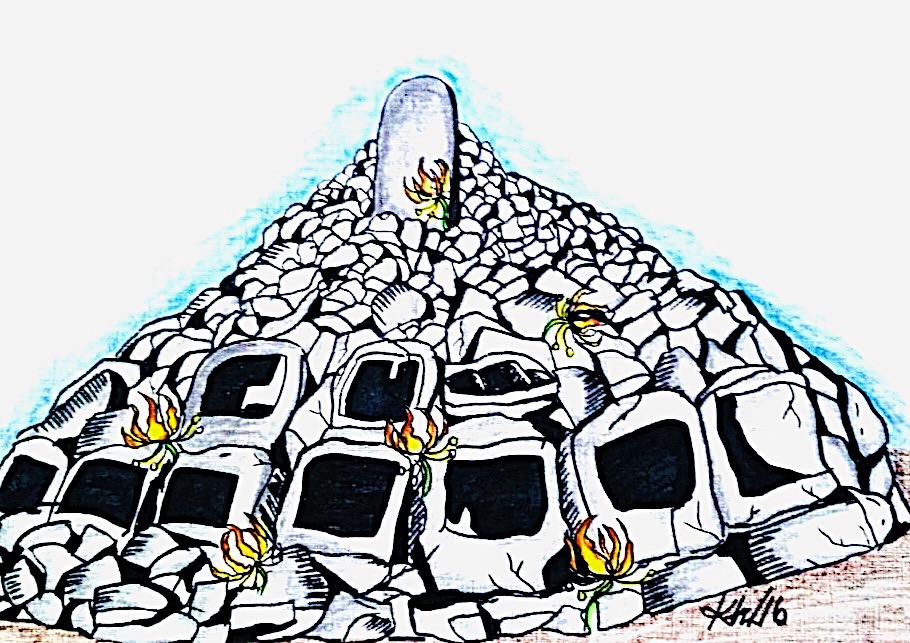
Nowhere was this more stark than at the Koppay Thuyilum Illam, the resting place of some 2,000 liberation fighters. The cemetery has long been paved over and occupied by the Sri Lankan army’s 51 Division. More than two weeks after the minister’s statement, that occupation remained firmly in place. There was no easing of military control and no gesture of respect. Instead, Tamils were compelled to light flames and lay garlands on the roadside leading up to the army camp, while soldiers continued to walk freely over the sacred land beneath which parents, siblings and children of Tamil families lie buried.
Chandrasekar’s words were neither misinterpreted nor taken out of context. His pledge was carefully worded and deliberately made in the run-up to Maaveerar Naal, at a moment of immense emotional and political significance for the Tamil nation. What followed was yet another broken promise.
Since coming to power, Chandrasekar, Dissanayake and numerous senior figures within the National People’s Power government have waxed eloquently about “reconciliation” and reform. Yet time and again, these words have failed to translate into action. Shockingly little reform has actually taken place.
This pattern extends well beyond rhetoric. Last year, the government pledged to remove a single army camp in Jaffna, a site long identified for demilitarisation. Before that, it vowed to abolish the widely condemned Prevention of Terrorism Act. Those promises, too, remain unfulfilled.
At this stage, only two explanations remain. Either the government is deliberately misleading the Tamil people, or it is incapable of acting against the Sri Lankan military and the entrenched institutions of the Sinhala-dominated state.
The latter explanation collapses under scrutiny. The Dissanayake administration has acted swiftly against senior figures from previous regimes, pursuing corruption cases and dismantling aspects of the old political order. Powerful individuals have been dragged before courts with little hesitation. Even Ranil Wickremesinghe, a former president and six-time prime minister, was placed behind bars. When it chooses to act, the state has shown that it can do so decisively.
The unavoidable conclusion, then, is that the government has chosen not to act when it comes to Tamil rights. The NPP has lied, and it continues to lie, to the Tamil people.
Chandrasekar’s recent crocodile tears over repeated vandalism at the Chemmani memorial only deepen this hypocrisy. Such statements ring hollow in a region that remains under heavy military occupation. The Tamil homeland is among the most militarised regions in the world. Soldiers man checkpoints across the North-East, while military and police intelligence networks operate extensively, monitoring, harassing and intimidating journalists, rights defenders and civil society actors.
To suggest that the perpetrators of targeted attacks on Tamil memorials are unknown, or beyond the reach of the security forces, is simply not credible. This is another failure of political will.
After more than a year in power, the façade surrounding the NPP has rapidly fallen away. The repeated abandonment of pledges that would have directly affected the daily lives of the Tamil people reveals how little weight their rights carry within the Sri Lankan state, even under a government that markets itself as reformist. Governments and institutions that continue to engage Colombo on the basis of promised change must confront this reality. Until international actors move beyond expressions of concern and demand concrete, verifiable actions, including the demilitarisation of the Tamil homeland and respect for Tamil political rights, they will continue to entrench the very structures of repression they claim to oppose.
The lies cannot continue.
______
Illustration by Keera Ratnam.