
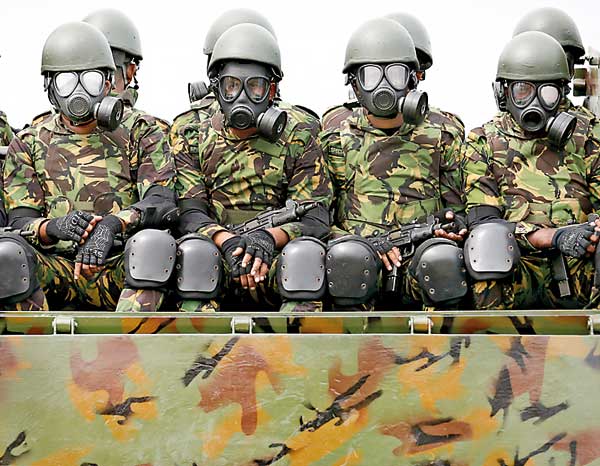
File photograph.
The Human Rights Commission of Sri Lanka (HRCSL) has written to Anura Kumara Dissanayake, raising concerns regarding the Emergency (Miscellaneous Provisions and Powers) Regulations, No.1 of 2025, issued on 28 November.
While recognising the scale of the disaster caused by Cyclone Ditwah and challenges of recovery, the HCRSL expressed anticipation that its observations and recommendations would assist in ensuring fundamental rights during the recovery process.
The Commission noted that the Regulations appeared to be drawn from a set of template regulations used repeatedly by successive governments, and highlighted that several Regulations were incompatible with international human rights standards and Sri Lanka’s own constitution.
The HRCSL raised concerns over Regulation 8(1) permitting requisitioning of any building and premise, potentially including residential properties. They highlighted the broad language of Regulation 10, which allows authorities to require “any person to do any work or render any personal service in aid, or in connection with national security or the maintenance of essential service’, warning that it could amount to forced labour. Concerns were further raised over Regulations that could impede legitimate trade union activity.
The Commission also drew attention to Regulation 16, which permits arrests under Penal Code sections 365 and 365A relating to consensual sexual activity between adults. The HRCSL stressed that these had no relevance to emergencies and reiterated their calls for these sections to be repealed. Further concern was expressed over Regulation 17(1) which allows imposition of the death penalty and the Commission recommended all references to death sentences be removed.
The Commission highlighted a number of Regulations for their implications on freedom of expression. Regulation 18(a) criminalises attempts to “cause disaffection” among public officials or essential service workers. The Commission considers this language too broad and noted that the government must tolerate criticism even during emergencies.
The HRCSL also expressed concern over reports that government officials have suggested the Emergency Regulations would be used against critics of the Sri Lankan president or government. Deputy Minister of Public Security Sunil Watagala was criticised by the International Federation of Journalists and Sri Lanka Working Journalist Association in a statement issued 5 December for suggesting that emergency regulations could be used over alleged defamation of Dissanayake and senior ministers.
The Commission similarly raised concern around the language and broadness of Regulation 19, which prohibits material deemed ‘prejudicial’ to ‘public security’ or ‘public order’, and Regulation 20 which criminalises dissemination of rumours that cause ‘public alarm’ . The HRCSL warned that these terms are broad and may lead to disproportionate restrictions of speech, particularly when truth and falsehood are difficult to determine during emergencies.
The HRCSL further criticised the expansive powers granted to police, and in some instances to military, under Regulations 31-36, warning of a lack of adequate checks of balances. Citing the large number of complaints to the HRCSL relating to custodial deaths, torture, and arbitrary arrest by police officers, the Commission expressed concern about the granting of expansive investigative powers. The Commission identified Regulation 41 as particularly troubling as it removes provisions that bar the use of confessions made to a police officer or in the custody of a police officer. The HRCSL warned that their exclusion via the Regulation removes safeguards against torture.
The HRCSL made a series of recommendations, including amendments and repeals of certain Regulations, in its letter to Dissanayake. The HRCSL emphasised that the list of concerns was non-exhaustive and called for a wider overhaul of the template regulations long used by successive governments.