
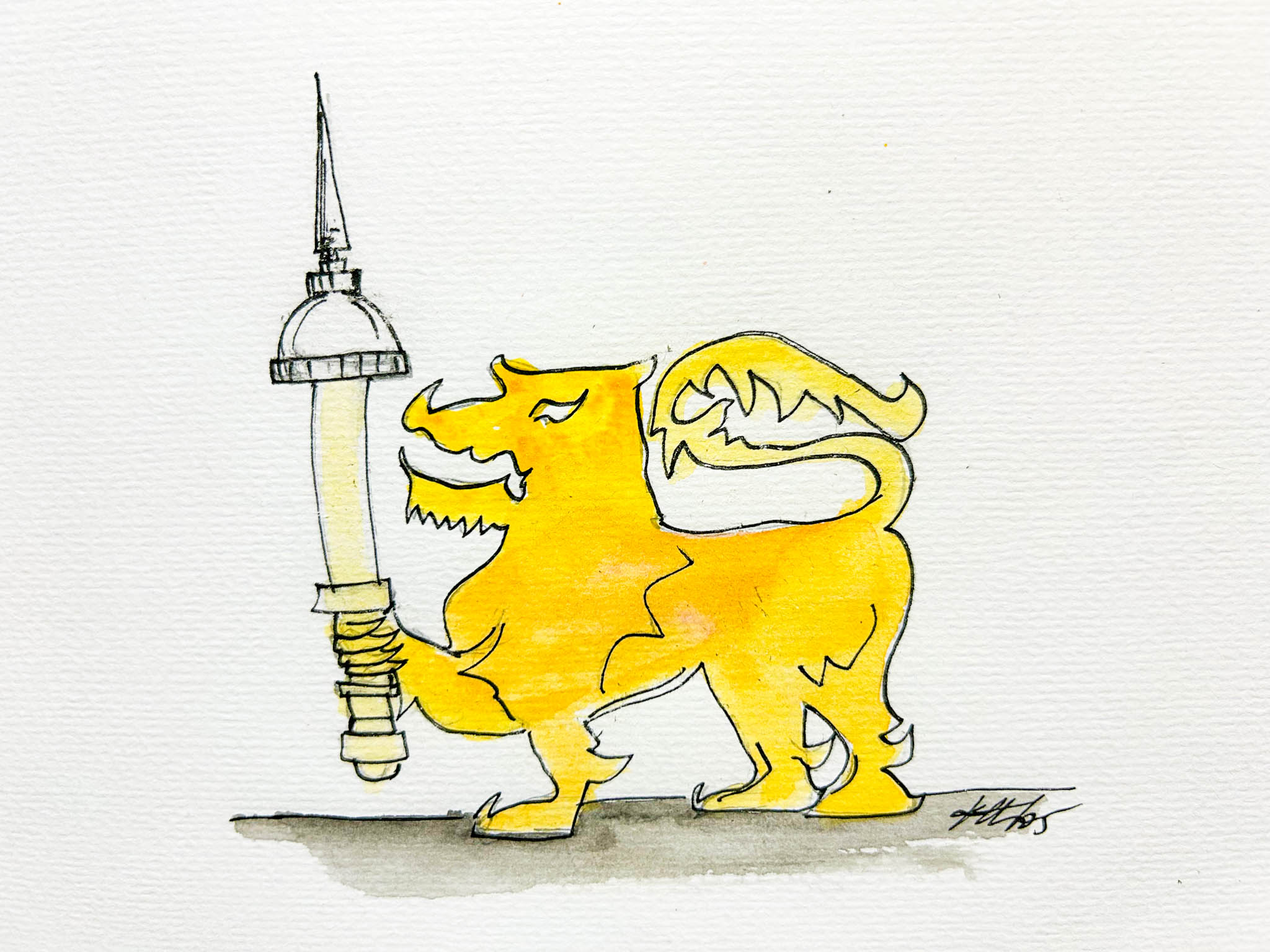
The events unfolding in Trincomalee over the past week have laid bare an uncomfortable truth that many in the Tamil homeland have long understood, but some around the world chose to hope against. The ruling National People’s Power (NPP) government is not the rupture from Sinhala Buddhist majoritarianism it promised to be. Instead, it has revealed itself to be yet another administration, both unwilling and unable to confront the entrenched supremacism that continues to drive Sri Lankan state policy.
The installation of an unauthorised Buddha statue on the Trincomalee coastline, the police’s subsequent removal, and the government’s humiliating reversal the next morning did not occur in a vacuum. They sit squarely within a decades-long project of Sinhalisation and Buddhicisation of the North-East. The pattern is has been long established: identify a coastal strip, archaeological site, temple ruin or other plot of land, bring in monks or settlers, erect a statue or shrine, and then consolidate control through state bodies, military protection and legal manoeuvres. Trincomalee, once declared the capital of Tamil Eelam and one of the most historically significant Tamil regions, has been a primary target of this strategy for years.
What makes this episode especially revealing is the government’s response. Sri Lankan president Anura Kumara Dissanayake’s insistence that the “problem is already resolved” is as disingenuous as it is dangerous. The statue remains where it was placed, the land remains in dispute, and monks backed by Sinhala nationalist groups continue to insist that they alone have authority over the site. There has been no resolution.
Public Security Minister Ananda Wijepala’s remarks went further, pledging to give police protection to the site. Even as the government’s own Coast Conservation Department and the maligned police force detailed clear violations of the law, the government chose not to uphold its own institutions. Instead, it chose to appease the monks.
This is not a one-off incident. Similar issues with Sinhala settlers – whether Buddhist monks in Thaiyiddy or Sinhala farmers in Batticaloa – have been opportunities for the NPP to meaningfully confront Sinhala-Buddhist nationalism. At every turn, it has failed spectacularly. Far from tackling extremists, the government has empowered them. Sinhala colonialism is continuing to expand, unabated.
The message to the Tamil people is unmistakable. Sri Lankan law enforcement will be used to repress you, and protect those who encroach upon your lands.
Sinhala nationalist groups have already seized the moment. The arrival of Bodu Bala Sena and its inflammatory rhetoric, and the pressure mounted by Sinhala-Buddhist clergy was almost inevitable. Sajith Premadasa, the opposition leader who was once touted as the reformer that Tamils needed, quickly fell in line, slamming the police for attempting to remove the statue and reasserting the primacy of the Buddhist clergy on the island. And the Rajapaksa clan, who represent some of the most extreme manifestations of chauvinism and are responsible for the mass murder of Tamils, have been using the moment to drum up even more support. All of this underline the hold that majoritarianism still has on the South. Sinhala nationalism is clearly very much alive, and kicking.
For the Tamil people this episode is yet another reminder that no Sinhala administration – left, right, or self-proclaimed “system-change” – has been willing to challenge the supremacy embedded in the Sri Lankan state. If the NPP cannot even uphold a basic coastal regulation order in Trincomalee, what hope is there for structural reforms, demilitarisation, land return, accountability or a political settlement? What credibility can its promises hold in Geneva, Delhi or Jaffna?
There is a deeper lesson here for the international community, which for decades has issued statements, expressed “concern,” and urged Sri Lanka to uphold the rule of law. Yet the events in Trincomalee show, once again, that polite diplomacy and voluntary commitments have achieved nothing. A Sinhala Buddhist majoritarian state cannot be persuaded into equality. It must be compelled into compliance.
This is the reality that international actors must confront.
______
Illustration by Keera Ratnam.