
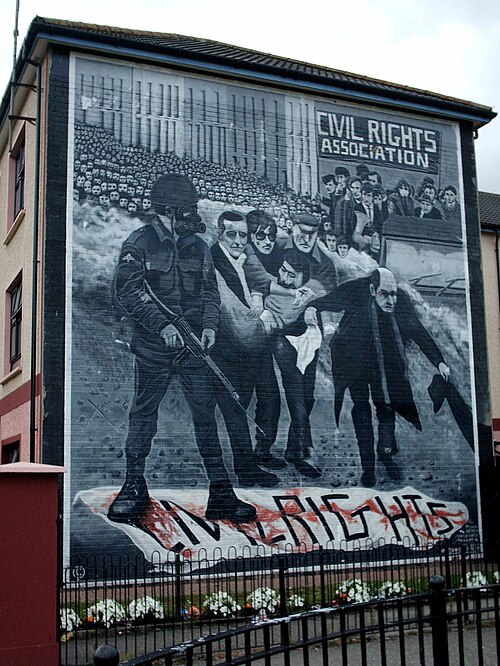
A mural to Bloody Sunday (Keith Ruffles)
A former British Army soldier known as "Soldier F" has been acquitted of two murders and five attempted murders related to the Bloody Sunday massacre in Derry on January 30, 1972.
The judge in the trial last week said that the evidence presented by the prosecution "falls well short" of proving guilt beyond a reasonable doubt, despite recognising that troops had shot at innocent people and lacked any sense of military discipline. Witnesses and victims' family members left the courtroom visibly upset. British veterans and defence organisations however expressed relief over the decision.
On the 30th of January 1972, members of the British Army’s elite Parachute Regiment opened fire on unarmed civil rights protesters and bystanders in the Bogside area of Derry, killing 13 people immediately and the 14th killing from injury.
A British inquiry took place in 2010, and it was chaired by Lord Saville, who stated that the shootings were “unjustified and unjustifiable”, marking the killings as a defining moment in the decades-long troubles. Despite the decision and a formal British government apology, criminal accountability remains hard, and Soldier F was the only soldier ever charged in connection with Bloody Sunday.
The brother of William McKinney, one of the men shot dead, slammed the decision in remarks shortly after the trial but said he does not blame the judge for the verdicts. "The blame lies firmly with the British state," he told reporters.
"Soldier F has been discharged from the defendant's criminal dock, but it is one million miles away from being an honourable discharge," he said outside the courthouse.
Though the outcome left families of those murdered on Bloody Sunday without a criminal conviction, they have vowed to continue their campaign for justice.