
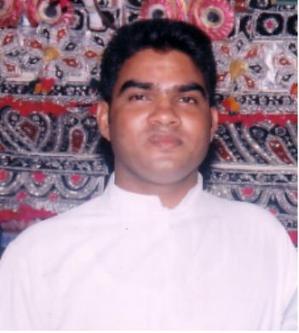
On 20 August 2006, a young Tamil Catholic priest Father Thiruchelvam Nihal Jim Brown disappeared along with his lay assistant in the Sri Lankan military occupied Jaffna peninsula.
Nineteen years later, his fate remains unknown, shrouded by silence and unanswered questions.
Father Brown’s disappearance occurred at a perilous time. Sri Lanka had reignited war as it began to withdraw from a tenuous ceasefire. Even the military occupied Jaffna peninsula was plunged back into conflict. In the weeks leading up to his abduction, government forces imposed strict curfews and travel blockades.
It was against this chaotic backdrop that Father Brown, the parish priest of St. Philip Neri Church in Allaipiddy, Jaffna, tried to protect and aid his flock, only to become one of the “disappeared” himself.
In Allaipiddy, a small Tamil village under Sri Lankan Navy control, battles erupted in early August. On 13 August 2006, Sri Lankan Army artillery shelled St. Philip Neri’s Church, Father Brown’s parish, where hundreds of terrified Tamil civilians had taken refuge. The carnage was immense. At least 15 people were killed on the spot and dozens more were injured. Some reports later put the death toll even higher, at 20-24 civilians.
Father Brown survived the blast and heroically sprang into action, helping to evacuate the wounded and led his congregation to safety. Over the next days, he assisted as many as 800 villagers in fleeing the embattled islet to a safer church on nearby Kayts Island, personally carrying food, water and medicine. These lifesaving efforts earned him deep love from parishioners, but also dangerous scrutiny from the Sri Lankan security forces occupying the area.
Threats and the disappearance
Father Jim Brown’s dedication to protecting civilians did not sit well with the Sri Lankan authorities.
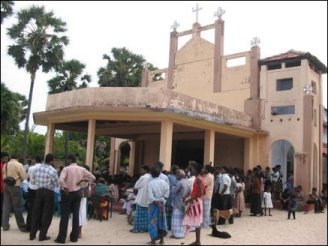
In the aftermath of the Allaipiddy church shelling, Sri Lankan Navy officers grew openly hostile toward the priest. The commanding officer of the occupying Allaipiddy naval camp, identified as “Commander Nishantha”, accused Father Brown of “helping the LTTE dig bunkers” around the church and issued death threats against him. These threats were not idle. The priest’s predecessor at Allaipiddy, Father Amalraj, had allegedly been pressured and removed from the parish after witnessing a Sri Lankan Navy-EPDP massacre of villagers in May 2006. Despite the danger, Father Brown persisted in ministering.
On 19 August 2006, the day before he disappeared, he met with the Bishop of Jaffna to voice his concerns about the Navy’s anger and the hardships facing his people under siege. Unbeknownst to him, that meeting would be his last report of the mounting risks he faced.
The final hours of Father Jim Brown have been painstakingly reconstructed through eyewitness testimony. On Sunday 20 August 2006, Father Brown, just 34 years old and only ten days into his new posting, set out by motorbike with his aide Mr. Wenceslaus Vincent Vimalathas (40) to check on Allaipiddy parishioners. The road back into Allaipiddy was heavily militarised, with a Sri Lankan Navy checkpoint at the causeway onto the islet.
The priest’s colleagues later recounted that around 1:50pm, another Catholic clergyman saw Father Brown and Vimalathas enter the Allaipiddy checkpoint on their motorbike. That was the last confirmed sighting of the pair. Multiple witnesses then described a sinister sequence of events inside the cordoned-off zone: armed men on two motorbikes, each carrying three riders in bulletproof vests, were seen tailing Father Brown and his companion along the village road. The six armed men stopped by St. Mary’s Church in Allaipiddy for a brief discussion; then one bike turned back toward the Navy post. When the original eyewitness later tried to leave Allaipiddy, they saw the same three armed men at the Navy checkpoint, speaking with naval personnel and gesturing back toward the village. Those men promptly rode off again into Allaipiddy by another route. Father Brown and Mr. Vimalathas were never seen again.
All signs indicated that the priest and his aide had been abducted within a tightly controlled military zone. Kayts Island and the islet of Allaipiddy were under strict Sri Lankan Navy lockdown, making it virtually impossible for any armed group other than state forces or their militia allies to operate there. Suspicions immediately fell on the Sri Lankan Navy and the pro-government EPDP paramilitary, who were known to be active in the area. In fact, local sources would later flatly report that Father Brown “was taken away by Sri Lanka Navy and [the] Eelam People’s Democratic Party (EPDP)” on that day. Sri Lankan Navy officials, however, denied all involvement. Rear Admiral Upali Ranaweera, the Navy’s Northern Commander, insisted that the two men “were never arrested” by his forces. Navy guards at the checkpoint claimed Father Brown had passed through and then “returned [out] soon after… heading toward Jaffna town,” but when police asked for checkpoint log records or other proof, the Navy refused to produce any. This obstruction and lack of transparency only deepened suspicions of a cover-up.
Sri Lankan state orchestrated
From the very start, credible evidence pointed to Sri Lankan state orchestration in Father Brown’s disappearance.
The circumstances, last seen at a Navy checkpoint, in a Navy-patrolled area, after being threatened by a Navy officer, are damning. An Amnesty International urgent appeal issued days later stated it plainly that the priest and his aide “may be victims of ‘disappearance’ by state agents”. The eyewitness account of unknown gunmen tailing Father Brown, then liaising with naval personnel, strongly suggests military or paramilitary involvement. No other armed group could operate freely on Allaipiddy under the Navy’s watch in 2006. Even the Sri Lankan police appeared to suspect foul play by the Navy, attempting to obtain evidence of the duo’s departure – evidence the Navy refused to provide. To the priest’s colleagues, family and parishioners, the conclusion was inescapable. This was an enforced disappearance, perpetrated and sanctioned by the Sri Lankan security forces.
Outcry from the Church
From the moment Father Jim Brown went missing, an outpouring of grief and outrage resonated from the Catholic Church, human rights organizations, the local Tamil community and international observers. Catholic clergy in Jaffna were among the first to raise the alarm. On 24 August 2006, just days after the disappearance, Bishop Thomas Savundaranayagam of Jaffna led priests, nuns and laypeople in a prayer service for the safe return of the priest and his aide. Church groups did not hesitate to point fingers. The Jaffna Diocese’s Justice and Peace Commission noted Father Brown had openly “confronted the navy” over the church shelling that killed his parishioners, and now he had paid the price. The Bishop of Jaffna urgently appealed to Sri Lankan authorities and even wrote to the Vatican’s ambassador (Papal Nuncio) in Colombo, imploring international help to locate the missing clergyman.
Meanwhile, Caritas (the Catholic relief agency) and the diocese organized a silent march of hundreds of faithful through Jaffna town after the prayer service. Marchers carried a memorandum to the local government office demanding answers. At the same time, the church-run Centre for Peace and Reconciliation (CPR) issued an impassioned statement: “We need our priest and the layman back. Act in time and save these innocent victims,” it pleaded, calling on the international community to pressure Colombo.
The Sri Lankan state’s response to these peaceful demonstrations was telling. When hundreds of Father Brown’s own displaced parishioners tried to hold a prayer procession carrying his photograph, Sri Lankan security forces blocked their way. Citing wartime Emergency Regulations, troops declared the gathering illegal, threatened to arrest the participants, and even photographed and intimidated the priests leading them. Only after tense negotiations did the crowd disperse back to their refugee camp.
Nevertheless, the Church persisted. Over the following months, Catholic bishops across the island released several public statements condemning the disappearance and urging the government to investigate. The Vatican’s ambassador also pressed then Sri Lankan president Mahinda Rajapaksa’s office for answers, though to little avail.
International human rights organisations and observers likewise voiced deep concern. Amnesty International issued urgent appeals (UA 230/06) and updates highlighting evidence of state involvement and calling for an impartial inquiry. Human Rights Watch listed Father Brown among the most prominent “disappearance” cases in Jaffna, noting that hundreds of new abductions since 2006 had already placed Sri Lanka among the worst offenders globally. The United Nations Working Group on Enforced Disappearances was notified as well. In Geneva, Sri Lanka’s record was being scrutinized; activists raised Father Brown’s name in submissions to UN forums to illustrate the resurgence of state terror tactics. Even foreign media outlets and Christian advocacy groups reported on the missing priest.
AsiaNews, a Catholic news service, ran headlines like “Amnesty International joins appeals for Fr Jim Brown”, explicitly warning that he “may be [a] victim of ‘disappearance’ by state agents”asianews.it. The BBC, Reuters and others picked up on the story of a priest vanishing behind army lines, casting a spotlight on Sri Lanka’s deteriorating human rights situation. Each statement and report added pressure on Colombo, but the government’s public stance remained one of denial and deflection.
A body is found
Over the ensuing months, further grisly clues emerged reinforcing these allegations. In March 2007, fishermen off nearby Pungudutivu island discovered a mutilated human torso stuffed in a Sri Lankan military-issue sandbag and weighted down with a barbed-wire-bound stone. Local Catholic clergy feared the worst – that the body was likely Father Brown’s. The remains were so deliberately concealed (meant to stay sunk on the seabed) that priests believed only a high-profile victim (“a VIP”) would warrant such extra effort by the killers.
The torso was sent for DNA testing in Colombo, and unofficial reports claimed a match to Father Brown.
As news of this spread, the family’s despair deepened. “A shiver went through me… I cannot bear this shock,” mourned his aunt upon hearing that her nephew’s 35th birthday had instead “become a funeral day for us”. Yet, officially, the courts held back from releasing the DNA results pending further procedure. To this day, no one has been charged or held accountable for Father Brown’s disappearance.
The case encapsulates a pattern of state impunity. Despite credible leads, Sri Lankan authorities failed to conduct a serious, impartial investigation.
A Presidential Commission of Inquiry was eventually tasked with probing a handful of high-profile cases from that period, including Father Brown’s disappearance. But like so many Sri Lankan commissions before and since, it “proved futile”, establishing neither truth nor justice. Nearly two decades on, Father Brown’s file remains open but cold, a stark reminder of Sri Lanka’s legacy of unresolved atrocities.
Enforced disappearances surge
Father Jim Brown’s abduction was not an isolated incident, but rather part of a wider pattern of enforced disappearances committed by the Sri Lankan state. By late 2006, as violence flared, abductions and “disappearances” were spiking at an alarming rate, especially in Tamil areas under military control. Amnesty International warned in September 2006 of a “re-emerging” pattern of disappearances by state agents, citing new Emergency Regulations that gave security forces sweeping powers and noting at least 62 cases in the north in the past year.
Sri Lanka’s own Human Rights Commission had also registered dozens of disappearance complaints and was investigating nearly 200 missing persons nationwide, amid what it called a “climate of fear”. In just August 2006 alone, at least 50 Tamil civilians were reported abducted in the island’s North-East.
Sadly, the post-2006 surge of disappearances only foreshadowed an even greater tragedy to come. Sri Lanka today ranks among the countries with the highest number of missing persons in the world, with estimates of 60,000 to 100,000 people vanishing since the late 1980s. Many were Tamil civilians or surrendering combatants who disappeared in military custody at the war’s end, which culminated in the Mullivaikkal genocide of 2009.
Impunity for crimes against clergy, journalists and activists
Father Jim Brown’s case sadly joins a long list of unsolved atrocities against clergy, journalists, and civil activists committed by the Sri Lankan state for which no one has been brought to justice.
The National Evangelical Alliance recorded, Father Brown’s abduction was merely “the latest in a long series of abductions and killings of Catholic priests” in Sri Lanka. Over the decades of conflict, multiple clergymen from various faiths met violent ends. A chilling roll call includes Father Mary Bastian (abducted by unknown men in 1985), Father Chandra Fernando of Batticaloa (shot dead in 1988), and Father Eugene Herbert, an American Jesuit (disappeared in 1990) – none of whose cases were ever solved. Just days before Father Brown vanished, another Christian minister – Pastor Vincent Vinodharajah of Jaffna – also went missing in August 2006, and remains missing to this day.
Journalists and civil society activists fared no better. These patterns created an atmosphere of total impunity, emboldening perpetrators.
Successive Sri Lankan governments often responded to international pressure by appointing Commissions of Inquiry or making pledges to investigate these egregious crimes. But as the Catholic Bishop of Mannar, Rt. Rev. Rayappu Joseph, lamented in his testimony to the Lessons Learnt and Reconciliation Commission in 2010, “previous Commissions of Inquiry have failed to establish the truth… and bring justice and relief to victims and their families.” Father Brown’s case, he noted, had been on the docket of one such commission without result. The Bishop’s words reflect a bitter reality: Sri Lanka’s culture of impunity has persisted, allowing state actors suspected of abductions and extrajudicial killings to escape consequences.